A Tour de France in Your Glass
Food and wine go together, especially in France. I attended the VanWineFest 2026 seminar, A Tour de France in Your Glass. With Moderator, Arnica Rowan, we took an oenological journey through seven classic French wine regions, each with their own unique characteristics and history. We crossed the country from Champagne to South West France with stops in Bourgogne, Rhône, Bordeaux, Languedoc-Roussillon, and Provence.
With Arnica were the following French winery principals: Charles Bouthillier, Romain Chevrolat, James Leonardo De Sa, Thibaut Marquis, Marie Pinceloup, Julie Pion, Claudio Varas-Rubio, and Rebecca Yates-Campbell, who discussed with us, their wines as it relates to a dish from their region that they would pair it with.
I’ve included my wine tasting notes at the end of each discussion for each wine. As a bonus, we were provided with a PDF containing the recipes for all the recommended dishes. I’ve provided a link to this PDF for you at the end of this article.
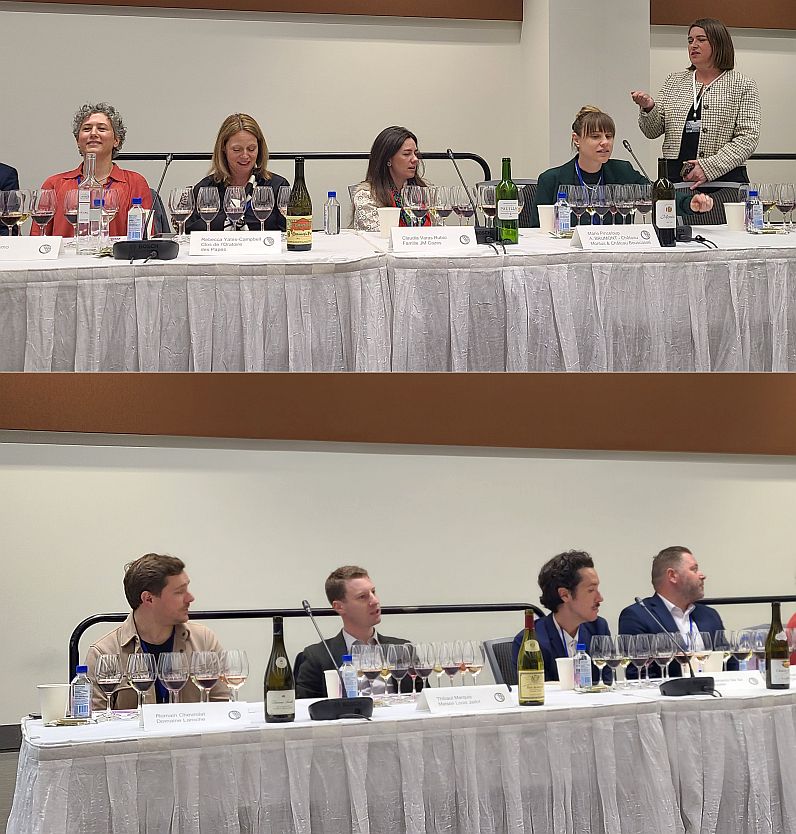
Our wines for this seminar:
- Champagne Taittinger Cuvée Prestige Rosé NV, Champagne
- Domaine Laroche Premier Cru Chablis “Les Vaudevey” 2023, Bourgogne
- Maison Louis Jadot Pinot Noir Couvent des Jacobins 2022, Bourgogne
- M. Chapoutier Hermitage Blanc Chante-Alouette 2021, Rhône
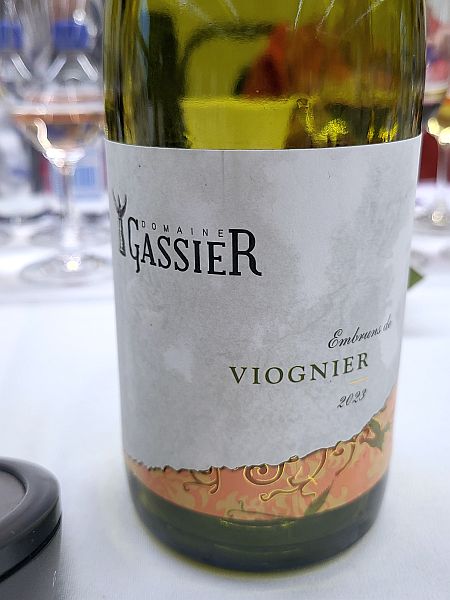
- Château de Nages Michel Gassier Embruns de Viognier 2023, Rhône
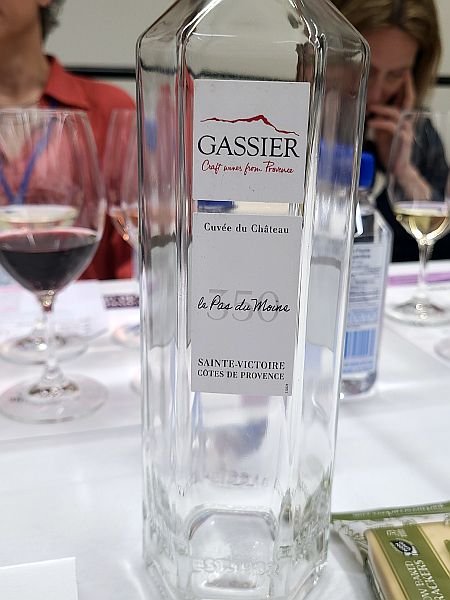
- AdVini Château Gassier Le Pas De Moine AOP Côtes de Provence Sainte-Victoire 2024, Provence
- Clos de l’Oratoire des Papes Châteauneuf-du-Pape Rouge 2022, Rhône
- Famille JM Cazes Pauillac AOC (Troisième) 2020, Bordeaux
- Gérard Bertrand Cuvée 100 Les Arbousiers Corbières 2021, Languedoc-Roussillon
- BRUMONT – Château Montus Madiran 2019, South West France
We started our seminar with Arnica providing some background into France and gastronomy. The French “gastronomic meal” is more than a mere sequence of courses; it is a strategic pillar of national identity so profound that in 2010, UNESCO designated it as a piece of Intangible Cultural Heritage of Humanity. Unlike a static monument or a cathedral, this heritage is a living, breathing liturgy of the senses, rooted in the concept of terroir; the inextricable link between a specific landscape and the Arnica it yields. To understand French wine and food is to map the geography of France itself, where every dish and bottle serves as a liquid and edible reflection of the land.
The sheer scale of this cultural landscape is vast, characterized by a diversity that serves as the central argument for French identity:
- Viticultural Complexity: 360 official wine appellations (AOCs), each governed by a rigorous “cartography of taste” regarding grape varieties and harvesting.
- Gastronomic Density: Over 1,200 distinct varieties of cheese. A figure that has nearly quintupled since Charles de Gaulle famously lamented the difficulty of governing a nation with 246 varieties.
- Philosophical Foundation: Encapsulated by Brillat-Savarin’s dictum: “Tell me what you eat, I will tell you what you are.”
Our journey begins in the north, in the hills of Champagne, before winding through the monastic hearts of Burgundy and toward the sun-drenched, rugged landscapes of the South.
Champagne: Julie Pion (Champagne Taittinger)
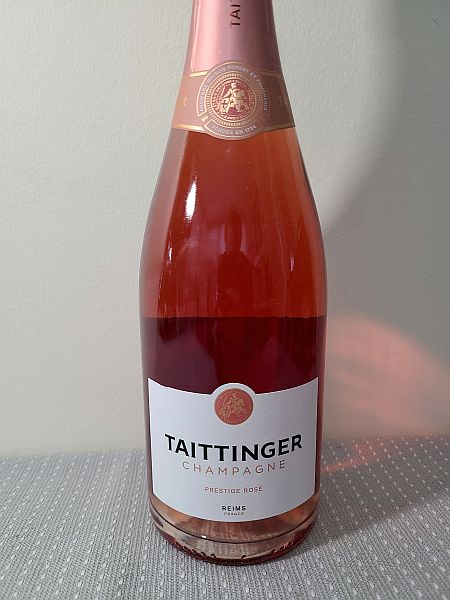
Champagne has evolved far beyond its role as a celebratory toast; it is a versatile gastronomic entity. In France, Champagne also has some very traditional practices. One of the most delightful comes from the city of Reims. When you have champagne there, you often have it with something called the Biscuit Rose de Reims, which pairs with the “biscuit aromas” derived from extended autolysis (bottle aging).
The Champagne Taittinger Cuvée Prestige Rosé, NV illustrates the symbiosis between the wine and the Biscuit Rose. This pairing is rooted in 17th-century. Bakers in Reims, seeking to utilize the residual heat of their ovens after the bread was finished, created a biscuit that was “twice-baked” (bis-cuit) to dry it completely. This permanent culinary icon is distinguished by its carmine (red) colouring, derived from dried and ground up cochineal insects to mask the vanilla specks in the dough. Twice baking allows the biscuit to be dipped into Champagne without dissolving. The Pinot Noir in the blend provides red berry notes, while the wine’s toasty finish mirrors the dry, twice-baked profile of the biscuit.
Champagne Taittinger Cuvée Prestige Rosé, NV – A medium, bright salmon colour. Fresh red fruit, strawberries, and brioche aromas. Dry, high acidity with medium sized, creamy bubbles. Bright red fruit flavours along with a touch of pepperiness and tannins. Medium-plus to long length. 

Chablis: Romain Chevrolat (Domaine Laroche)
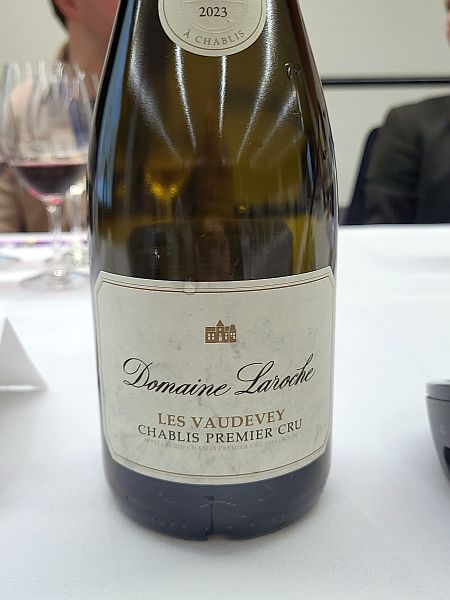
Chablis is defined by its narrow valley environment, where southeast-facing slopes and cooler northern temperatures ensure a slow, tension-filled maturation. This produces a style of Chardonnay that is the antithesis of the buttery profiles found elsewhere; it is a wine of “liquid stone.”
Chablis represents the pinnacle of mineral-driven viticulture, characterized by tension, iodine, and a distinct chalky freshness. Domaine Laroche’s Chablis Premier Cru “Les Vaudevey” serves as the benchmark for this profile. For global hospitality, Chablis is an essential partner for saline-heavy seafood, offering a bridge to high-growth international culinary trends like Japanese omakase.
The Domaine Laroche Premier Cru Chablis “Les Vaudevey” 2023 exemplifies this character through its:
- Freshness and Tension: A bracing acidity that acts as a palate cleanser.
- Iodine and Citrus Notes: A direct aromatic link to the prehistoric Kimmeridgian limestone (fossilized oyster shells) of the region.
Romain noted that with four Japanese chefs currently working in the small village of Chablis, the wine’s high minerality and saline finish elevates umami-rich dishes like salmon tataki or tuna with yuzu. This wine also provides the necessary acidity to cut through the richness of a gougère (savoury cheese choux pastry) or sharp Comté cheese.
Domaine Laroche Premier Cru Chablis “Les Vaudevey 2023 – A bright, medium intensity, lemon colour. Light aromas of citrus and oak. Dry, medium body with a silky smooth mouthfeel. Soft flavours of citrus and stone. Bright acidity. Medium-plus length.
Bourgogne: Thibaut Marquis (Maison Louis Jadot)
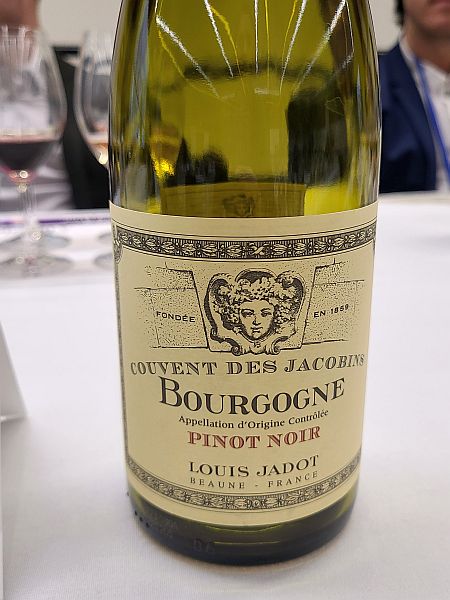
The “Sense of Place” in Burgundy was established by 11th-century Cistercian and Benedictine monks. Through a liturgical devotion to the vine, literally tasting the earth and observing the lunar cycles, they mapped the Climats (specific plots) that define the modern appellation system. Maison Louis Jadot has served as a steward of this land for over 200 years. Their Maison Louis Jadot Pinot Noir Couvent des Jacobins 2022, bears the visage of Bacchus, the God of Wine, on the label.
This wine, made from Pinot Noir, has the fruitiness which would balance really well with meat, but you also have the acidity. I would have it with a leg of lamb or with lamb chops and the creaminess of white beans, the “haricot blanc“. The wine’s acidity cuts through the fat of the meat and the starch of the beans, ensuring the palate remains refreshed despite the meal’s richness.
Maison Louis Jadot Pinot Noir Couvent des Jacobins 2022 – A medium intensity, clear garnet colour. Light red fruit and oak on the nose. Medium-minus body with a smooth, soft mouthfeel. Medium acidity and light tannins. Juicy red fruits, candied cherries and a touch of oak on the palate. Medium plus length finishing with a mix of sweet and tart red fruits and a touch of pepperiness.
Northern Rhône: James Leonardo De Sa (Maison Chapoutier)
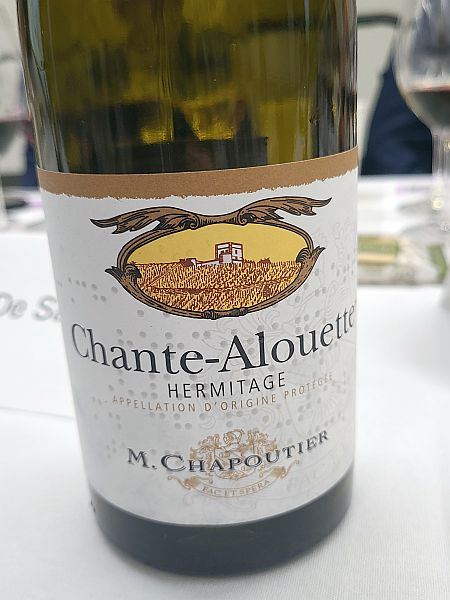
In the Northern Rhône, specifically on the iconic hill of Hermitage, biodynamic viticulture is used by Maison Chapoutier to “show a picture of a terroir” rather than satisfy a commercial taste profile. In the Northern Rhône’s Hermitage appellation, quality is a function of verticality. The family has been producing wine in Tain-l’Hermitage since 1808. Their “Chante-Alouette” cuvée, made from 100% Marsanne grapes, represents a complete topographical expression, synthesized from three distinct geological layers. By blending fruit from the granitic summit (for salinity and freshness), the middle slope of Le Méal, and the clay-rich bottom (for generosity and volume), the wine achieves a holistic balance.
The suggested pairing of Pâté en Croûte serves as a culinary mirror to this stratified geology; the distinct layers of crust, jelly, and meat mimic the topographical layers of the Hermitage hill, providing a symbolic and organoleptic bridge between plate and slope. The wine’s salinity cuts through the buttery crust and meat jelly, while its mid-palate weight matches the density of the pâté.
Chapoutier Hermitage Blanc Chante-Alouette 2021 – It has a deep, bright, lemon colour. Rich aromas of toast, honey and dried stone fruits. Dry, fuller body that lightens on the mid palate. Rich flavours of stone fruits, honey and touches of oak and pepperiness. Medium length. –
Southern Rhône: Charles Bouthillier (Château de Nages)
The transition to the Southern Rhône marks a shift toward a Mediterranean landscape where the wine “smells like the sun” according to Charles. Here, the influence of the sea and the Camargue landscape dictates a more generous profile. Their vineyard is 100% estate grown and certified in regenerative agriculture. They were the first French winery to be certified regenerative in France back in 2023 and believe that the purity of fruit and expression is shown in this glass of wine.
Their Château de Nages Michel Gassier Embruns de Viognier 2023 is made from 100% Viognier grapes and reflects this warmth, offering a floral purity that pairs effortlessly with Brandade de Morue (salted cod whipped with olive oil and garlic). In this region, the essence of the culture is found in “small plates” and sharing rather than formal pairings. The saltiness of the cod finds a natural harmonic resonance in the sun-ripened, stone-fruit generosity of the Viognier.
Château de Nages Michel Gassier Embruns de Viognier 2023 – A lighter, lemon colour in the glass. Rich, ripe stone fruits, apricots in particular, plus a touch of sweet spices on the nose with more on the palate. This wine is dry, smooth, with a thicker mouthfeel. Lower acidity. Medium length with a touch of pepperiness. 
Provence: Marta Bonomo (Château Gassier)
The introduction of the “Cru” classification for the Sainte-Victoire sub-appellation in 2025 marks a pivotal evolution for Provence according to Marta Bonomo. This designation formalizes the recognition of a specific terroir, the limestone backbone of the Sainte-Victoire mountain, lifts the wine out of the “commodity rosé” category. The resulting chalky minerality and dry backbone differentiate these wines through structural elegance rather than simple fruitiness.
The AdVini Château Gassier Le Pas De Moine AOP Côtes de Provence Sainte-Victoire 2024 is a blend of Syrah, Grenache and Cinsault red grapes vinified with a touch of Vermentino to provide a hint of garrigue. This creates a profile of red berries underscored by Mediterranean herbs. It is the ultimate partner for the sun-drenched flavours of Socca (chickpea pancake) and Ratatouille.
AdVini Château Gassier Le Pas De Moine AOP Côtes de Provence Sainte-Victoire 2024 – A pale salmon colour. Sweet strawberries and chalkiness on the nose. Dry, medium body with higher acidity. Strawberries and red fruit plus some stoniness on the palate. Medium length.
Châteauneuf-du-Pape: Rebecca Yates-Campbell (Advini)
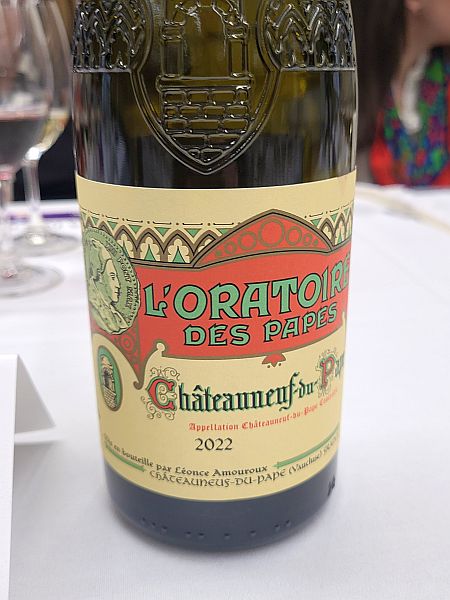
Châteauneuf-du-Pape is the source of hearty, savoury French reds. Since 1726, these wines have been strategic staples for cold-weather gastronomy, offering deep meaty textures through Grenache-focused blends. Benefiting from a unique natural heritage, the AOC relies on 13 grape varieties, 5 distinct terroirs, and an exceptional climate, marked by sun and mistral wind, to produce exceptional wines.
These wines possess a formidable phenolic structure (tannins) that traditionally demands red meat. However, they pair exceptionally well with vegetarian fare like Eggplant (Aubergine) Parmesan. The smoky, roasted flavours of the eggplant and the richness of the melted cheese interact with the wine’s savoury tannins, providing a “steak-like” satisfaction without the animal protein.
Clos de l’Oratoire des Papes Châteauneuf-du-Pape Rouge 2022 – A deeper, clear garnet colour. Ripe berries and cherries aromas. Dry, medium-plus body with a smooth, soft mouthfeel. Red berries, red and black cherries and some pepperiness and bitterness on the palate. Medium length. –
Corbières: Gérard Bertrand (Presented by Arnica Rowan)

Corbières is defined by garrigue; the aromatic scrubland of lavender, rosemary, and thyme. These resinous oils literally perfume the grapes, resulting in wines that are spicy, dark, and wild. Gérard Bertrand Cuvée 100 Les Arbousiers Corbières 2021 utilizes centenarian vines and biodynamics to create a “living” wine. A spicy blend of Carignan and Syrah, it is the perfect foil for the richness of duck breast.
Arnica provided us with this technique to perfectly cook duck breast.
- Preparation: Score the fat in a crosshatch pattern (do not cut the meat).
- The Cold Pan Technique: Place the duck skin-side down in a cold cast-iron pan. Turn the heat to medium-low. This renders the fat slowly, making it crispy rather than just seared.
- The Render: Cook for 5 minutes until the fat is liquid and the skin is golden.
- Finish and Rest: Flip for 2 minutes, then let the meat rest for 3 minutes.
- The Sauce: Use the rendered fat to sauté Blackberries or Saskatoon berries with a splash of the Corbières and a touch of cardamom. The cardamom acts as a bridge between the spicy Carignan and the fruit.
Gérard Bertrand Cuvée 100 Les Arbousiers Corbières 2021 – A deep, dull garnet colour. Nice aromas of ripe, black fruits, sweet spices, and cedar. Dry, smooth, with flavours of ripe cherries, black fruits, sweet spices and cedar on the palate. Medium-plus length finishing with a touch of pepperiness and medium drying tannins.
Bordeaux: Claudio Varas-Rubio (Famille JM Cazes)
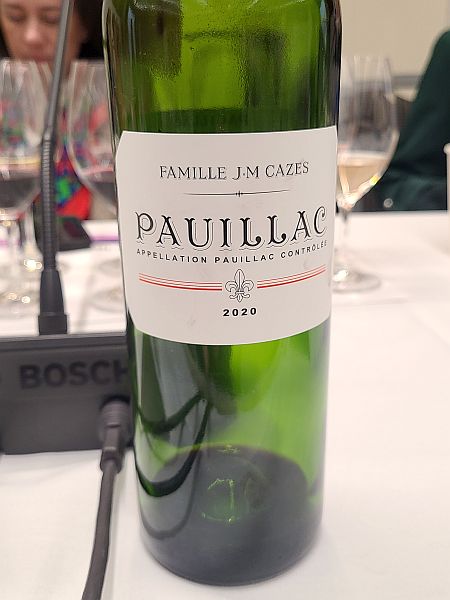
The Left Bank of Bordeaux, specifically Pauillac, remains the global benchmark for Cabernet Sauvignon, defined by a commitment to longevity and structural complexity. However, the modern Pauillac brand is now equally defined by architectural heritage and winery tourism. The 2022 reconstruction of the winery at Château Lynch-Bages by I. M. Pei (the firm founded by the architect of the Louvre pyramid) elevates the estate’s cultural and aesthetic narrative.
Gastronomically, these wines demand dishes of equivalent intensity and patience, such as Lièvre à la Royale, (wild hare stew), a dish cooked for 12 to 18 hours until it reaches a chocolatey, concentrated richness. The high acidity and volume of a Pauillac Cabernet Sauvignon can cut through this density, preventing the palate from becoming overwhelmed.
To fully open a Pauillac wine, Claudio recommended opening the bottle at least two hours prior to service to allow the tight tannic structure to breathe and soften.
Famille JM Cazes Pauillac de Lynch Bages AOC (Troisième) 2020 – A deep garnet colour. Light aromas of black fruit, cedar, black pepper and capsicum. Dry, medium body with a soft, very smooth mouthfeel. Juicy black fruit on the palate plus a touch of pencil leads. Medium acidity. Longer length with firmer, drying tannins.
The South West: Marie Pinceloup (Château Montus)
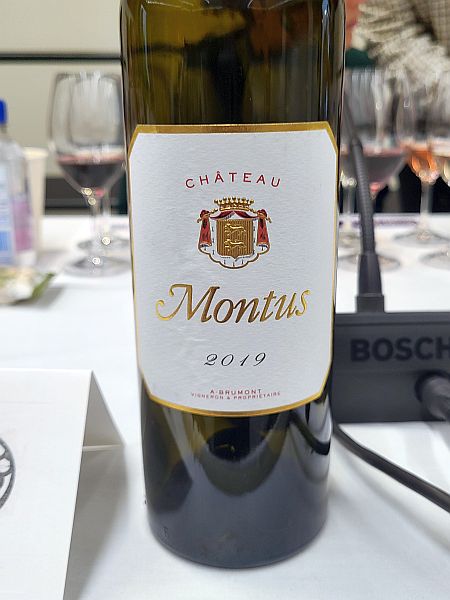
The foothills of the Pyrenees are the “Wild West” of French wine and home to the Tannat grape. Tannat is an unyielding entity, possessing the highest tannin levels in the viticultural world. It requires the gentle expertise of a master like Alain Brumont to transform it into something silky. This is achieved through meticulous viticulture and the use of pebble-rich soils that impart a perceived roundness to the palate.
In a region where the culinary tradition is unashamedly rich, centered on Black Pig and duck fat, the high-tannin structure of Tannat is a gastronomic necessity. Whether it is butter, cream, or the fat from the local Black Pig, the fat coats the palate, allowing the fruit of the wine to shine through the tannins. This reflects the estate-to-table lifestyle of Montus, where employees eat organic, estate-grown food daily. Serve these robust reds slightly chilled to emphasize their freshness.
Château Montus Madiran 2019 – A medium-plus intensity garnet colour in the glass. Medium intensity aromas of black fruits and a touch of oak. This wine is dry, medium-minus body with a smooth mouthfeel. Medium-plus tannins and medium acidity. Ripe black fruits and berries on the palate plus light pepperiness and a hint of capsicum. Firmer drying tannins and sweet black fruit flavours on the finish.
To Conclude
Our seminar ended by addressing the tension between the media’s doom and gloom and market reality. While headlines suggest a decline in wine culture, the intelligence suggests a sophisticated renewal. The youngest segment (20s to early 30s) is the fastest-growing group of wine lovers. Wine tourism in France, Spain, and Italy is reaching all-time highs. Strategic exploration of regions like Languedoc and the South West offers elite quality at accessible price points.
Some suggestions to wineries and restaurants on how to promote their wines:
- Cultural Storytelling: Move beyond technical tasting notes. Use the “rugby player” hook of Gérard Bertrand to broaden the appeal of wine, or the 11th-century monastic narrative of Maison Jadot to justify price points through historical prestige.
- Educational Integration: Train staff to articulate the relationship between soil (pebbles, granite, limestone) and wine texture. When staff can sell the “Sense of Place” rather than just the grape, the guest experience is transformed into an educational luxury.
- Synergetic Menu Mapping: Architect menus that match regional wine “personalities”, the precision of Chablis, the romance of Burgundy, or the ruggedness of the Languedoc, with their traditional culinary counterparts to ensure sensory harmony and repeat patronage.
Here is a link to the PDF containing the recipes from this seminar. Thank you to the Vancouver International Wine Festival for providing me with a media seat to attend this seminar.