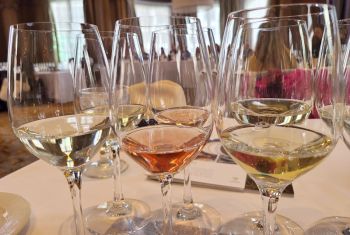
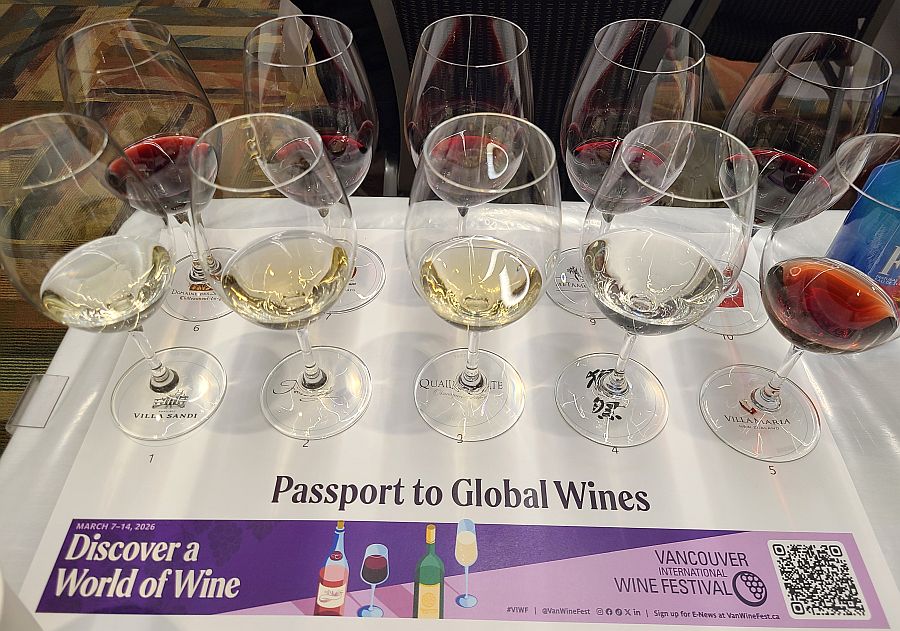
Passport to Global Wines flight of wines
The 47th Vancouver International Wine Festival seminar, “Passport to Global Wines,” was a strategic exploration of the global viticultural map through the lens of cultural identity. Moderators Christine Campbell, Lisa Giovanella, and James Nevison established a “Passport” metaphor as a vehicle to navigate international “ports of entry,” moving beyond the standard technical data about how a wine is made and instead concentrated on three topics: the specific vision of the winery principal, the influence of local culture, and the sense of place dictated by unique geography. The seminar concentrated toward storytelling and cultural heritage, rather than talking about the vinification methods.
Following are the ten wines with discussions by their winery principals from around the world. Embedded will be my wine tasting notes for each wine.
Gualtiero Cenere, Villa Sandi
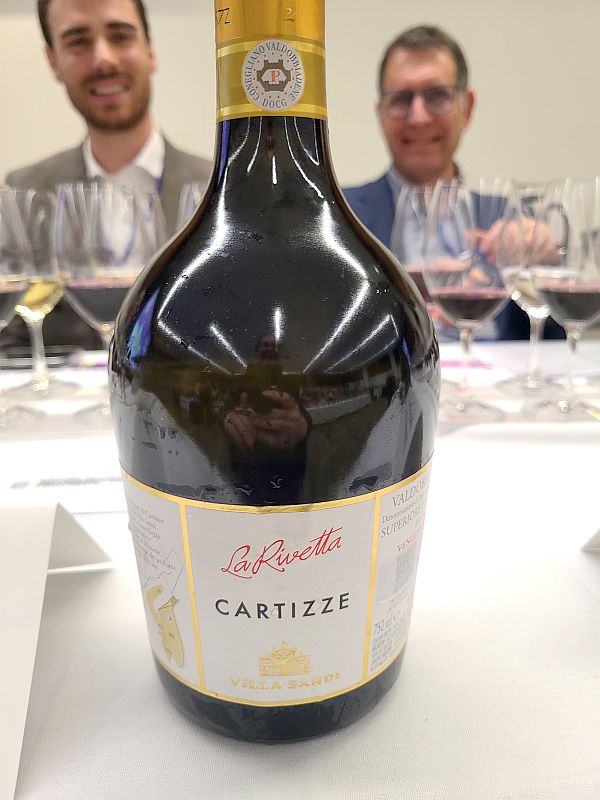
Gualtiero Cenere from Villa Sandi, brought our attention to the micro-region of Cartizze within the broader Prosecco DOCG appellation. This tiny region spans just 106 hectares within a much larger 37,000-hectare Prosecco landscape and forms part of the Prosecco Hills of Conegliano and Valdobbiadene. Here, viticulture is often described as “heroic,” with vineyards planted on dramatically steep slopes where mechanization is impossible. Harvesting is entirely manual, with workers sometimes needing to cling to the vines as they pick the fruit. Despite the physical demands required to produce these wines, the philosophy in the Veneto remains simple. Prosecco is considered an everyday wine, crafted for sharing and enjoyment, reflecting a regional spirit that celebrates accessibility and a joy for life.
Villa Sandi’s “La Rivetta” single vineyard serves as a primary case study for heroic viticulture. Their vineyards are situated on slopes so precipitous that mechanization is physically impossible; every intervention, from pruning to the harvest, requires manual labour and significant physical risk. This manual craftsmanship in extreme topography is the primary driver of the wine’s premium status.
Villa Sandi Valdobbiadene Prosecco Superiore Di Cartizze DOCG La Rivetta 2024, Veneto, Italy – a pale lemon colour with tiny bubbles showing in the glass. Nice, light citrus, orange, stone fruits, and white flowers aromas. Light body with a mix of creamy and biting bubbles. High acidity. Tropical fruits, plus oranges, and some bitterness on the palate. 
 –
– 
Jean-Luc Fourrey, Chablis
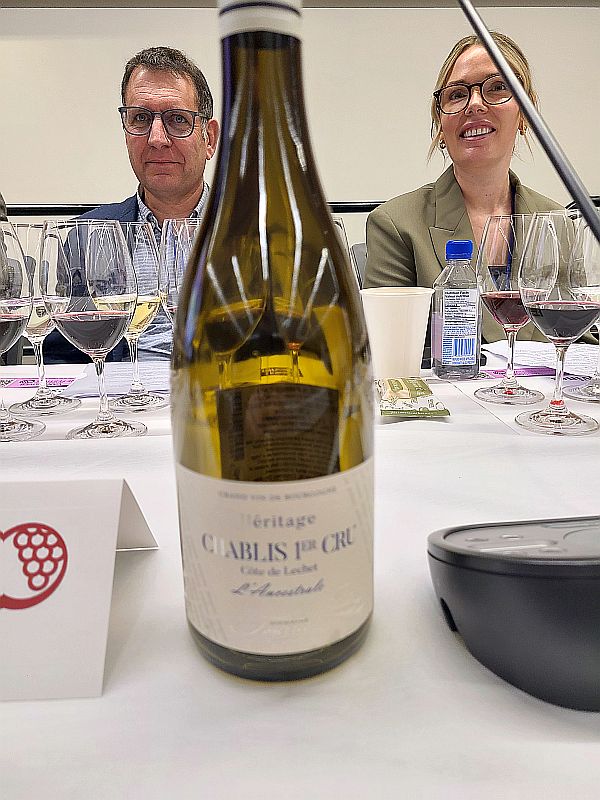
Jean-Luc Fourrey presented his “l’Ancestrale,” a wine tied to the Kimmeridgian limestone soils of the Côte de Léchet in Chablis. This geological origin imparts the signature “straight and mineral” character synonymous with premium Chablis. This wine pays tribute to family heritage, honouring his grandparents and drawing fruit from vines planted in his birth year, 1969. Jean-Luc is the fourth generation running the winery.
While rooted in tradition, the winery is also adapting to modern challenges. To preserve freshness and the hallmark minerality of Chablis in a warming climate, the wine is fermented in amphorae and stone vessels rather than the more typical wood or stainless steel. But, cultural traditions remain equally important in the region, including the annual celebration of Saint Vincent around January 22nd, when growers and communities gather to pray for a successful harvest while celebrating the enduring culture of Burgundy wine.
Domaine Fourrey Côte de Lechet 1er Cru Heritage “l’Ancestrale” 2023, Bourgogne, France – medium lemon colour. Light stone fruit and mineral aromas. Medium body with a soft, smooth mouthfeel and a buttery texture. Citrus, mineral, and a touch of toast on the palate. Medium-plus length finishing with buttered toast, stoniness and citrus flavours. A textured wine. –
Kailee Frasch, Quails’ Gate Winery
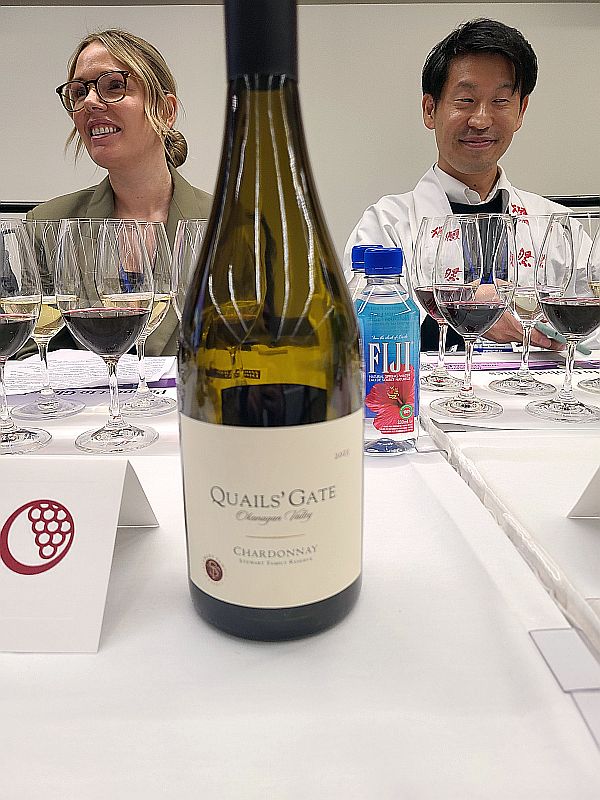
The Okanagan Valley was represented through two perspectives from Quails’ Gate Winery in West Kelowna and Burrowing Owl Estate Winery in Oliver. The modern wine industry took shape in the late 1980s with a major vineyard transition that saw hybrid grapes removed and replaced with European Vitis vinifera. Kailee highlighted the moderating influence of Okanagan Lake that cools the vineyards during the intense summer heat and offers critical protection against winter kill, resulting in a balance of rich ripeness and vibrant acidity in their Stewart Family Reserve Chardonnay.
While Chablis is defined by centuries of expectation, Quails’ Gate Winery represents the spirit of youth and adaptability. Celebrating the 30th anniversary of the Stewart Family Reserve Chardonnay, Kailee outlined how a lack of centuries-old restrictions allows for a culture of constant innovation.
Quails’ Gate Winery Stewart Family Reserve Chardonnay 2023, Okanagan Valley, BC – a deeper, bright lemon colour. Deep aromas of tropical fruit, toast, and butterscotch. This wine is dry with a smooth, soft mouthfeel. Lower acidity. Deep flavours of tropical fruit and butterscotch. –
Takenari Yamamori, Dassai Saké Brewery
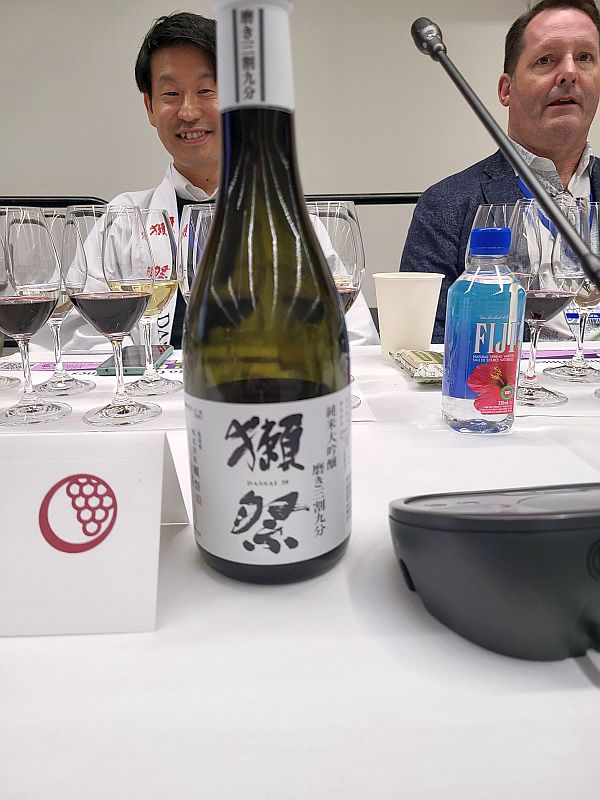
Takenari Yamamori of Dassai offered a fascinating perspective on saké, suggesting that its character is shaped less by terroir and more by the intellect and technical skill of the brewers themselves. The brewery is renowned for its meticulous approach to rice polishing, often reducing the grain to 39 percent or less of its original size to craft premium Junmai Daiginjo. This intense polishing removes outer layers of the rice, helping produce a sake known for precision, purity, and elegance. Dassai has also pushed innovation well beyond the brewery walls. In an ambitious experiment, the company sent yeast and rice to the International Space Station to explore how fermentation behaves in zero gravity, imagining a future where sake might one day provide a touch of enjoyment and cultural connection for human settlements on the moon.
The inclusion of sake in a wine seminar signals a global shift toward recognizing its sophistication. Takenari Yamamori of Dassai, located in the Yamaguchi Prefecture, detailed the historical decline of “cheap and strong” bulk production in favour of the premium “Junmai Daiginjo” category.
(Karl: Junmai Daiginjo is a premium sake category made with rice polished to 50% or less of its original size, with no added brewer’s alcohol. It is characterized by high, fruity/floral aromas, a delicate, refined flavour profile, and a clean finish.)
Dassai Saké Brewery Dassai 39 NV, Yamaguchi, Japan – I was amazed at how perfectly clear and bright this saké was in the glass, as it stood out from the lemon and garnet coloured glasses of wines that surrounded it. It had a light floral nose with more floral on the palate. Dry with a soft mouthfeel. Very delicate flavours of floral along with pears.
Rod Hallam, Villa Maria
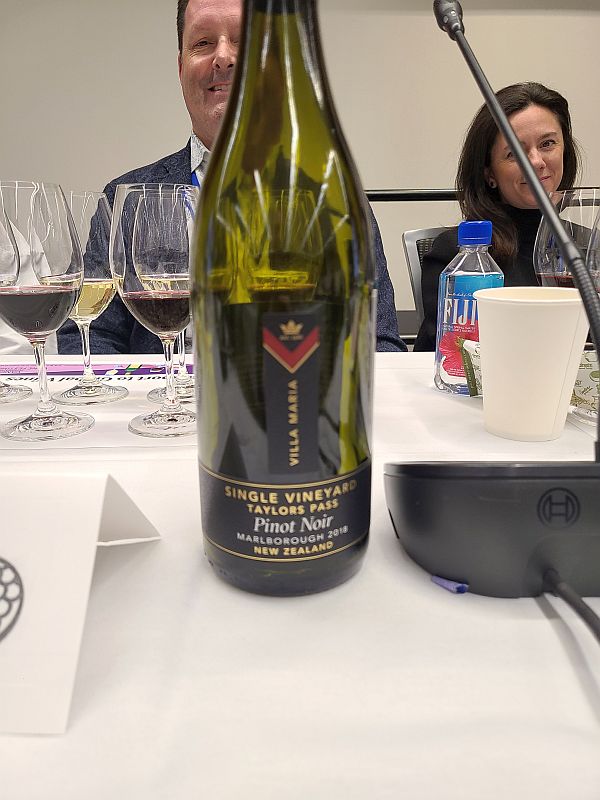
Rod Hallam from Villa Maria spoke about the Taylor’s Pass Vineyard in Marlborough, highlighting how New Zealand stands as the youngest wine region represented on the panel <Karl: BC’s modern winemaking started in the late 1980’s> . Modern winemaking in New Zealand only truly began in the 1970s, with growers embracing a practical “give it a crack” mindset that encouraged experimentation rather than strict adherence to Old World traditions.
The geology of the region plays a role in shaping the wines, with soils containing a gray-blue mudstone, along with graywacke stones carried down from riverbeds that help contribute to the purity and aromatic lift found in Pinot Noir. Despite Marlborough’s global reputation, total plantings of Pinot Noir across New Zealand remains relatively small, covering an area roughly thirteen times the size of Stanley Park. That modest scale has fostered a strong culture of sustainability, with producers focused on keeping the land pristine for future generations.
Villa Maria’s Taylor’s Pass Vineyard in Marlborough, is a site defined by the cool breezes of the Mt. Tapuaenuku peaks. These alpine influences regulate temperatures, ensuring the high-acid profile necessary for premium Pinot Noir.
Villa Maria Taylor’s Pass Pinot Noir 2018, Marlborough, New Zealand – A medium intensity, translucent garnet colour. Medium intensity aromas of toast, red fruits and strawberries. Dry, medium body with a lean mouthfeel. Red fruit flavours along with touches of pepperiness, dill and some bitterness. Medium length with red cherry flavours toward the finish.
Claudia Varas Rubio, Famille J.M. Cazes (Famille Gassier)
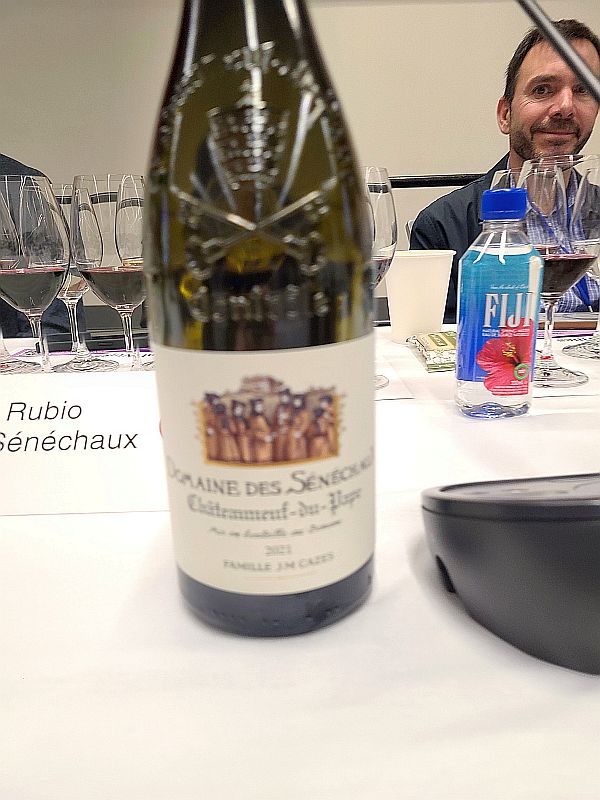
Claudia Varas Rubio of Famille J.M. Cazes shared the rich historical backdrop of Châteauneuf-du-Pape, whose name translates to the “New Castle of the Popes.” During the era when the papacy resided in nearby Avignon, the region became closely tied to the Church, and the Popes’ fondness for its wines helped establish the area’s lasting prestige.
The vineyards themselves are equally distinctive, covered with large rounded river stones, deposited by ancient glacial movements, known locally as galets roulés, often described as “pudding stones,” which absorb warmth during the day and slowly release heat at night, helping grapes ripen despite the cooling influence of the powerful Mistral wind.
Claudia noted that the environment is tough, characterized by the piercing, dry Mistral wind and extreme temperature fluctuations. But, this toughness is transformed into the generosity of the Grenache-based blend as the ruggedness forces the vines to struggle, concentrating the fruit and resulting in a powerful wine.
Famille JM Cazes Domaine des Sénéchaux Châteauneuf-du-Pape AOC Rouge 2021, Rhône, France – this wine is primarily a Grenache, Syrah, and Mourvèdre blend. It has a deep garnet colour and shows teardrops on the sides of the glass with swirling. It has a light intensity, but deep aromas of raspberries and cherries. Dry, medium-plus body with a smooth mouthfeel. Ripe, juicy red fruits and raspberries, plus pepperiness on the palate. Higher acidity and medium tannins. A long lingering finish.
Leandro Rigo, UKO Wines
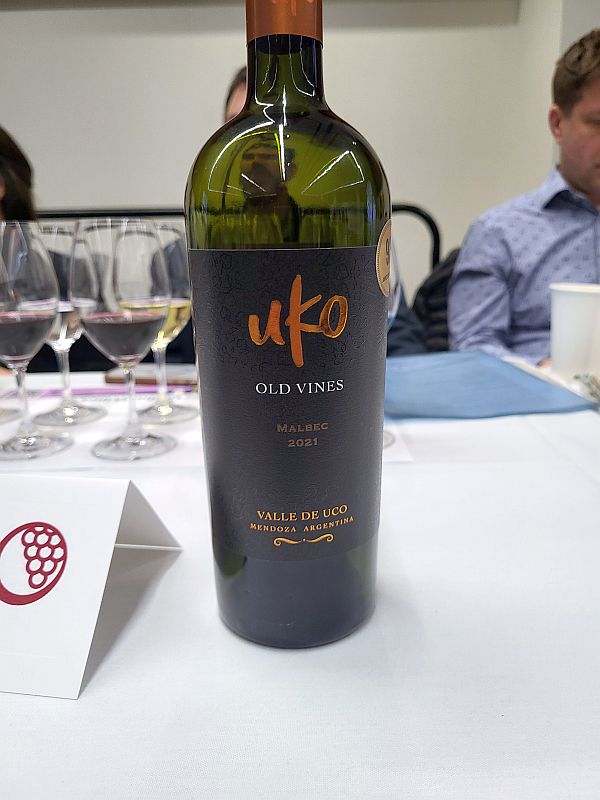
Leandro Rigo, owner of UKO Wines, spoke about the deep connection between winemaking and the dramatic landscape of the Uco Valley, where vineyards sit in the shadow of the Andes Mountains. In this semi-arid environment, viticulture depends entirely on snowmelt flowing down from the Andes; water that Leandro described as quite literally giving life to the desert. With many vineyards planted above 1,000 metres in elevation, the region benefits from sunny days and sharply cooler nights, a combination that helps shape expressive Argentinean Malbec with both power and freshness.
UKO Wines Old Vines Malbec 2021, Mendoza, Argentina – this wine, made with 50 year old vines, is opaque garnet-black in the glass. Medium intensity, deep aromas of black fruits and oak. Dry, medium-plus body with a smooth mouthfeel. Deep, ripe black fruit flavours, pus light pepperiness and a touch of dill. Medium acidity and tannins with the tannins firming up on the finish.
Stephen Neumann, Burrowing Owl Estate Winery
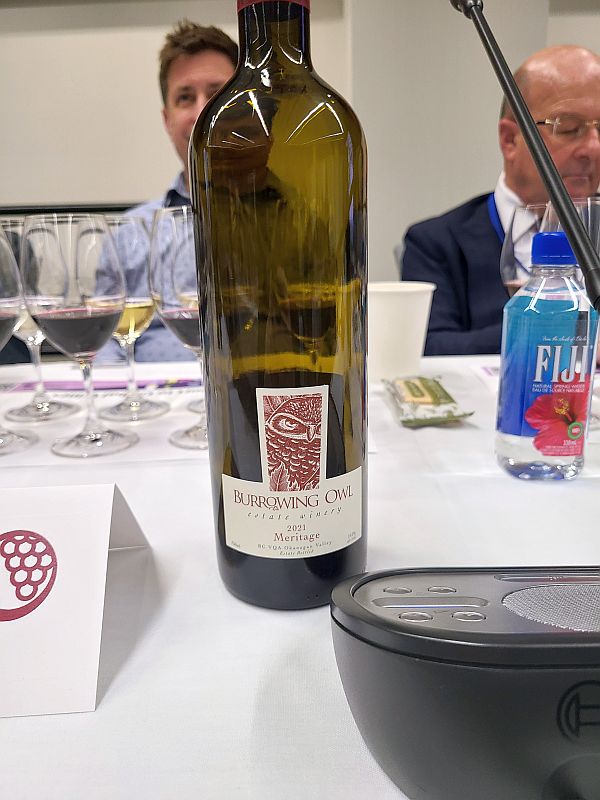
Stephen Neumann from Burrowing Owl Estate Winery reflected on the remarkable transformation of Oliver in the Okanagan Valley, once known in the 1920s as the “Cantaloupe Capital of Canada.” The turning point came in 1988 with a government-supported vineyard renewal program that removed hybrid grapes and replaced them with European Vitis vinifera, setting the stage for the modern Canadian wine industry.
The winery’s Meritage, (a North American trademarked combination of Merit and Heritage), a Bordeaux-inspired blend of Cabernet Sauvignon, Merlot, Malbec, and Cabernet Franc, is a result of the vineyard renewal program. The 2021 vintage shows how well the South Okanagan can ripen these classic varieties, delivering savoury pyrazine notes alongside layered fruit and structure, and illustrating how the region has evolved from simple fruit-driven wines to bottles with greater depth getting international recognition.
Burrowing Owl Estate Winery Meritage 2021, Okanagan Valley, BC – a deep garnet colour. Medium intensity, deep aromas of black fruit and leather. Dry, fuller body with a smooth, lean mouthfeel. Black fruit flavours along with leather, a touch of dill, and light pepperiness. Medium acidity and drying tannins. A touch of butteriness toward the finish. –
Fiorenzo Rista, Ville Metamorfosis
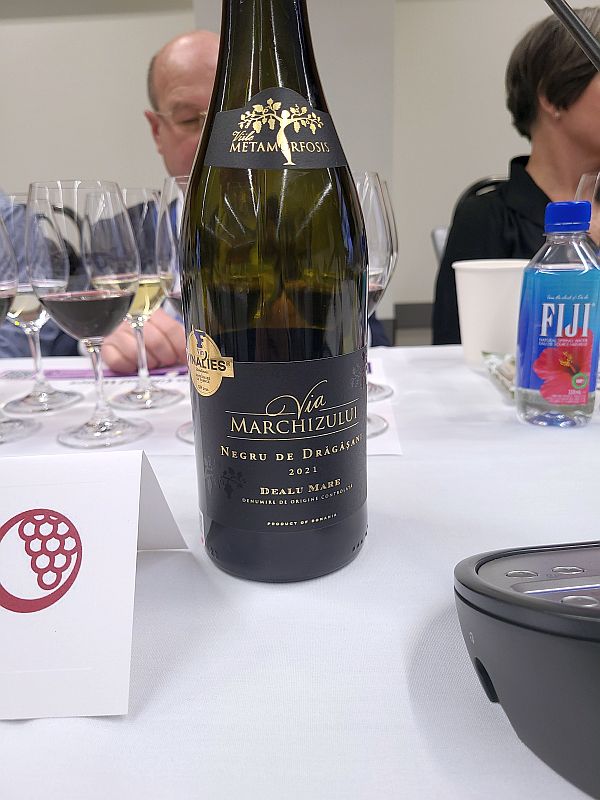
Fiorenzo Rista of Ville Metamorfosis, from Romania, an Italian winemaker, presented a wine from the Dealu Mare region made with the hybrid grape Negru De Dragasani, a modern cross developed in 1993. The philosophy behind the project is rooted in authenticity, with a focus on allowing Romanian soils and vineyards to speak for themselves rather than imitating the well-known styles of France or Italy. Wine culture in Romania remains deeply tied to everyday life, where a bottle on the table is seen as something meant to be shared, reflecting a tradition of generosity, hospitality, and community around food and family.
Viile Metamorfosis Via Marchizului Negru De Dragasani 2021, Dealu Mare, Romania – opaque garnet-black in the glass. Light intensity, black fruit nose. Dry, medium body with a soft, smooth mouthfeel. Sweet black fruit flavours. Lower acidity and fine grained tannins that get firmer and drying on the finish.
Kelly Ladbrook, Barossa Valley Estate
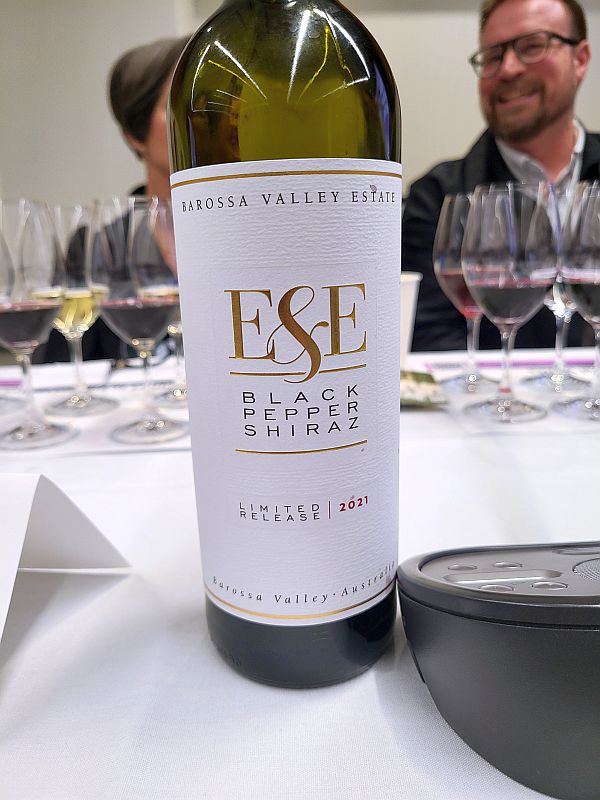
Kelly Ladbrook from Barossa Valley Estate offered a perspective that challenges the long-standing stereotype of bold Australian wines by presenting their icon E&E Black Pepper Shiraz from the Barossa Valley. The “E&E” name traces back to a group of growers who once marked their best barrels with their initials, and in one memorable vintage the top fruit happened to come from two growers whose surnames both began with the letter E, giving rise to the collaborative label.
The region carries a deep sense of community history, symbolized by the famous Seppeltsfield Road, often called the Avenue of Hopes and Dreams, where rows of palms were planted during the Great Depression and wartime years to provide employment for local residents. Today, many producers in the Barossa embrace a more refined philosophy in the cellar, aiming for wines that emphasize definition, structure, and complexity rather than sheer power, reflecting a broader regional shift toward substance over show.
Barossa Valley Estate E&E Black Pepper Shiraz 2021, Barossa Valley, Australia – Kelly noted that this wine is not produced each year, only the best parcels are selected for this wine, and that this wine will age ten or more years. It has an opaque garnet-black colour. Light aromas of overall black fruits, plus sweet black fruits and some oak. The wine is dry, medium-plus body with a soft mouthfeel. Black fruit flavours plus pepperiness on the palate. Medium acidity and soft tannins.
To Conclude
The seminar concluded by synthesizing the overarching lessons of this global tour. The “Passport” journey demonstrated that while geography provides the foundation, it is the culture and human hands in the vineyard and winery that provides the soul.
Thank you to the Vancouver International Wine Festival for providing me with a media seat to attend this seminar.