Cabernet Franc has found a remarkable home in the diverse terroirs of Ontario, producing wines that are both vibrant and distinctive. Over the past several months I’ve tasted through 28 different bottles of Cabernet Franc, primarily from the Niagara peninsula, but also two bottles from Prince Edward County. I wanted to examine how the unique climate and soil composition of the Niagara Peninsula, and Prince Edward County, shaped the character of Cabernet Franc. With this final article, I examine the common aromas and flavours of these Cabernet Franc wines and try to see if there is some relationship between the soil type in the region and if there are any unique aromas and flavours for these wines. Enjoy and learn.
The Ontario Cabernet Wines Reviewed
Here is the list of all the Ontario Cabernet Franc wines that I reviewed:
- Exploring the Terroir of Ontario Rosé Wines<span class="badg…
 Rosé wines are quite enjoyable in the summer while you are on your patio, enjoying a meal, but these wines fit in throughout the year with their red fruit flavours and bright acidity. In BC we are familiar with the ...
 - Ontario Chardonnay Review: Wine Aromas and Flavours by Soil…
 This is the final article for my Ontario Chardonnay Review. I’ve reviewed the wines, compiled tasting notes, identified soils associated with the participating wineries, and identified the weather conditions for each vintage. Are there any similarities between wines produced on ...
 - Ontario Chardonnay Review: Growing Seasons and the Wines
 I have been interviewing Ontario winery principals for many years about their harvest and the growing season. Weather and growing conditions can vary widely from year to year. For my Ontario Chardonnay Review I tried to get wines that were ...
 - Ontario Chardonnay Review: Soils of the Niagara Region and …
 Soil is one of the important factors influencing the aromas and flavours produced by wine grapes. For my Ontario Chardonnay Review, I checked with the Government of Canada National Soil Database (NSDB) Soils of Ontario to determine the soil types ...
 - Ontario Chardonnay Review: Dreas Blanc de Blancs Brut 2021<…
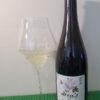 The last Chardonnay to review for my Ontario Chardonnay Review is a sparkling wine made by Drea’s Wine Co. which produces small batch, single vineyard, low intervention wines. Drea’s wines are certified by Sustainable Winegrowing Ontario. I really enjoyed tasting Drea’s ...
 - Ontario Chardonnay Review: Two Reserve Wines from Henry of …
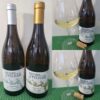 As I mentioned in an earlier post, I received four bottles of different Chardonnay produced by Ontario’s Henry of Pelham winery. I previously tasted their more entry level wines: Henry of Pelham Family Estate Classic Chardonnay 2025 and Speck Brothers ...
 - Ontario Chardonnay Review: Dobbin Estate Winery Chardonnay …
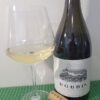 Ontario’s Dobbin Estate Winery does not talk a lot about itself. It lets their wines do the talking. Last year I tasted their Dobbin Estate Cabernet Blend 2020, which I rated as one of my top wines for 2025. They ...
 - Ontario Chardonnay Review: Wending Home Estate Vineyards &#…
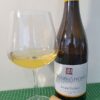 I received three vintages of Chardonnay from Ontario’s Wending Home Estate Vineyards & Winery as part of my Ontario Chardonnay Review. I reviewed the 2020 and 2021 vintages previously (see article), and today I am reviewing their 2023 vintage. Without ...
 - Ontario Chardonnay Review: Wending Home Estate Vineyards &#…
 Last year I was tasting through Ontario Cabernet Franc wines, and I adored the wines from Wending Home Estate Vineyards & Winery Estate Vineyard, so I had great expectations when I received Chardonnay wines to review as part of my ...
 - Ontario Chardonnay Review: Niagara Peninsula Winegrowing Reg…
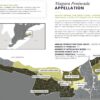 You may have noticed that I have been reviewing and writing about southern Ontario Chardonnay wines, from the Niagara Peninsula in particular. I have undertaken my “Ontario Chardonnay Review” where I review a selection of wines from across southern Ontario, ...
 - Ontario Chardonnay Review: Two Wines from Henry of Pelham P…
 The next Chardonnay that I am tasting for my Ontario Chardonnay Review comes from Henry of Pelham. I received four bottles of their Chardonnay wines. Today I am tasting two of them: Henry of Pelham Family Estate Classic Chardonnay 2025 ...
 - Ontario Chardonnay Review: Two Wines From Cave Spring Viney…
 For my Ontario Chardonnay Review, Cave Spring Vineyard sent me four bottles of their various Chardonnay wines. In my previous article I reviewed two of the wines and I am now reviewing the remaining two wines. This winery is one ...
 - Ontario Chardonnay Review: Two Wines From Cave Spring Vineya…
 My next set of Ontario Chardonnay wines to review comes from Cave Spring Vineyard. This winery is one of the pioneers in the area, having been around for four decades. They are certified by Sustainable Winegrowing Ontario and their wines ...
 - Ontario Chardonnay Review: Tawse Quarry Road Vineyard Chardo…
 My next wine for my Ontario Chardonnay Review comes from Tawse Winery, located in the Twenty Mile Bench area of the Niagara Peninsula. I received their Tawse Quarry Road Vineyard Chardonnay 2023 for the review. They farm organically, although I ...
Winery Location
Here is a Google Maps‘ map showing the location of the wineries that provided Cabernet Franc samples for me to taste. The map is centred on the Niagara Peninsula. One winery, Grange of Prince Edward, is located in Prince Edward County, which is north and east of this map window. You can pan across this map view to see the location of this winery.
Soil Maps
There is always much discussion about how soil affects grapes. The most common relationship is how limestone provides high acidity, a mineral backbone, and elegant, flavours to Chardonnay. What soils are in the Niagara region, and does soil type affect Cabernet Franc’s aromas and flavours? I was able to merge a jpg of a generalized soil map (1:100,000 scale which is quite coarse) of the Niagara region with Google Earth Pro which contained the locations of the Ontario wineries that submitted Cabernet Franc wines for me to review.
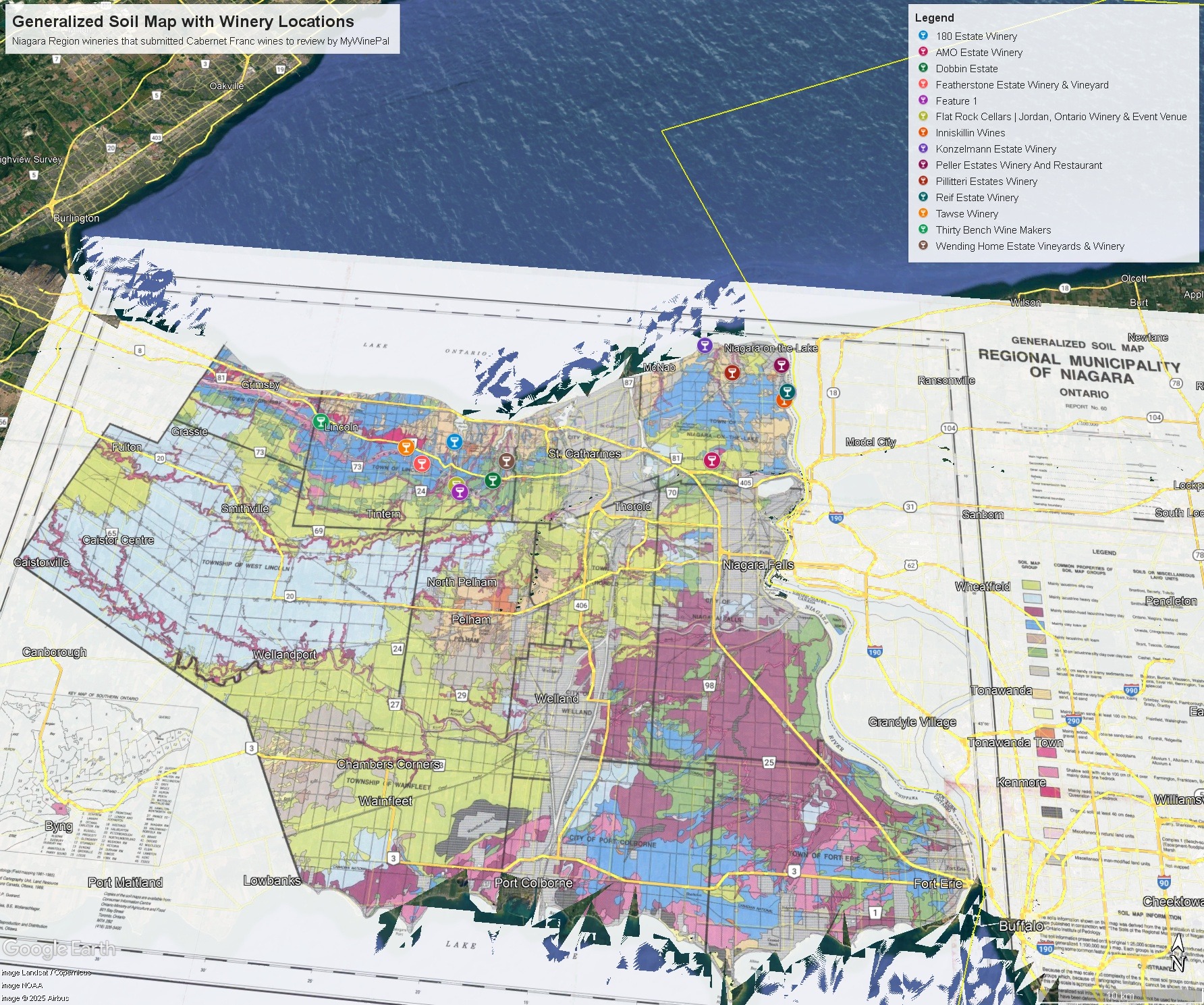
From the overlay of the winery locations with the generalized soil map, I extracted the following soils associated with each winery location. It must be noted that the vineyard, containing the Cabernet Franc grapes, may be at a different location from the winery, but I had to assume the vineyard is located at the winery.
| Winery | Soil Type |
| Thirty Bench | mainly clay loam till |
| Sue-Ann Staff | mainly clay loam till |
| Reif Estate | mainly clay loam till |
| Drea’s Wine | mainly clay loam till |
| Inniskillin Wines | mainly clay loam till |
| AMO Estate | mainly lacustrine silty clay |
| Konzelmann | mainly lacustrine very fine sandy loam, loamy sand, and sand |
| Pillitteri | mainly lacustrine very fine sandy loam, loamy sand, and sand |
| Wending Home | mainly clay loam till (or mainly reddish-hued lacustrine heavy clay) |
| Dobbin | 40-100 cm lacustrine silty clay over clay loam till |
| Peller Estates | 40-100 cm sandy or loamy sediments over lacustrine clays or loams |
| Flat Rock Cellars | shallow soils with up to 100 cm of soil over mainly dolostone bedrock |
| Tawse Winery | shallow soils with up to 100 cm of soil over mainly dolostone bedrock |
| 180 Estate | miscellaneous natural land units |
| Featherstone | miscellaneous natural land units (or mainly clay loam till) |
The only soil type that has a relatively large number of samples is the “mainly clay loam till”, so I did a little more analysis on those tasting notes in the next section below.
Word Clouds
One of the ways that I like to visualize the aromas and flavours of a group of wines is via a word cloud. A word cloud picks tallies the number of times certain words are shown and then draws them as a large size for the most used, to a small size for the least used words. Colour can also be added to the text to enhance the differences in word usage. Here are the word clouds generated from my tasting notes for the 28 different Ontario Cabernet Franc wines. Most of the wines were from the 2022 and 2023 vintages.
(I used https://www.freewordcloudgenerator.com/generatewordcloud to generate the word clouds.)
Aromas
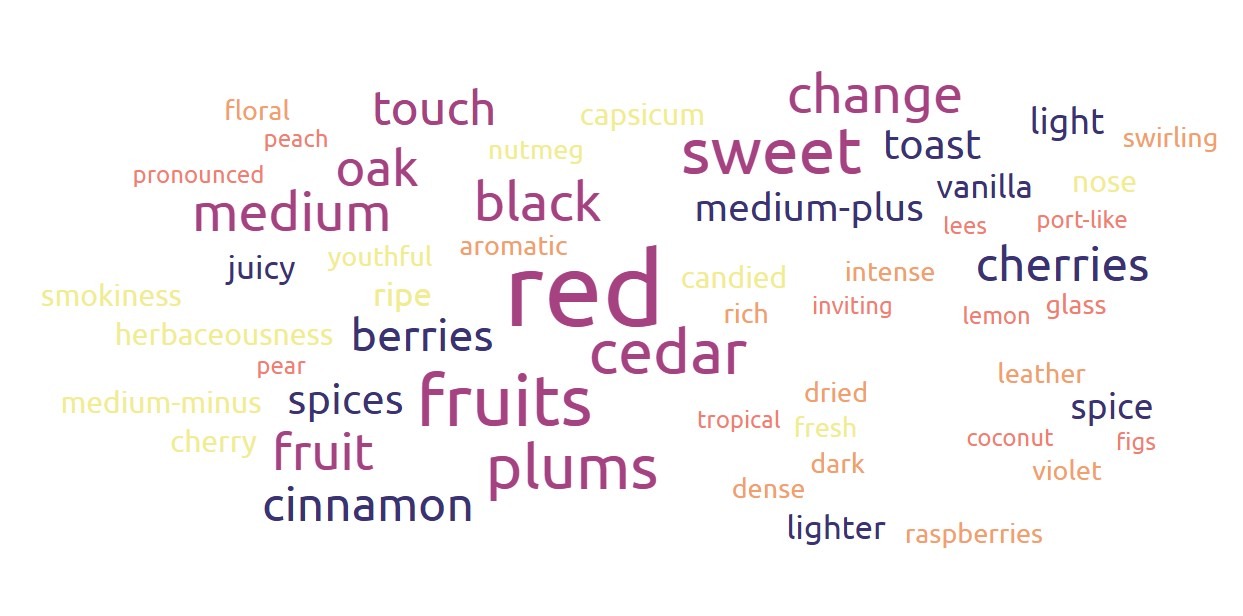
The largest words in this word cloud are red, fruits, plums, cedar, cherries, cinnamon, and oak. All these words are very good descriptors for Cabernet Franc and show that these wineries are producing wines with prominent red fruit aromas and that the wines have oak barrel contact. On the intensity side, medium is largest followed by medium-plus, showing that these wines are fruit-expressive on the nose. I note that the word “sweet”, shows up, but would better be termed “fruity” as you cannot smell sweet. Fruity and sweet are commonly used interchangeably. As these wines are still young, tertiary aromas like leather or figs are quite small in this word cloud. As the wines gain more age in the bottle, these tertiary aroma terms should get larger in a word cloud.
Flavours
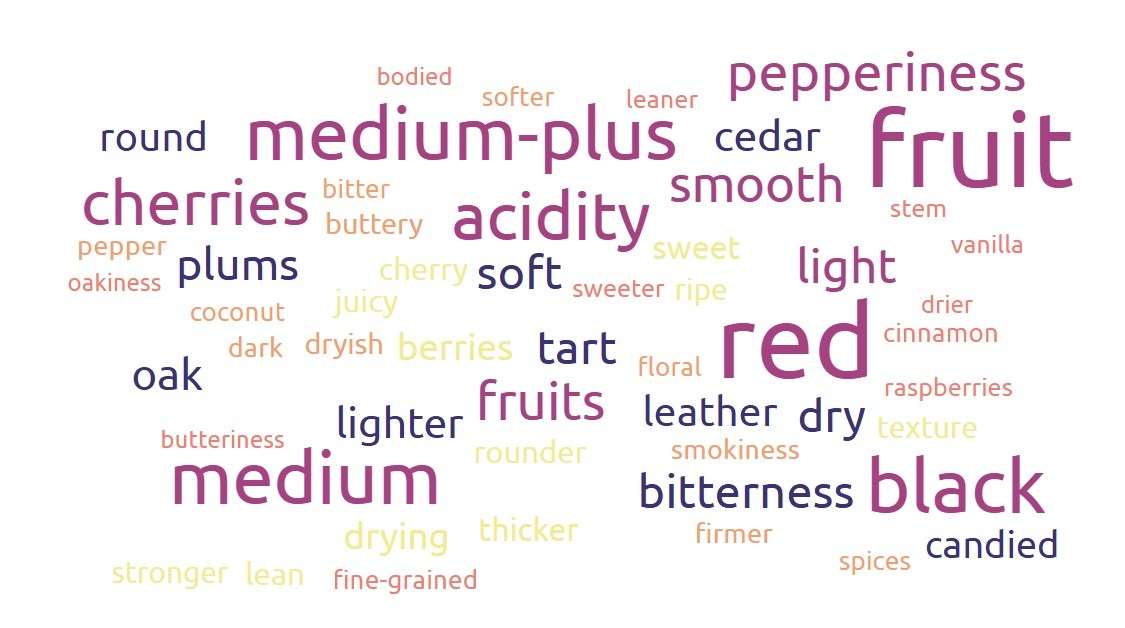
Niagara Cabernet Franc shows red fruits and cherries with black fruit and pepperiness on the palate. Medium to medium-plus body. There is a lesser amount of candied fruit, leather, plums, and bitterness from these wines. Smooth, round, and soft show up below the previous groupings of words. Overall I think a good representation.
Aromas and Flavours for “Mainly Clay Loam Till”
As I mentioned, the soil type “mainly clay loam till” was the most common type at five winery locations, I generated word clouds for those Cabernet Franc wines. Is there much difference from the overall word clouds?
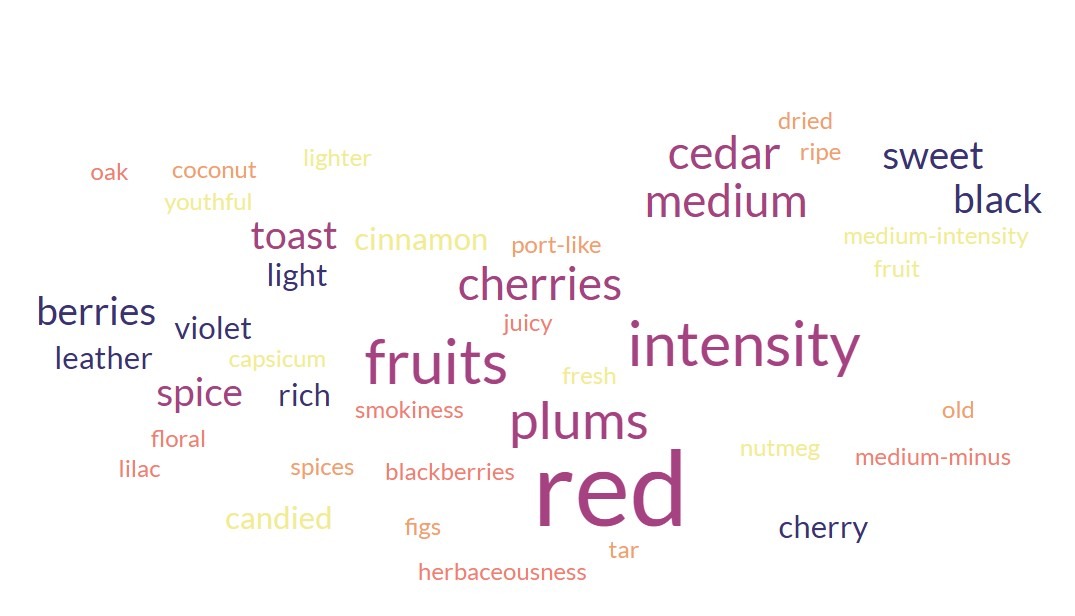
Comparing these aromas to the full wines tasted, red fruits, plums, berries, cedar, spice, and cherries are common to both and more often mentioned. I think the intensity of aromas for this subset of wines is lighter than for the full set of wines.
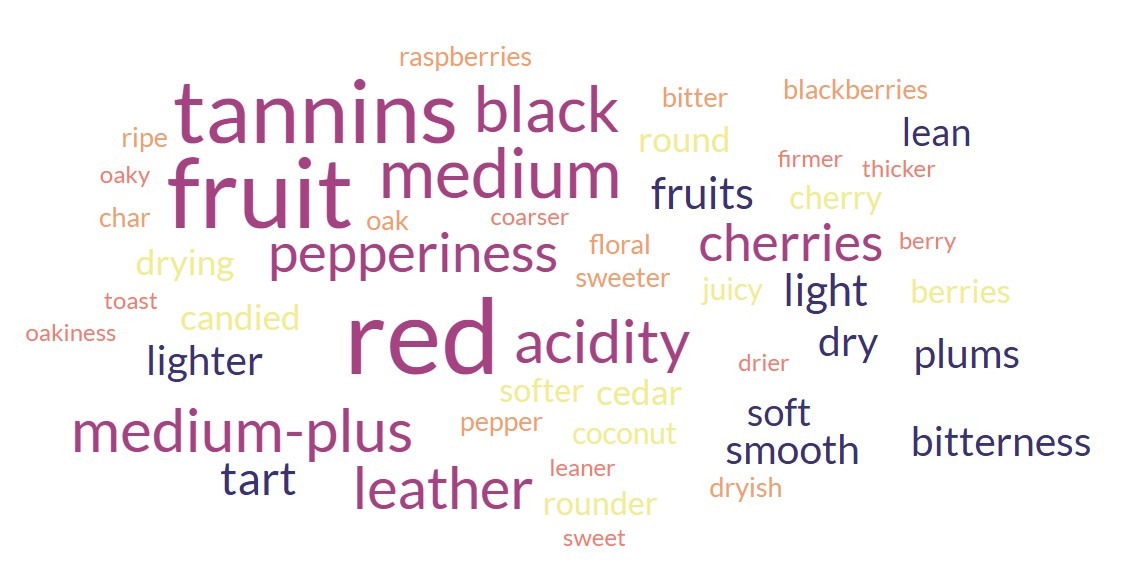
Reviewing flavours, red fruits and acidity stand out in both, along with cherries and pepperiness. There are more differences in flavours. The whole set shows more black fruits, with round and soft, while the subset notes lean and light. Tartness and bitterness are indicated between the two datasets, but these words are not as prominent in either word cloud. Both datasets also show the wines as medium to medium-plus in body.
Do you see any other similarities or differences in the aromas and flavours? This was an interesting experience.
Thank You
Thank you to all the wineries that participated in my comparison of Niagara Cabernet Franc, as well as Wines of Ontario, who put out my request to their members. You can order the wines that I tasted from the winery websites. Those links are in the articles I listed at the top of this page. Some wines may also be available at LCBO stores. In my articles, I did note which wines are at LCBO stores.
I hope we may get Ontario Cabernet Franc wines here in BC when the interprovincial trade barriers come down. There are many nice wines to enjoy.