The 2026 BC harvest was one of cautious optimism for areas that were affected by smoke in the interior and effusive optimism for those areas outside of the forest fire areas, such as the Fraser Valley and Vancouver Island.
Now that it is late November and the wines are all in tanks or barrels, what do BC winemakers have to say about their wines and growing season? This year I interviewed six BC winemakers from across BC’s grape-growing regions to get their take on this year’s vintage toward the end of November 2026. The winemakers I interviewed are:
- Bradley Cooper, Director of Sales and Winemaking, Therapy Vineyards & Inn
- Jesse Steinley, Winemaker, Monte Creek Winery
- Chris Turyk DipWSET, Director of Marketing & Sales, Unsworth Vineyards
- Mark Hopley, Winemaker, Hester Creek Estate Winery
- Grant Stanley, Winemaker, Spearhead Winery
- Gary Zhygailo, Winemaker, Chaberton Estate Winery
Where Are These Wineries?
I colour-coded the pins on this map to match the colours associated with the winemaker names that I have listed above.
My Interview With the BC Winemakers
1. Where are your vineyards and winery located?
Bradley: The winery is located at 940 and 980 Debeck Road in Naramata. Vineyards are here too.
Jesse: We have 3 vineyards, all under the ownership of Monte Creek Winery/Sidhu And Son’s Monte Creek Ranch, located south of the South Thompson River with gentle north-facing slopes. Our Lion’s Head Vineyard is on the northern side of the south Thompson River with south-facing slopes. Our Keremeos Vineyard is located south of the Similkameen River at the foot of the Cathedral’s facing north.
Chris: Our winery and home vineyard are in Mill Bay, in the Cowichan Valley on Vancouver Island. We also work with other vineyard sites within the Cowichan Valley, each contributing its own character to our wines.
Mark: Hester Creek sits on the Golden Mile Bench near Oliver.
Grant: The winery and primary home vineyard are located in East Kelowna, with contract growers in Naramata and Summerland.
Gary: Our own vineyards are located in Fraser Valley, and contracted vineyards are in Okanagan Valley and Similkameen Valley.
2. How would you summarize your 2026 harvest in terms of timing, yield and fruit quality compared to 2025, which was an outstanding vintage, and your longer-term average?
Bradley: It was an excellent growing season, with early bud, early flower, and a decent crop load. Smoke was troublesome.
Jesse: 2026 was dry and hot, with a cooler harvest when compared to 2025; however, the timing was similar for our Keremeos vineyard to 2025. Our MCR and Lion’s Head sites were a little bit later due to the cooler fall temperatures, but that worked out well for phenolic ripeness and flavour development.
Chris: Early! An early budbreak set the pace for what became our earliest harvest on record. The growing season was consistently warm, without the extreme heat that can make vineyard management more challenging.
Mark: 2026 shaped up to be one of our best harvests on record. We completed harvest at the start of November at just over 1,500 tons. That is up around 11% from the 1,350 tons of 2025. Berries are smaller than last year, which has worked in our favour, giving us more concentrated flavour and intensity in the fruit.
Grant: Harvesting took place throughout October, finishing with a late-harvest Riesling in early November. Production was down to roughly half of a typical vintage, processing around 45 tons compared to their long-term average of approximately 100 tons. The quality of the harvested fruit (Pinot Gris, Pinot Noir, and Riesling) is excellent.
Gary: It was an early harvest. We picked the first grapes in Similkameen Valley in the end of August. I consider this harvest as controversial. On one hand, we had some smoke-affected vineyards in the Okanagan that we decided not to pick, on the other hand, grapes that were not smoke-affected were very good quality. In the Fraser Valley, the harvest was beautiful with good and healthy grapes.
3. Excluding discussion of forest fire smoke, did the summer heat have any adverse effect on the vineyards, or did you have a typical year? Did it affect cluster size, berry size, or flavour development?
Bradley: There were very few extreme weather incidents, if any, in the Naramata area as far as heat spikes or cold events.
Jesse: We did see lower juice yields in a lot of our varieties, primarily due to the prolonged drought conditions. So smaller clusters in some varieties and overall less juice extraction.
Chris: We did not experience significant adverse effects from summer heat. Our proximity to the Salish Sea helps moderate temperatures, and this season was characterized more by consistent warmth than extreme heat events. The distinction matters that a warm season in Cowichan still takes place within a cool coastal climate. This year gave us excellent conditions for flavour development and ripening.
Mark: An early ripening season, with picking starting August 24, let us harvest the whites at their peak. The whites and rosés have great aromatics, and Viognier, Sémillon and Pinot Gris, all picked early at ideal ripeness, are the standouts I expect to be highlights of the vintage. The reds may be just as exciting. A long hang time gave us ripe phenolics, more flavour development and strong varietal expression to work with in the cellar, and I don’t remember such vivid, intense flavours from our reds in any previous year.
Grant: The growing season was warm enough for grapes to ripen nicely without extreme heat stress. Cooler autumn weather arrived in late September and early October, allowing for steady flavour development and balanced ripening.
Gary: Every year is now dryer and hotter. In Okanagan and Similkameen growers were on top of irrigation, so we didn’t have any issues with berry size. In the Fraser Valley, summer was warm and dry. October was actually one of the driest in the Fraser Valley.
4. Were your vineyards or contract vineyards affected by any forest fire smoke? If so, was the smoke mild or strong? Will you not harvest some of your grapes? If you were not affected by forest fire smoke, that is great news.
Bradley: We experienced smoke over most of a month starting in late July and extending into the last week of August. It was medium to heavy on most of those days. We assumed smoke aroma/flavour precursors early on and neighbours’ tests confirmed evidence of that. We began planning for mitigation procedures a few days after the Summerland / Bald Range fire took hold.
Jesse: Yes, we were affected; however, it wasn’t our first rodeo with wildfires. We pivoted on our production plan for certain varietals that tend to see more impact. Fortunately most of our varieties don’t show much or any smoke impact, so that was to our advantage. We’ve developed some mitigation techniques that work reasonably well on years like this. Some varietals are heavily impacted, so there was a section of crop abandoned due to smoke, but a small percentage.
Chris: We did not experience smoke-related issues in the fruit we harvested this year. That is something we are grateful for and never take for granted.
Mark: Wildfire smoke was a real concern across the region this season, and our thoughts are with the communities and growers most directly affected. Our distance from the fires played a role for us. We sent several red varietals for testing, are confident moving forward with the results, and are not rejecting any fruit. That means we can keep supporting the local growers we work with while maintaining the quality Hester Creek is known for, and we’ll use sound winemaking techniques and modern technology to keep the 2026 wines consistent with prior vintages.
Grant: Contracted vineyards in Summerland and Naramata were severely impacted by strong smoke from nearby forest fires that burned along vineyard borders for up to a week. Micro-fermentations and laboratory testing confirmed high levels of smoke taint, leading the winery to reject 100% of the contracted fruit from Summerland (Chardonnay, Pinot Noir, Gamay Noir) and Naramata. As a result, no Chardonnay was produced from the 2026 harvest. The home vineyard and neighbouring plots, plus a high-altitude vineyard near Big White experienced no smoke taint.
Gary: Unfortunately, some vineyards were affected by smoke, and we decided not to pick. Mostly red varieties.
5. Were there any varietals or blocks that surprised you that stood up to the hot weather, and how did you respond in your harvest strategy?
Bradley: I don’t consider 2026 an exceptionally hot year. Checking the data, Summerland had 42 days where the temperature hit 30C or above. The hottest day hit 36C Penticton was similar; 49 days at 30C or better, with the hottest day also at 36C. All the blocks did well in these consistent temps. Naramata doesn’t have an official reporting station.
Jesse: We implemented some later-season irrigation to delay some varieties that needed more time for flavour development. That’s a bit of a gamble if the weather turns for the worst, but fortunately it worked out well for us.
Chris: Not applicable this year. The broader story was the consistent warmth and orderly progression of ripening across our vineyard sites.
Mark: The whites and rosés have great aromatics, and Viognier, Sémillon and Pinot Gris, all picked early at ideal ripeness, are the standouts I expect to be highlights of the vintage. The reds may be just as exciting.
Grant: Because of their boutique size, they did not need to pick early to free up tank space. They waited until October for maximum ripeness, picking Pinot Gris first, followed by Pinot Noir, and ending with late-harvest Riesling.
Gary: As I mentioned, heat didn’t affect the quality of the grapes that we received. Growers were on top of everything.
6. Given the fruit harvested this year, did you have to make any changes in the winery (fermentation vessels, maceration time, maturation regime) to reflect the crop and style you wish to express?
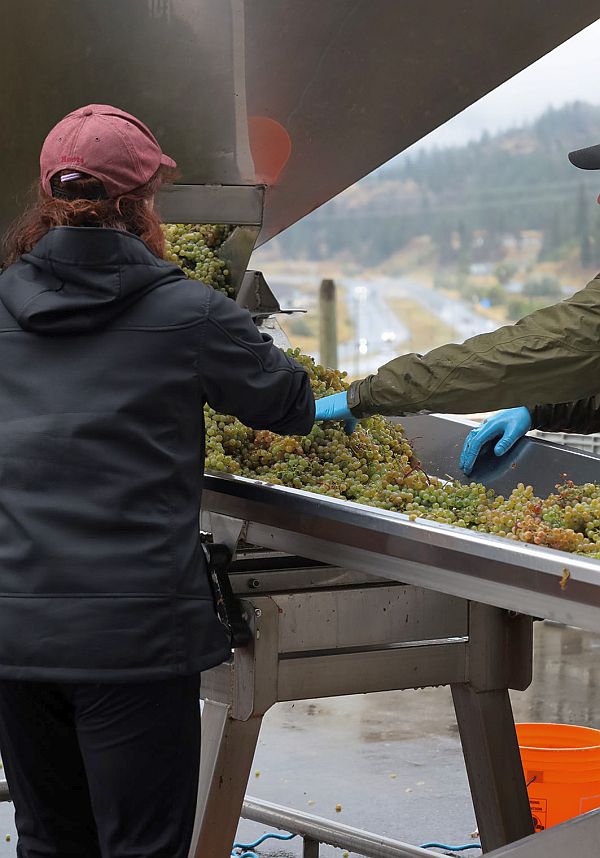
Bradley: As mentioned above, we employed a number of procedural and interventionist tactics to reduce the impact of fumé Ponderosa. So far, so good. We chose not to make red wine this year, diverting that crop to rosé production.
Jesse: Yes. Many changes, some to note, were less maceration time for certain smoke sensitive reds and early malolactic fermentation to assess for any mitigation needs before going to barrel. Increasing the number of press fractions to separate any impacted juice and wine from that which showed less smoke.
Chris: This was our second harvest in our new winemaking facility, where almost every major piece of equipment has been upgraded or replaced. The greatest benefit is the precision and flexibility it gives us to respond to individual vineyard blocks and lots. We approach each lot according to the fruit in front of us. The new facility gives us greater capacity to give every block the individual care and attention it deserves.
Mark:
Grant: No special processing or shortened macerations were required for the harvested fruit, as testing showed no smoke taint. Pinot Noir underwent a standard 7-day cold soak followed by up to 20 days of total skin contact, relying entirely on 100% resident yeast.
Gary: Yes, of course. To lower the risk of smoke taint, I reduce the time of maceration of both whites and reds, no cold soaking for reds. Lower pressing pressure on the press and separation of press fraction early.
7. Are you experimenting with anything new with this harvest, like making a sparkling wine, using amphora or skin-fermented white wines?
Bradley: No, this didn’t feel like a good year to experiment.
Jesse: Various smoke mitigation trials, and while we normally do a skin fermented and skin aged white, in a heavy smoke year it’s something I didn’t feel comfortable with this year as some of the smoke markers can end up in wines with extended skin contact time. We are planning on increasing our canned wine line up for release in early spring 2027 (currently we have a sparkling rosé, white blend and our split decision in can). We will be adding a sparkling white to the line up and possibly a still rosé.
Chris: Always. Each year, we conduct several small-lot trials exploring different winemaking techniques. We track the results through both laboratory analysis and tasting, using what we learn to refine our approach over time. One of the most exciting developments this year was receiving our first fruit from our new Sahtlam Vineyard. The quality was outstanding, and beginning to understand the character of a new site is a particularly rewarding part of our work.
Grant: The winery is experimenting with Marquette, a cold-hardy hybrid variety. Nothing for this vintage as the vines are still growing to reach maturity for picking.
Gary: Nothing really extra this year. Same production technics. The only new thing this year is a new rose wine made of Pinot Noir. Also, now we package our Chaberton Pink in 4 L Bag in a Box format.
8. What are you going to do to celebrate the completion of the Harvest?
Bradley: We’ll be welcoming everyone to our open house during the local Winterfest celebration November 20-21. https://naramatabenchwinterfest.com/
Jesse: Many of our seasonal harvest staff travel internationally to work with us, and our end-of-harvest tradition offers a little taste of life in Canada: dinner at a locally owned establishment, followed by beer and hockey. This year, the Noble Pig Brewhouse hosted our dinner before we headed to watch the Kamloops Blazers take on the Vancouver Giants. The Blazers delivered a win, and the evening finished with karaoke at a local pub—a fitting chance for everyone to trade the work boots for a microphone.
Chris: Part of the celebration is simply taking a moment to appreciate how smoothly the season unfolded. Fruit arrived at a steady, manageable pace, giving our vineyard and cellar teams the time to work thoughtfully through each lot. That is not something we can count on every year in Cowichan!
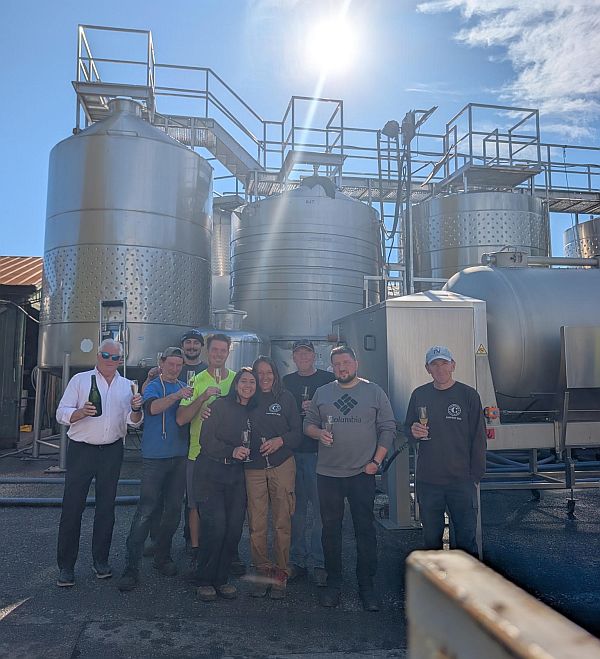
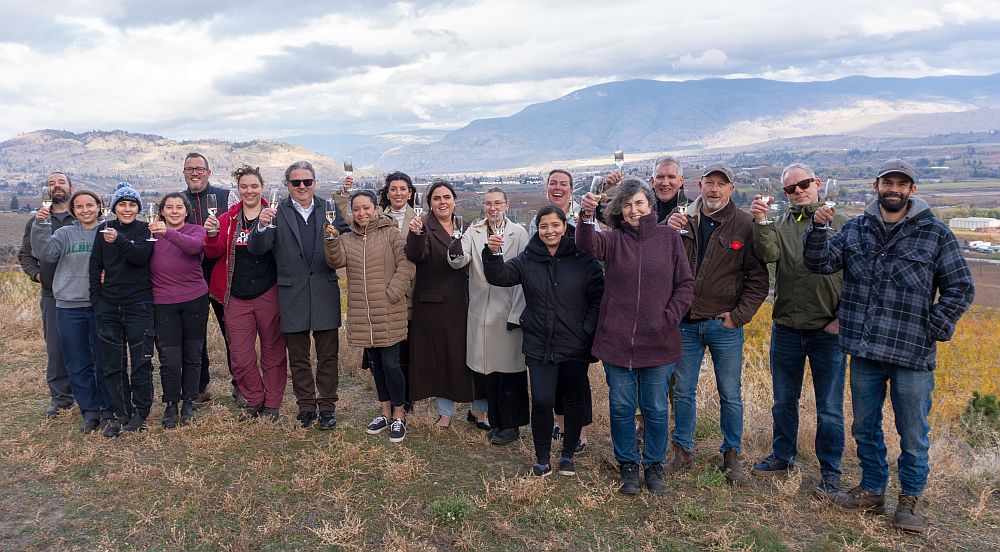
Mark: To celebrate the season, our team recently gathered at our newly acquired vineyard land, known as the “Rattlesnake Vineyard,” which sits on the Golden Mile Bench and connects to our estate property, for a toast with our Old Vine Brut. We’d also love to share our Winemakers Estate Dinner on Saturday, November 28th, featuring our Origin Wines series: The Judge, Garland and Undici.
Grant: Vacation in Mexico!
Gary: Sleep, have some sparkling, relax at home.
9. Is there anything that you would like Canadian wine lovers to know about your wines or winery?
Bradley: Our Naramata wineshop is open year round (unusual out here in the sticks) for drop in or appointment tastings.
Jesse: We are certified Organic, BC family owned, on the edge of the extremes and freaking awesome.
Chris: Cowichan is developing a distinctive voice within Canadian wine, and we are excited to help tell that story. Our focus is firmly on Pinot Noir, Chardonnay and Pinot Gris, alongside an established sparkling wine programme, rosé and other cool-climate wines.
Grant: The winery expressed deep appreciation for their 1,000+ Wine Club members who supported them through recent low-volume vintages. They are expanding distribution back into Vancouver and Alberta while warmly inviting wine lovers to visit their tasting room in East Kelowna for tastings.
Gary: Come to visit us in Langley. We have nice picnic area and Bacchus Bistro with French cuisine.
Summary of the Season Based on Winemaker Responses
2026 Harvest Overview
British Columbia’s 2026 harvest was generally early, warm and dry, with excellent fruit quality reported by several winemakers. The growing season varied considerably by region, however, and wildfire smoke became the defining challenge for many Okanagan growers. Bradley Cooper of Therapy Vineyards described an excellent growing season in Naramata with early budbreak, flowering and a good crop, while Jesse Steinley of Monte Creek Winery reported a dry, hot season followed by a cooler fall that helped extend ripening. On Vancouver Island, Chris Turyk of Unsworth Vineyards experienced the earliest harvest on record following early budbreak and consistently warm conditions. Hester Creek’s Mark Hopley called 2026 one of its best harvests, while Spearhead Winery and Chaberton Estate Winery both reported earlier harvests but very different impacts on yield and fruit availability.
Dry conditions were a common theme, although the effects varied by vineyard. Monte Creek experienced prolonged drought that reduced juice yields and produced smaller clusters in some varieties, while irrigation helped manage the conditions. Chaberton also reported a hot, dry summer, both in the Okanagan and Fraser Valley, but said growers managed irrigation effectively and maintained berry size. Unsworth’s coastal climate provided a different experience, with the Salish Sea moderating temperatures and producing consistent warmth rather than extreme heat. Unsworth’s coastal climate provided a different experience, with the Salish Sea moderating temperatures and producing consistent warmth rather than extreme heat.
The biggest difference across the BC wineries was the impact of wildfire smoke. Unsworth reported no smoke issues in its harvested fruit, while Hester Creek tested several red varieties and decided to proceed with its crop. Monte Creek was able to harvest most of its fruit but abandoned a small portion of heavily affected varieties. Chaberton chose not to harvest some smoke-affected vineyards, primarily red varieties. At Therapy Vineyards, smoke persisted from late July through August, leading to extensive mitigation measures and the decision not to produce red wine, instead directing the crop to rosé. Spearhead experienced significant crop loss among the wineries interviewed, rejecting all contracted fruit from heavily affected Summerland and Naramata vineyards after testing confirmed high levels of smoke taint.
Despite the challenges, there is considerable optimism about the 2026 vintage. Several winemakers described the fruit as excellent, beautifully ripe or showing exceptional flavour potential. Hester Creek was particularly enthusiastic about the intensity of its reds, while Unsworth was excited about the quality of its first fruit from the new Sahtlam Vineyard. Spearhead reported excellent quality from the fruit it was able to harvest, and Chaberton found its non-smoke-affected grapes to be very good.
The defining story of BC’s 2026 vintage may therefore be one of contrasts: an early, warm and generally successful growing season produced excellent fruit, but wildfire smoke created a sharp divide between vineyards that could harvest normally and those forced to reject fruit or significantly alter their winemaking plans.