
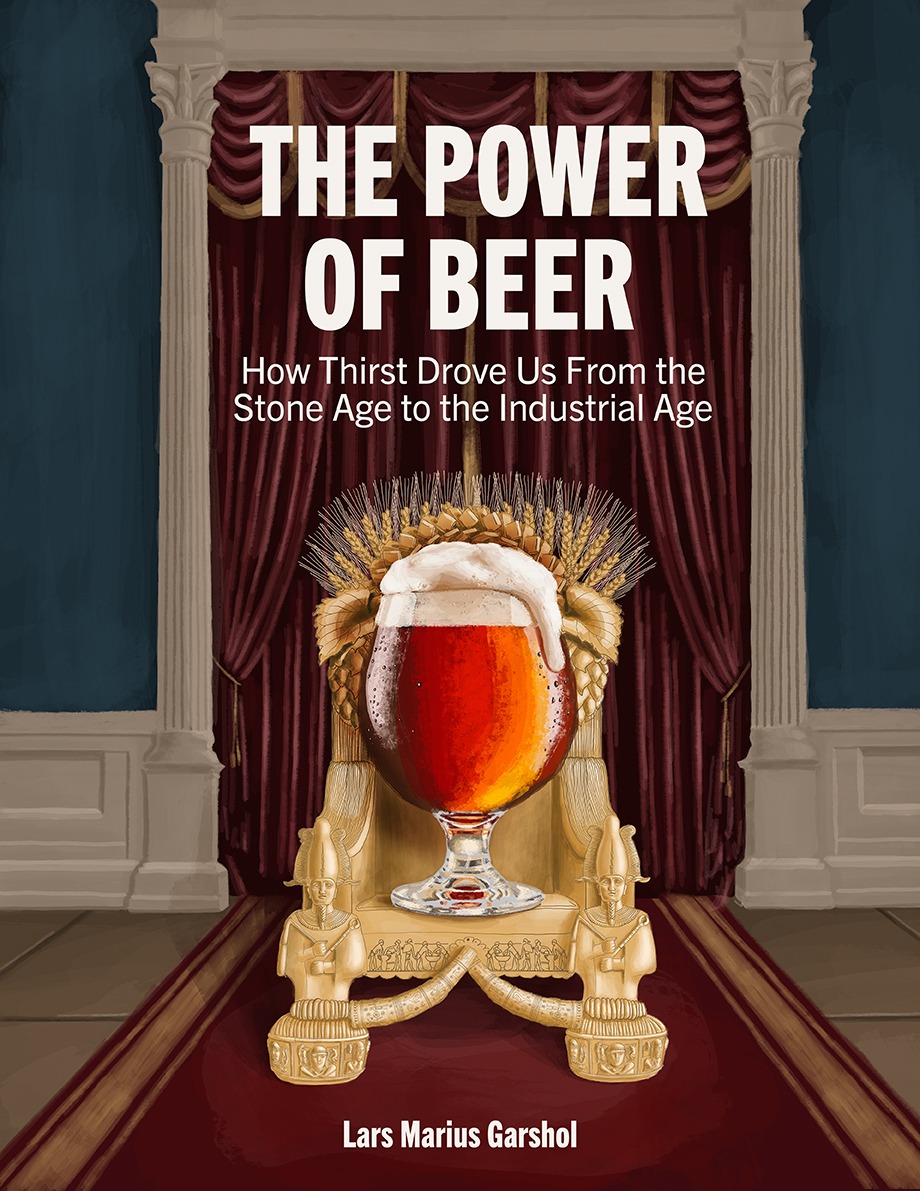
Beer and wine have played a large part in the history of civilization from the stone age onwards. I was recently contacted by Lars Marius Garshol to review his latest book covering the power of beer in civilization. His book is aptly named, “The Power of Beer – How Thirst Drove Us From the Stone Age to the Industrial“. This is his seventh book, covering some aspect of beer. He is a Norwegian software engineer that travels the world to learn more about beer, so learns by visiting and drinking beer.
The Power of Beer is divided into 12 chapters starting off on how beer (alcohol) affects us physically and socially, which then gives beer its power over us. He then goes through the development of beer from how it is made, e.g. there were no copper vats for making beer thousands of years ago, or agriculture growing hops. But over time each development, or innovation, helped to shape how and who made beer, styles of beer (porter vs IPA vs lagers), creation of pubs, taxation and wealth, funding wars, and much more. Lars does cover some of the more modern scientific innovations that went into the development of modern beer, such as the identification of different yeasts in beer making (which were good and not good), filtration, and carbonation. He also covers the development of beer production from different parts of the world. Beer making in Egypt, in southern Europe, northern Europe and England, and in Asia.
Lars notes in his Preface that this is not a scholarly work. He does come up with ideas and scenarios of how certain aspects of beer making could have happened in the past and acknowledges that this is just his theory. He sometimes goes off on short tangents about a particular brewery that closed or had problems with the ownership, which, although interesting, doesn’t necessarily contribute to the “power” story behind beer. In Chapter 11, Lars talks more about farmhouse brewing and quirkiness in cultures around the world regarding local beers, which I think could be dropped to make the book stronger.
While this book is about the power of beer, it is also to me, more of how beer developed around the world, as well as the people who made the beer and controlled how it was sold and taxed. With the growth in power of beer-making companies consolidating their powers and homogenizing beer, there is an uprising amongst smaller breweries to compete, as well as the teetotalism movement that viewed consuming alcohol as a tax on families, bad morals, dissolution of families, etc. Lars gets into how the creation of “unions” that worked to define what was properly made beer and to publicize beer in a positive way to the public brings us to where we are today with the Craft Beer revolution. He has a section on American craft brewing, the development of hops in the USA, and export of an American beer style to the UK, which I find interesting.
The final chapter is a good summary of the previous chapters in one big swig. Pick up this book if you would like a light read that goes into all kinds of quirky details about the history of beer and how it has been used as an economic and political force around the world.
Where Can I Buy This Book?
The book is available on Amazon.ca as a paperback for $48.29. You can also order the book directly from Lars.