
Climate Change as the New Challenge
As climate change is affecting wineries in real-time, several Alsatian winemakers could not attend this scheduled panel discussion as their grapes had matured early due to a severe spike with temperatures up to 40°C in late June/early July, so those winemakers recorded their answers to questions and were played via video. We still did have Olivier Humbrecht to provide the Alsatian perspective in person. On the BC side, we had Shane Munn from Martin’s Lane, Chris Turyk from Unsworth Vineyards, Mark Simpson from Mythology Vineyard, and Jean-Marc Enixon from Phantom Creek.
The panel noted that both regions are experiencing more frequent and intense weather events, including:
- Heatwaves: Alsace reported a severe spike with temperatures up to 40°C in late June/early July, and British Columbia saw temperatures up to 38°C.
- Droughts: Alsace faced a dry late spring/early summer.
- Heavy Rains: Alsace experienced 60-100mm of rain over a few weeks, followed by another 40-60mm.
- Early Harvests: BC is expecting its second-earliest harvest in its short history, and Alsace is also seeing earlier ripening cycles.
- Winter Kill/Frost: BC experienced no harvest from many vines last year due to winter kill. Alsace is now exposed to new spring frost risks, an phenomenon previously unheard of by older generations.
- Wildfires: BC suffered massive wildfires in West Kelowna in 2023, severely impacting Pinot Noir production.
Eddy Faller from Domaine Weinbach via video noted that the temperature in Alsace was 35°C with drought conditions. They then had 100mm of rain the last 3 weeks, followed by another 40-60 mm a week later, but now the hot weather is back.

Melanie Pfister, from Domaine Melanie Pfister, noted that exaggerated temperature swings caused them to receive spring frost in their vineyards for the first time in 2017 and 2021.
The harvest for grapes to produce cremant wine started last week, and this week is the start of harvest for still wines.
For BC, Martin’s Lane winemaker, Shane Munn, noted that their harvest will start in two weeks, and describes this year as a warm/hot harvest, but luckily without heat spikes. He also mentioned that Pinot Noir sugars were rising four bricks in a week in late season (which is very fast), highlighting the challenge of managing grape ripeness.
Adaptation Strategies in the Vineyard
What can wineries do to adapt to climate change? Producers are implementing various viticultural adaptations to combat climate change effects, such as:
- Rootstock Selection: Alsace is using “extremely vigorous” rootstocks to combat drought and provide extra vigour to combat drought. BC is limited in experimenting with new rootstocks due to the need for both heat and cold tolerance, sticking to standard ones that have worked well in the past.
- Canopy Management / Shade Management: This is critical in both regions to protect fruit from sunburn and slow ripening. Vineyards facing south need more canopy shade (less leaf removal) to slow down grape ripening and to minimize sunburning the grapes. Managing shade allows the winemaker to balance sugars and phenolic ripeness in the gapes.
- Smaller Canopies: British Columbia is ensuring smaller canopies to slow down fruit ripening, according to Shane Munn.
- Density: Alsace is also planting vines more narrowly to create more shade for grapevines; a reversal of past trends.
- Soil Management by No-Till for Microbial Health: BC producers, noted by Shane Munn, are moving away from tilling to promote “strong microbial health soil” for better resilience against tough seasons.
- Irrigation Challenge: While irrigation will soon be allowed in Alsace, “you have to find water,” and its use for agriculture depends on local government decisions, with wine not considered “essential” like wheat or corn. They noted that there are no big lakes like we have in the Okanagan to use as a water source for irrigation.
Impact on Grape Varieties and Wine Styles
Climate change is significantly altering the characteristics and winemaking approaches for key varietals. In the case of this seminar, the discussion revolved around Riesling and Pinot Noir grapes.
Riesling

Climate change has provided an opportunity to think on how the style of this wine should be in the future in Alsace. In the past, the wine was made with aggressive acidity (lots of malic acid), with moderate alcohol, and often needing sweetness to balance. Now, they are moving toward more tartaric acidity, less malic acid (“green apple acid”). The result now is that wines can be vinified drier and more easily undergo malolactic fermentation, resulting in a “more saline acidity and not the tart green apple” quality, which aligns with current consumer preferences.
Riesling is very well suited to the north Okanagan due to altitude and proximity to lakes for retaining acidity, according to Jean-Marc Enixon from Phantom Creek. They have been shifting harvest strategy, waiting for acidity to drop to “harvestable” levels, which can happen quickly with low yields. They are emphasizing preserving aromatics through cool fermentation and are searching for the coldest terroirs in the Okanagan.
I learned also that Riesling does not like drought, so more drip irrigation is likely in the plans for wineries in Alsace and British Columbia.
I have an article for you to read, if you would like to learn more about acidity in wines.
Pinot Noir

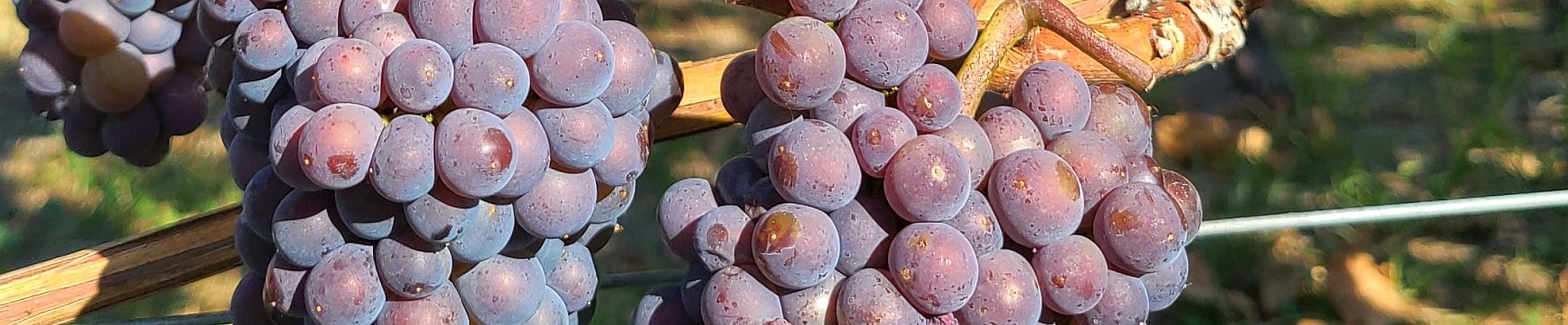
Pinot Noir is benefiting the most from climate change, improved viticulture, and winemaking skills in Alsace. I would say that is also true for BC, with the Vancouver Island wineries producing better quality Pinot Noir wines.
Historically in Alsace, Pinot Noir was overshadowed by white wines, but Pinot Noir acreage has dramatically increased from less than 2% in the 1960s to 18% today, becoming the second most important grape after Riesling. Recognition has grown, with a new AOC for Alsace Pinot Noir in 2022.
In Alsace winemakers are looking for less extraction, not solely focused on colour, aiming for more elegance and letting the terroir shine through, which is what BC winemakers have been talking about for a long time.
Similar to Riesling, winemakers must manage sun exposure on south-facing slopes to avoid “jam aroma” and protect against shrivelling in high September temperatures.
At Martin’s Lane, they are still trying to define their style of Pinot Noir and have proceeded by keeping all their harvested parcels separate through fermentation. In the beginning they would make many different bottlings of wines, but as they learn more about the blocks, the number of bottlings has gone down from eight to two.
Pinot Noir is seen as very well-suited to cooler northern Okanagan regions, allowing for reliable ripening of red wines (compared to past focus on rosé and sparkling).
Long-Term Threats and Challenges
Beyond immediate climate impacts, other threats loom. The winemakers discussed:
- Fungal Diseases: Increased temperatures lead to new diseases like downy mildew, requiring more Bordeaux mix spray applications. BC has powdery mildew, while Alsace has downy mildew.
- Trunk Diseases: Were identified as the “biggest threat,” a direct result of past “bad habits” in pruning (e.g., mechanical pruning in the 70s-80s) and climate change (decreasing temperatures exacerbating fungal issues).
- Water Management: Finding water for irrigation remains a significant problem in Alsace due to limited lakes and regulatory hurdles.
Conclusion
The wine industry in both Alsace and British Columbia is at the forefront of adapting to climate change. While both regions face unique challenges, with Alsace managing historical varieties and established appellations, and BC with defining its emerging identity, they also share a common goal: to produce high-quality wines that reflect their terroir despite increasingly unpredictable conditions. The panel discussion highlighted a proactive and innovative spirit among wine producers, who are not only responding to immediate environmental shifts, but also re-evaluating long-held viticultural and winemaking philosophies.