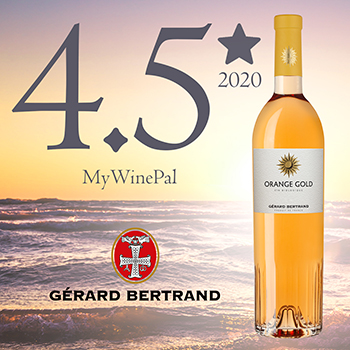

Six years ago we welcomed Gérard Bertrand and the Gérard Bertrand Group to VanWineFest 2020. Now, we can welcome them back to VanWineFest 2026. Read about their history and wines in their own words.
Introducing Gérard Bertrand
In 1975, Georges Bertrand introduced his son, Gérard, to harvesting on the Domaine de Villemajou in the unique terroir of Corbières. From his young age, Gérard Bertrand knew that he would be a winemaker and would perpetuate the passion for wine as well as his father’s pioneer spirit. Gérard took over Domaine de Villemajou in 1987. In 1992, he created the wine company Gérard Bertrand which later buys Domaine de Cigalus, Château Laville Bertrou and Domaine de l’Aigle.
The 2002 acquisition of Château l’Hospitalet, however, allows Gérard Bertrand to acquire a new dimension: more than an exceptional domain overhanging of the sea, l’Hospitalet is a place entirely dedicated to the art of Mediterranean life.
Gérard Bertrand Group: Origin & Values
 The wines signed Gérard Bertrand have common features: they are wines of expression of the South of France, are balanced and elegant, and able to meet the different expectations of consumers. The Visigothic Cross, which dates back to the 7th century, is the emblem of Gérard Bertrand wines, and the doves represent sharing. This cross is the first version of what has become, centuries more later, the cross of Languedoc.
Great Wines, Excellence & Naturalness
Gérard Bertrand created, in each of his domains, wines exceptional pieces from unique parcels chosen from the most beautiful terroirs of Languedoc. These parcels, selected for their ampelographic situation and exceptional climatic conditions, position themselves as great wines of the South of France, the quintessence of the Languedocian terroir.
Innovation is a keyword for the group Gérard Bertrand, today incarnated by several projects: the production of wines from quality, biological and / or sulphite-free, or from biodynamic agriculture, for all consumers.
Biodynamics: A Strong Commitment to Nature

Convinced early on that viticulture in harmony with nature is the best way to reveal the typicity of a terroir and to elaborate great wines, Gérard Bertrand started in 2002 on the path of biodynamics at Domaine de Cigalus, in Bizanet in Aude. A vineyard in excellent health, a preserved environment and magnified, balanced and vibrant wines of the intensity of their terroir demonstrate the relevance of the approach. Today, Domaine de Cigalus and Château la Sauvageonne are certified DEMETER, the reference organization for biodynamics. Since 2023, all vineyard parcels have completed their conversion to biodynamics. Gérard Bertrand and his teams are convinced that viticulture in harmony with nature is the best way to reveal the typicity of a terroir and to develop great wines.
The Wines We Will Feature at the International Festival Tasting Room
Here are the wines that will be poured at the International Festival Tasting room for you.

- Gérard Bertrand Cote des Roses Rosé, AOP Languedoc, 2024 – This Cote des Roses cuvée celebrates the Mediterranean Art de Vivre. The soil, which is highly varied, consists mainly of the hard limestone of the garrigues, schistose soils and gravels brought in by the rivers of the Languedoc. The warm, windy climate (“semi-arid Mediterranean climate with mild winter variations”) favours grape ripening and good health, while retaining coolness thanks to the altitude and the effect of the sea, which mitigates the high summer temperatures. The bottle, with its rose-shaped base, was created by a young designer from the Ecole Boulle. It’s a wine to be offered like a bouquet of roses!
- Gérard Bertrand Le Grande Bleue 2024 – A blend of Grenache Blanc, Viognier, Chardonnay, and Sauvignon Blanc. Cuvée La Grande Bleue embodies the spirit and beauty of the Mediterranean Sea, where generous sunshine and the mineral influence of the sea shape a unique terroir. This organic white wine highlights grape varieties emblematic of the South of France, offering freshness and an aromatic palette centered on fruit. The grapes are harvested at the coolest times of the day to preserve their freshness. Each grape variety is vinified separately to express its own characteristics before being blended. Fermentation takes place at low temperature in stainless steel tanks to preserve the full aromatic intensity of the fruit and flowers. The wine is not aged in barrels, to preserve the freshness and purity of the fruit.
- Gérard Bertrand Chateau L’Hospitalet Grand Vin Rouge 2022 – The 2017 vintage was voted Best Red Wine in the World with 97 points at the International Wine challenge 2019. A blend of Grenache, Syrah, and Mourvèdre. Each grape variety is harvested by hand and vinified separately. Some of the Syrah is vinified in whole bunches. Maceration lasts between 20 and 25 days. At the end of winter, 100% of the wine is transferred to new 225-liter barrels (French oak) for 12 to 16 months in the magnificent Hospitalet winery (2,000 barrels). The best barrels of each grape variety are selected and blended to produce this cuvée.
- Gérard Bertrand Le Viala 2023 – A blend of Syrah, Grenache, and Carignan. The Viala comes from a small parcel of land at the Château Laville Bertrou, situated amongst the exceptional terroirs of the appellation La Livinière, officially acknowledged since 1998. Gérard Bertrand acquired this uncommon plot of land in 1997 and encouraged the development of strong and powerful wines. This wine benefits from the semi-arid Mediterranean climate; the Viala is exposed to the conditions of the mid-south in the heights of the village la Livinière at around 120m of altitude…The harvest is triggered after a very precise monitoring of maturities and a daily grape tasting. The harvest is manual, and the grapes are meticulously sorted upon entering the cellar. The Syrah and Carignan grapes are put entirely into vats and vinified separately by carbonic maceration. The Grenache are destemmed and vinified with traditional maceration closely controlling the temperatures. After draining the vats and the malolactic fermentation of the wine, the different grape varieties are blended, and the wine is sunk into oak barrels to age for 12 months. We select the best coopers in order to adapt the choice of origins of wood and their types of heating with the potential of each vintage. The wines are neither fined nor filtered before bottling, and the bottles are then stored for 12 months before being sold.