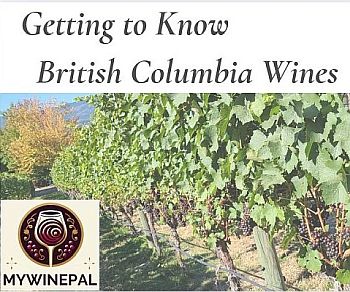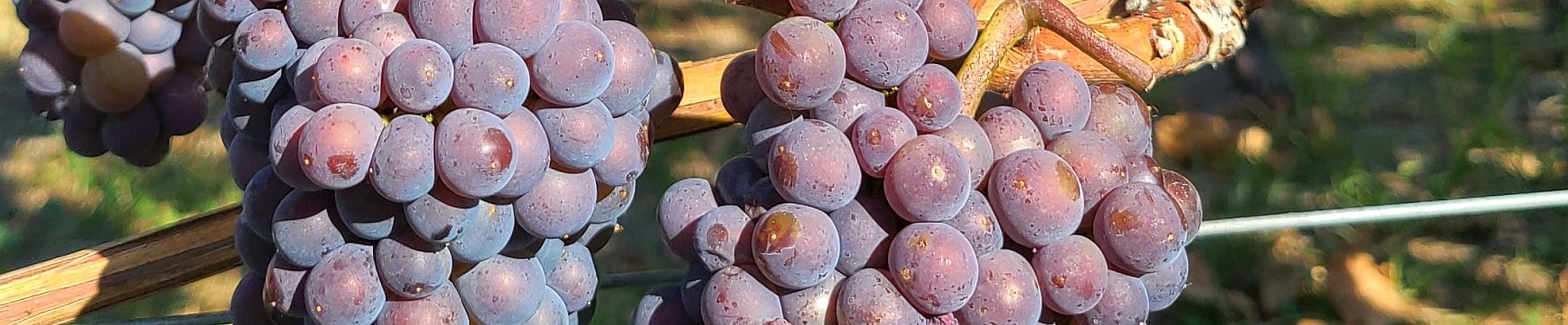
The 2025 BC harvest was one of hope and a bounty of grapes. I travelled to Osoyoos at the beginning of October and all the winery principles I spoke to mentioned how their grape vines were supplying an overabundance of grapes this year, to make up for the devastation last year.
Now that it is late November and the wines are all in tanks or barrels, what do BC winemakers have to say about their wines? This year I interviewed five BC winemakers from across BC’s grape-growing regions to get their take on this year’s vintage as of the end of November 2025. The winemakers I interviewed are:
- Layne Robert Craig, 40 Knots Winery, Vancouver Island
- Alessandro (Alex) Nel, Fort Berens Estate Winery Ltd, Lillooet
- Kathy Malone, Hillside Winery & Bistro, Naramata Bench, Penticton
- Mark Hopley, Hester Creek Estate Winery, Oliver
- Gary (Gennadi) Zhygailo, Chaberton Estate Winery, Fraser Valley
Where Are These Wineries?
I colour-coded the pins on this map to match the colours associated with the winemaker names that I have listed above.
My Interview With the BC Winemakers
1. Where are your vineyards and winery located?
Layne: We are 100% Estate for the 2025 vintage. We have 20 planted acres on our home vineyard, and another 5 acres on a leased adjoining land, which is where our 2 acre orchard is location.
Alex: We are located in Lillooet, BC, right along the Fraser river.
Kathy: All along the Naramata Bench.
Mark: The Golden Mile Bench Oliver, BC and various growers in the South Okanagan, between Okanagan Falls and the border.
Gary: Our vineyards are located in Fraser Valley and Okanagan Valley ( Summerland, Osoyoos, Oliver, Penticton, Kaleden), Similkameen Valley. Our winery is in Langley, BC.
2. How would you summarise your 2025 harvest in terms of timing, yield and fruit quality compared to previous years (including 2024)?

Layne: Consistent is the word that best describes our 2025 harvest. This year, we experienced consistent heat units, exceeding 1200 GDD, paired with very little rainfall but excellent soil moisture. The vines maintained steady growth throughout the season, and most entered veraison at the same time, allowing many varietals to reach ripeness earlier than average, rather than ripening in a staggered pattern.
Compared to 2024, 2025 offered a more uniform harvest. While yields were around average, this would be one of our ripest years on record in our 12 years of vineyard operations. The fruit quality was outstanding—balanced sugars, acidity, and flavour concentration—making this, in my view, one of our most exceptional crops quality-wise in a decade. The timing, consistency, and ripeness of the fruit set the stage for wines that truly reflect the health and potential of the vineyard throughout the growing season.
Alex: We are looking at one of the top vintages I have had at Fort Berens, comparing closely with the 2022 vintage. We had optimal yields for the quality of wines we aim to produce. It was wonderful to have plentiful estate fruit, 85 to 90% back in production compared to a 30% crop of 2023 and 2024.
Kathy: It was one of the earliest starts—with Muscat Ottonel on September 8th. Normal is 3rd week in September, earliest ever was 2023—September 5th. We were pretty much flat out from then until our last pick on October 27th. Yields were extraordinary, bouncing back to levels of 5 and more years ago, while the intervening years had shown declines. Of particular interest were the merlot and syrah blocks which were 100% re-trunked (necessitated by winter damage) and reached average yields even though they had 5% and 25% vine death.
Mark: Definitely a larger harvest than anticipated. The vineyards have bounced back very well. We started harvest August 28th and picked our last fruit Saturday Nov 8th 2025. Quality is very good. Nice ripe flavours, the reds are looking very good with vibrant acidity, the whites and rose tanks are tasting great. The harvest was definitely compacted with lots of different varietals reaching phenolic ripeness at the same time.
Gary: This harvest was quite early, especially if we are talking about red grapes. It was quite a hot summer in Osoyoos and Oliver, so we picked red grapes earlier this year.
3. With a larger crop (in many places) this year, what challenges did you face in maintaining or improving quality (ripeness, flavour, phenolic maturity, acid balance)?
Layne: This wasn’t our case. We hit our yield targets this year for what we wanted for tons per acre. Vigor was slightly higher than usual in some blocks, but through careful canopy management, we were able to keep it under control. This allowed us to maintain excellent fruit quality, achieving optimal ripeness, flavour development, phenolic maturity, and balanced acidity throughout the vineyard.

Alex: We had a larger crop or rather we intentionally cropped the vines to where we would like them to be. Our biggest challenge for 2025 was pruning. We spent a large amount of time and effort in pruning decisions, to remove old dead wood for renewal canes, for either re-trellising vines or replacing unproductive arms, to ensure a full, productive fruiting wire and well-balanced vines. After budbreak we had more than usual shoot thinning to balance the vine and crop, along with some green harvesting to balance out some heavier blocks.
Kathy: Honestly, the challenges weren’t great. We expected low acidity/high pH due to the persistent warm nights leading up to harvest, but that wasn’t the case. The fruit seemed naturally well-balanced, with flavour ripeness coming on at the same time as sugar ripeness, so alcohol levels are well-balanced as well. The biggest challenge was getting the fruit off the vines and into the tanks at 30 Celsius—so we had to fight for those “dawn picks”.
Mark: We definitely maximized our hangtime on the reds to reach full ripeness levels, with the larger crop load. We picked the whites more on acid numbers than brix due to a warmer than usual September.
Gary: I worked with my growers in terms of yield and tonnage per acre. A lot of growers had to reduce yield to get more ripe grapes. Also, the irrigation program had to be adjusted. Less water to have more concentrated flavours.
4. Were there any site-specific surprises this year (for example, blocks historically marginal doing well, or ones you expected to excel but which under-performed)?
Layne: This year brought a few site-specific surprises. The Pinot Gris outperformed our expectations in terms of fruit ripeness, while the Chardonnay crop slightly underperformed in tonnage—but this lower yield actually enhanced the fruit quality. Schonburger and Siegerrebe continued their streak as exceptional performers for the third year running. Our three clones of Pinot Noir stayed right on target at under 3 tons per acre, achieving full ripeness with zero disease pressure.
The growing year and harvest were anything and everything you would want. Mother Nature and the vineyard did their job, and we were along to ensure its success was realized. With ideal conditions, careful management, and attentive vineyard practices, we were able to bring out the very best in each block, producing fruit that reflects both the character of the site and the exceptional quality potential of the 2025 vintage.
Alex: We had a fantastic vintage all round, but as usual we made phenomenal Cabernet Franc and Riesling. We even had enough Riesling to produce a Late Harvest.
Kathy: Yes the Merlot and Syrah. See answer #2. No under-performers.
Mark: I would say that this year we were consistent with normal ripening. See answer #2.
Gary: Yes, we had both. Some blocks that normally give better fruit gave average quality and some very young blocks (first year crop) gave very good quality. Both whites and reds. We had extremely good Syrah from the first-year vines.
5. What weather or vineyard risks did you contend with in 2025 (e.g., frost, smoke from wildfires, excessive heat, rainfall, disease pressure) and how did you mitigate them?
Layne: In 2025, we faced one week of smoke from wildfires in the Qualicum, Parksville, and Port Alberni areas, which temporarily increased disease pressure for about 7–10 days. However, through vigilant vineyard monitoring, targeted canopy management, and timely protective treatments, we were able to successfully mitigate these risks. Overall, the vineyard remained healthy, and we were able to preserve both fruit quality and ripeness, ensuring a strong and consistent harvest.
Alex: We had an unusual late heat wave late August/early September. This did not really speed up sugar ripening as the vines tend to shutdown, but it caused a considerable decrease in acidity. Fortunately, pH remained low and we ended up with some interesting wines. I mostly had to rely on tasting and visual signs of phenolic ripeness as sugars were high and acids were low, but the grapes were not phonologically ripe, for example green seeds or stems.

Kathy: It was a pretty disease-free year, following a couple of powdery-mildew-challenging years. We did have a lot of leaf hopper pressure however. Also heat as covered above.
Mark: This autumn has been very dry so rainfall not an issue. We did see some frost in lower lying areas, most of our blocks were harvested prior to this. Our estate property fairs very well and still has green leaves as I write this.
Gary: It was a very good year in terms of vineyard health in both Fraser Valley and Okanagan. We had a minor hail damage in Osoyoos in two contracted vineyards. Other than that, it was quite a healthy vintage. The Fraser Valley had exceptionally good vintage in term if quality. I even was able to make Late Harvest Ortega, which doesn’t happen every year in the Fraser Valley.
6. How did your harvest timing in 2025 compare to a typical year? Did you start earlier or later? Did ripening proceed more gradually or unusually fast/slow?
Layne: Full ripeness on our reds was achieved earlier than average, allowing us to begin harvest ahead of schedule while the crop was still clean and dry. Ripening progressed evenly across varietals, contributing to a smooth and efficient picking window. The majority of our harvest took place in the pre-daylight hours to preserve fruit integrity and temperature, and the entire harvest was completed over just six days—one of our most efficient and well-timed harvests to date.
Alex: 2025 started off with an early budbreak and overall looked like an early season. We harvested the earliest we ever have starting on August 25th. The late heat slowed everything down again, but on average it was 1 week earlier than usual. We ended harvest with Cabernet Sauvignon on October 16th and Late Harvest Riesling on the 20th.
Kathy: See above.
Mark: I would say that this year we were consistent with normal ripening. Our harvest usually runs from late August until early November.
Gary: I would say it was early in the Okanagan Valley, extremely early in the Similkameen and normal year in the Fraser Valley.
7. Given the vineyard outcomes this year, did you make any changes in your winery (fermentation regimes, vessel choices, maturation plans) to adjust to the fruit you harvested?
Layne: No

Alex: No, we were just happy to have a full winery again!
Kathy: We needed to rent a couple of red fermentation tanks, and we are woefully short of barrels.
Mark: Early on we acidified some of the whites. We did see slightly lower pH’s on the red wines this year.
Gary: I had to adjust operations a bit, because we start picking whites and reds basically at the same time. So, I had to adjust vessel choice, maceration time, barrels, etc.
8. Are you experimenting with anything new with this harvest, like making a sparkling wine, using amphora or skin-fermented white wines?
Layne: Nothing new, we are continuing with wines such as Pinot and and our skin-contact orange wine in Amphora, and keeping with our sparkling and our cider made French Traditional Method.
Alex: We decided to produce a traditional method Blanc de Noir from Pinot Noir, instead of the Blanc de Blanc we traditionally produce.
Kathy: We had a chardonnay that kicked off on wild yeast, so we went with it. Turned out great. Made a 100% Pinot Noir rosé (“Below the Road”). Still playing with reds.
Mark: We always try at least a couple of new yeast strains each year. This is the first year we have used Tonnellerie Montgillard barrels on our Chardonnay program, excited to see how those barrels are developing. We make two sparkling wines our Tiamo, which is a Prosecco style wine and we make an Old Vine Brut, which is a traditional method sparkling, made from 57 year old Pinot Blanc vines. Excited to see those wines return to our portfolio. We also continue to use Aromaloc technology on our white and rose tanks which we saw exciting results with this year, particularly on Viognier, Pinot Gris, Riesling, and Trebbiano.
Gary: Yes, we are making traditional method sparkling this year. All grapes are from the Fraser Valley. Also, as I mentioned before we are making a Late Harvest Ortega.
9. What are you going to do to celebrate the completion of the Harvest?

Layne: We celebrated the completion of harvest with our Vines & Tides Dinner, a collaboration with the BC Shellfish Growers Association. Our wines pair perfectly with everything from the ocean, and given the ocean’s strong influence on our viticulture and wines here on the Comox Peninsula, it was only fitting that our grape harvest be celebrated with foods harvested from the sea. The event was a true reflection of our region’s bounty and the harmony between land and ocean. This will now become an annual tradition.
Alex: We have surprisingly not had the time to celebrate with a fire and few bottles on great wine, but we will celebrate with an early Christmas dinner party with the whole team here at the winery on Sunday the 16th.
Kathy: Take a day off—maybe two.
Mark: We had a harvest party following our last day at BNA in Penticton. We had a great team this year and two of our interns have joined the team permanently.
Gary: Sleep.
Summary of the Season Based on Winemaker Responses
2025 Harvest Overview
Across all sites, 2025 was marked by strong fruit quality and generally larger or fully recovered crops. Several winemakers noted an early start, with some blocks returning to historical yield levels after years of decline or winter damage. Warm conditions supported ripeness, and many reported some of their top-quality fruit in recent memory, with vibrant flavours, healthy acidity, and a compact picking window. Compared to recent challenging seasons, 2025 brought renewed optimism and wines that should show impressive concentration and balance.
Challenges with Larger Yields
Most producers managed the season smoothly, though careful pruning, shoot thinning, and crop adjustment were essential for some. Warm nights raised concerns about acidity, yet many vineyards delivered naturally balanced fruit. Canopy management, targeted green harvesting, and in some cases adjustments to irrigation helped maintain flavour concentration and phenolic development. Early-morning picks were common to protect fruit integrity in the heat.
Weather and Vineyard Risks
The season brought localized challenges, including brief wildfire smoke, late-summer heat spikes, leaf hopper pressure, and small pockets of frost or hail. Vigilant monitoring and well-timed mitigations helped maintain fruit health, whether adjusting pick dates, canopy work, irrigation, or protecting fruit through stressful weather. Despite these pressures, disease incidence was low overall, and many regions experienced one of their healthiest growing years in some time.
Harvest Timing
Most producers picked earlier than usual, with some beginning in late August and finishing weeks ahead of a typical year. Ripening was generally even, although extreme heat briefly slowed physiological maturity in some regions. In other areas, timing followed a more classic Okanagan pattern, running from late August into early November. Several wineries highlighted efficient, condensed harvest windows, helped by consistently ripe, clean fruit.
Thank you to all these winemakers for taking the time to tell me, and you, about their grape growing and winemaking season. I look forward to trying the reds, whites, and sparkling wines that come from this vintage. They should be wonderful.