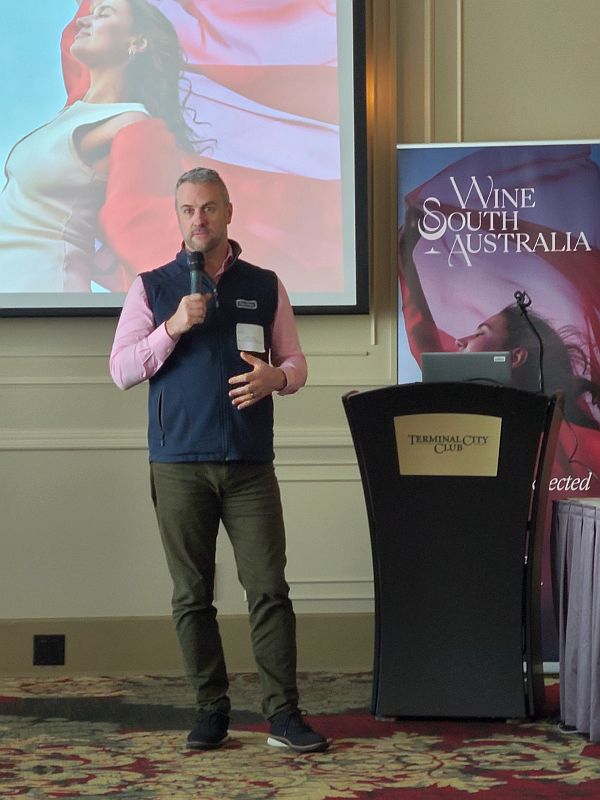
When you think of Australian wine, what comes to mind? For many, it’s a vision of big, bold, Shiraz from a hot, dry country. But sitting down with a delegation of South Australian winemakers recently, I heard a story that is more complex, ancient, and innovative. It’s a story written in 760-million-year-old soils and told through some of the oldest grapevines on the planet. What emerged was not a single wine identity, but a mosaic of diverse climates, evolving styles, and a profound connection to the land.
Let me tell you a few surprising facts that will change how you see South Australian wine.
Core Identity and Production
South Australia sits at the heart of premium wine production in Australia, contributing roughly 80% of the country’s finest bottles. Its wines are enjoyed far beyond its borders, reaching more than 90 countries worldwide. Adelaide, the state capital, is internationally recognized as one of the 11 Great Wine Capitals of the World, standing shoulder to shoulder with iconic names like Bordeaux, Porto, and Rioja. The state itself is visually striking, with pristine coastlines, rugged mountain ranges, and rolling hills that provide both natural beauty and a strong foundation for agriculture and viticulture. Within its borders lie 18 distinct wine regions, each shaped by unique microclimates and soils, giving every area its own identity and expression of terroir.
It’s Home to the Oldest Grapevines on Earth
South Australia possesses the greatest wealth of old vines and the oldest commercially producing grapevines for many classic varieties, including Cabernet Sauvignon, Grenache, Mourvèdre, and Shiraz, in the world. The reason for this incredible viticultural heritage is a matter of historical fortune and rigorous biosecurity. The first vines, arriving from the famed Busby shipment, were planted in 1838. Crucially, unlike the vast majority of the world’s wine regions, South Australia has remained free from phylloxera, the devastating root louse that wiped out Europe’s vineyards in the 19th century. This means that, unlike vines that are grafted onto phylloxera-resistant rootstock, South Australian vines grow on their own original roots. This has allowed for a continuous, uninterrupted winemaking evolution for nearly 200 years.
The Land is a Geological Time Capsule
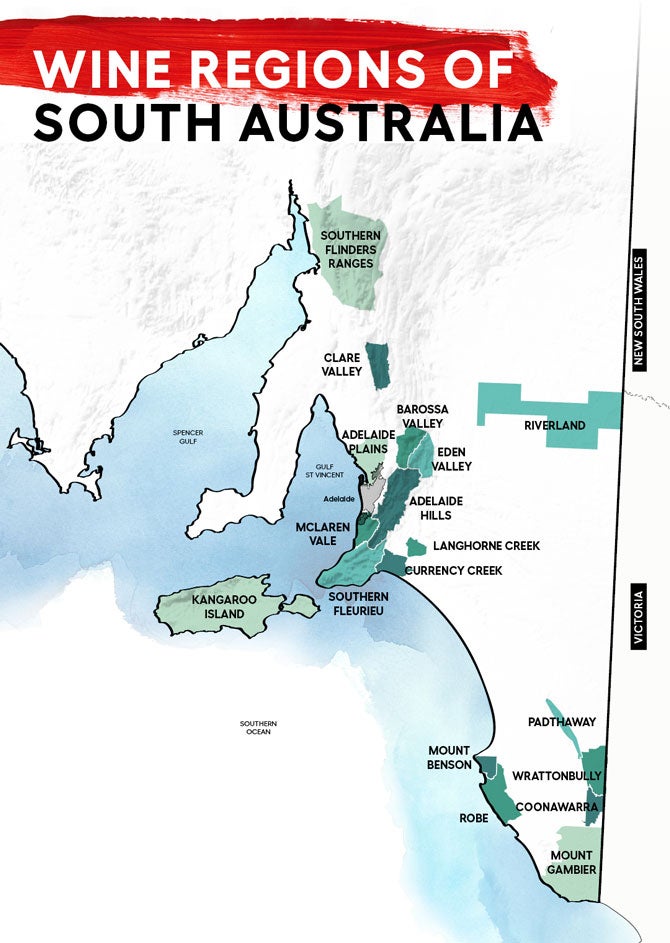
The story of South Australia’s vines is inextricably linked to the ancient land they inhabit. The region’s geology is old and diverse, spanning a timeline with its oldest soils dating back 760 million years. In fact, it possesses the “greatest spread of geological eras of any fine wine region in the world.”
This immense history has created a wide range of soil types. Over millennia, huge seismic activity created vast mountain ranges that compacted to form slate and schist. Then land had been underwater, leaving behind ancient sand dunes. It has been covered by shallow, warm seas teeming with life, which formed its limestone soils. More recently, just 6,000 years ago, volcanic activity created yet another layer of complexity.
To put this diversity into perspective, the single region of McLaren Vale contains 40 distinct soil types, a complexity only rivalled globally by Stellenbosch in South Africa. With this incredible geological variety, it becomes clear that you cannot generalize the character of South Australian wine.
It’s a Mosaic of Cool Climates
The perception of South Australia as exclusively a hot climate is one of the most common misconceptions in the wine world. The reality is a complex tapestry of microclimates, many of which are genuinely cool.
The Adelaide Hills is a perfect example. Situated at an altitude of 300 to 700 meters and exposed to cooling ocean breezes, it is a genuinely cool climate region. Its sub-region, Piccadilly Valley, is even described as the highest, coldest, and wettest sub-region in all of South Australia.
Even regions known for grape ripeness possess surprising nuances. McLaren Vale, while enjoying a classic Mediterranean climate with warm, dry summers, is heavily moderated by the ocean. This constant maritime influence creates a balance of ripeness and freshness in the wines, a signature that defies the hot and dry stereotype.
Winemaking Styles Are Evolving

Winemaking in South Australia is anything but static. While respecting a rich heritage, winemakers are constantly innovating, often by rediscovering traditional techniques and applying them in new ways.
The evolution of Grenache in McLaren Vale is one case study. Just 15 years ago, many producers made it in the same style as Shiraz; big, bold, and powerful. Today, that has completely changed. Winemakers have adopted techniques more commonly associated with Pinot Noir; picking earlier for freshness, using gentle extraction methods, and maturing the wine in old oak barrels to preserve its delicate character. The goal is to create a lovely fresh aromatic style of Grenache that is perfumed, crunchy, and defined by a fine tannin texture, moving far away from the fruit bomb style of the past.
This spirit of innovation is fuelled by a collaborative culture. Take, for example, the tradition at Wirra Wirra winery in McLaren Vale. On the first Friday of February, the winery rings its three-quarter-ton Angelus bell to signal the start of harvest. The entire community is invited for a barbecue, where everyone brings a bottle and ideas are shared. It’s in these moments, as new techniques and styles spread really quickly like wildfire, that the entire region continues to evolve and refine its craft.
They Are Leaders in Sustainability
There is a deep-seated commitment among South Australian wineries to look after their land, vines, water, and ancient soils. It is a core principle backed by concrete action and rigorous standards.
The “Sustainable Wine Growing Australia” program, a very rigorous certification program, underpins this commitment, with 8% of the state’s total crush now certified. But in some regions, the dedication goes even further. In McLaren Vale, the climate’s natural resistance to disease pressure has enabled 40% of the region’s vineyards to become certified organic, showcasing a level of commitment that far exceeds the baseline.
Winemakers are also proactively addressing the challenges of operating in the driest state on the driest inhabitable continent on Earth. McLaren Vale’s innovative water recycling scheme, for example, allows about two-thirds of the water used for irrigation to be recycled. This showcases a forward-thinking approach to managing precious resources and ensuring the health of the land for generations to come.
The Regional Showcase and Wine Analysis
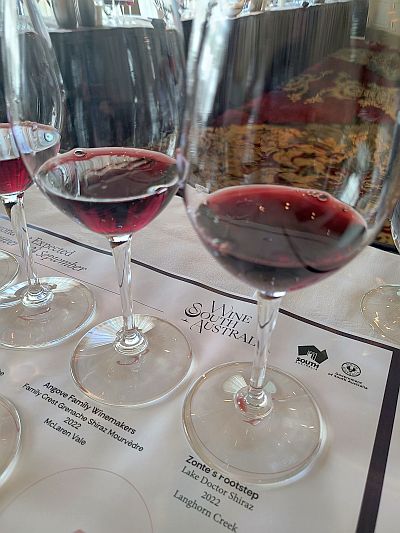
As part of the seminar, we tasted seven red wines from the region. One Pinot Noir, a Grenache, two Shiraz, two Cabernet Sauvignon, and one GSM blend. No white wines in the seminar, but we had a follow-on walkabout wine tasting which featured some white wines.
The regions we discussed:
-
Adelaide Hills: A genuinely cool-climate region due to its altitude (300-700m) and exposure to ocean breezes. The Piccadilly Valley is its highest, coldest, and wettest sub-region, ideal for producing elegant Pinot Noir and Chardonnay.
-
McLaren Vale: A classic Mediterranean climate heavily moderated by the ocean, creating a signature balance of ripeness and freshness. It has remarkable soil diversity, with 40 distinct types. The region produces both modern, fresh styles of Grenache and powerful, rich styles of Cabernet Sauvignon. 40% of its vineyards are certified organic.
-
Langhorne Creek: Located at the mouth of the Murray River, the region is characterized by alluvial soils. Historically flood-irrigated, it is now known for producing wines with a focus on purity of fruit and bright acidity.
-
Clare Valley: Situated 120km north of Adelaide, its elevation results in a significant diurnal temperature variation (hot days and cool nights). This helps with slow, even ripening and acid retention, leading to elegant and structured red wines.
-
Coonawarra: Famous for its “terra rossa” soil, a strip of rich red clay over a limestone base. This unique soil structure, combined with a cool, maritime-influenced climate, creates Cabernet Sauvignon known for its structure, intensity, and longevity.
Here is a matrix of the wines we tasted, with a brief outline of each’s wines character, as told by a winery principal. All these wines are available in BC either at BC gov liquor stores or at private wine shops.
|
Wine |
Producer |
Region / Sub-Region |
Varietal |
Vintage |
Key Characteristics |
|
Pinot Noir |
Ashton Hills |
Adelaide Hills / Piccadilly Valley |
Pinot Noir |
2021 |
Cool-climate elegance; savoury notes of bone marrow, porcini, truffle; high acidity; umami finish. |
|
Father’s Heart Grenache |
Wirra Wirra |
McLaren Vale |
Grenache |
2021 |
Perfumed, aromatic, and crunchy; from 95-year-old vines on sand; fine tannin texture; made with minimal new oak. |
|
Family Crest Grenache Shiraz Mourvèdre |
Angove Family Winemakers |
McLaren Vale |
GSM Blend |
2022 |
Medium-bodied with elegance and finesse; layers of flavor; gentle extraction; from certified organic vineyards. |
|
Lake Doctor Shiraz |
Zonte’s Footstep |
Langhorne Creek |
Shiraz |
2022 |
Focus on bright, crunchy acidity; purity of fruit; blackberry and black olive notes; co-fermented with Viognier skins. |
|
St. Andrews Shiraz |
Taylor’s / Wakefield |
Clare Valley |
Shiraz |
2021 |
Elegant and structured; great aromatic expression with hints of apricot; barrel fermented in American oak. |
|
Gigglepot Cabernet Sauvignon |
Mollydooker Wines |
McLaren Vale |
Cabernet Sauvignon |
2020 |
Big, bold, rich, and ripe style; high fruit weight and intensity; 15% alcohol; aged in American oak. |
|
Black Label Cabernet Sauvignon |
Wynns Coonawarra Estate |
Coonawarra |
Cabernet Sauvignon |
2022 |
Rich, concentrated dark fruit (blackcurrant, plum); pronounced, polished tannins; slight herbaceous note; high ageability. |
This article is getting quite long, so I will provide my tasting notes for these wines, plus a list of my favourite wines from the walk-about tasting in a following article.
To Conclude
South Australia is a region of staggering depth, history, and diversity that defies every simple category you might try to place it in. It is a land where some of the oldest vines and soils on earth provide the foundation for modern innovation, collaborative energy, and a profound respect for the environment. From the cool, misty hills of Piccadilly Valley to the ancient, sandy vineyards of McLaren Vale, a new story is unfolding. It’s a story of elegance, complexity, and a sense of place. Isn’t it time to rediscover what South Australian wine?












1 thought on “Beyond the Expected: Wine South Australia Masterclass”
Comments are closed.