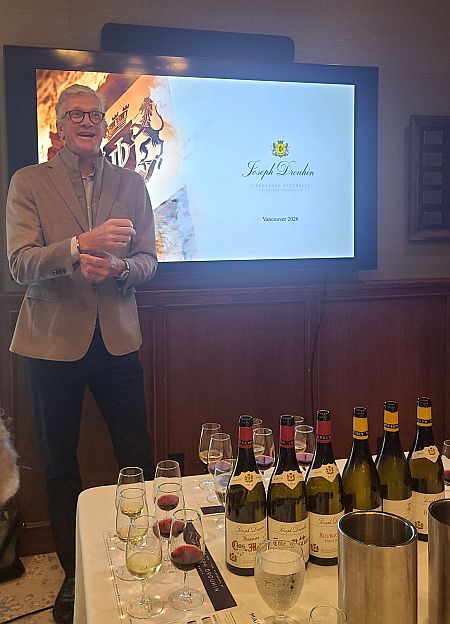
Recently, I attended a Burgundy seminar led by Laurent Drouhin, a fourth-generation family member and Export Director of Maison Joseph Drouhin, in Vancouver. Laurent brings over 140 years of family heritage to the seminar. He started off by introducing us to the supply pyramid of Burgundy wines, followed by the effects of climate change on the vineyards, the philosophy and practices of their family in the vineyards and in the production of wines, and finally some insights into the recent best vintages of red and white Burgundy. Along the way, we would sample one of six wines produced by their family. There were three red and three white wines to taste.
- Véronique Drouhin: Winemaker for Oregon and “guardian of the house style” in Burgundy. (The Drouhin family bought the initial property in the Dundee Hills in 1987, officially founding the Oregon estate with the first vintage in 1988. Note, none of the wines we tasted were from Oregon.)
- Philippe Drouhin: Estate Manager; led the transition to organic and biodynamic viticulture starting in the mid-1980s.
- Laurent Drouhin: Export Director for North America.
- Frédéric Drouhin: President of the company.
I will cover my tasting notes of these six wines after I report on what we covered and learned at this seminar by Laurent Drouhin.
Burgundy’s Supply Pyramid
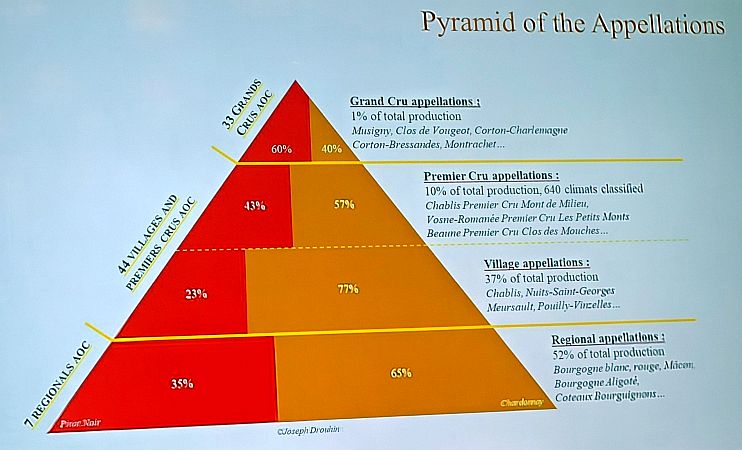
Burgundy’s Appellation Pyramid Grand Cru: Represents roughly 1% of total regional production (fluctuating slightly by vintage and yields).
- Premier Cru: Accounts for an average of 10% to 11%.
- Village Level: Makes up approximately 37%.
The Viticultural Shift Caused by Climate Change
Recent yields in Burgundy:
- 2021 Vintage: Severely reduced volume caused by spring frost and hail.
- 2023 Vintage: High yields, but required precise canopy and mildew management.
- 2024 Vintage: Extremely low volume caused by severe downy mildew pressure.
- 2026/Recent Vintage Cycles: Quality remains high, particularly for reds showing vibrant natural acidity despite elevated sugar levels, but intense heat waves reduced overall volume.
The Drouhin Philosophy: Elegance Over Extraction
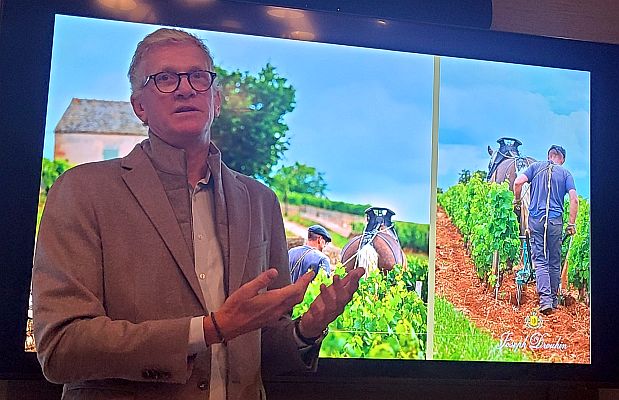
Another back-to-the-future moment for the family is the use of horse-plowing in their vineyards. In Premier Cru and Grand Cru vineyards like Clos des Mouches, Drouhin uses horses instead of heavy tractors. Heavy machinery compacts soil layers of clay and limestone, depriving the ground of oxygen and harming beneficial soil microorganisms. Horses aerate the topsoil without crushing its living structure or damaging deep roots.
- Winemaking requires sensory evaluation, historical intuition, and human judgment.
- Technical perfection driven purely by data risks eliminating the “soul” and character of the wine.
- Winemakers Véronique Drouhin and Jérôme Flous evaluate every fermenting vat and barrel daily via direct tasting.
Exceptional Recent Vintages
Laurent advised looking to the 2021 and 2024 whites for stunning natural acidity, energy, and crisp purity. And turn to the 2023, 2025, and upcoming 2026 reds for exceptional density, balance, fine tannin structure, and complete phenolic maturity.
My Wine Tasting Notes
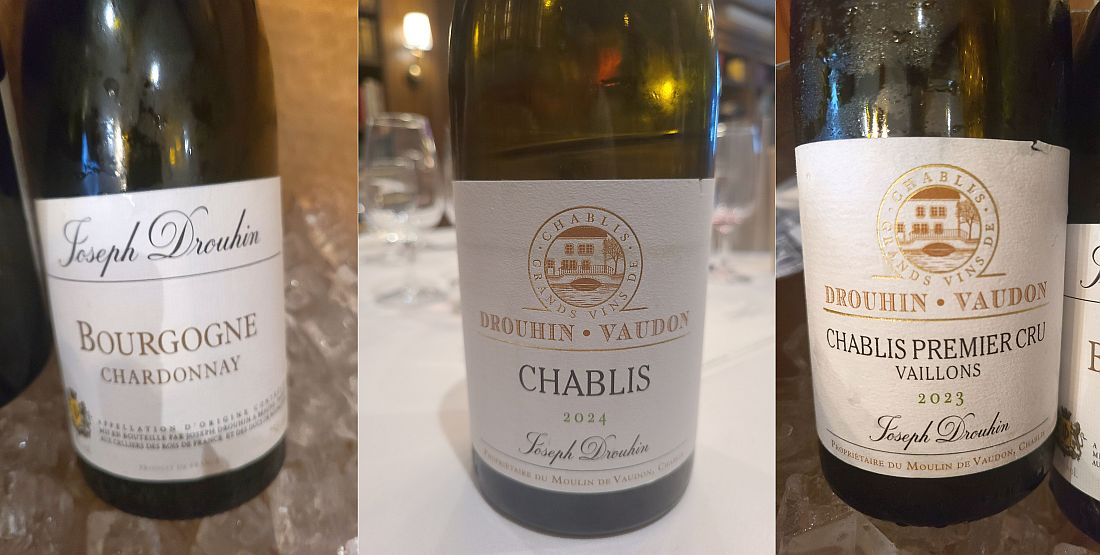
Maison Joseph Drouhin Bourgogne Chardonnay 2020 – a medium-plus, bright lemon colour. Rich, ripe nose with aromas of ripe stone fruits, apples, pears, and vanilla. Dry, medium-minus body, with a soft, smooth, lean mouthfeel. Light apple and a touch of oak on the palate. Fresh flavours with a touch of pepperiness. Medium-plus length. 

Maison Joseph Drouhin Chablis 2024 – a light, bright lemon colour. Light but rich aromas of pears along with stoniness. Dry, medium-minus body with a lean mouthfeel. Tart/crisp apple and pears on the palate with a hint of vanilla.  –
–
Maison Joseph Drouhin Chablis Premier Cru Vaillons 2023 – This wine is barrel-aged. It has a medium-plus, bright lemon colour in the glass. Light aromas of apple and a touch of toast. It is dry with a smooth, soft, medium body. Texture in your mouth. Apple, stoniness, and touches of sweet spice and oak. There is some bitter apple skin on the finish. Medium-plus length.
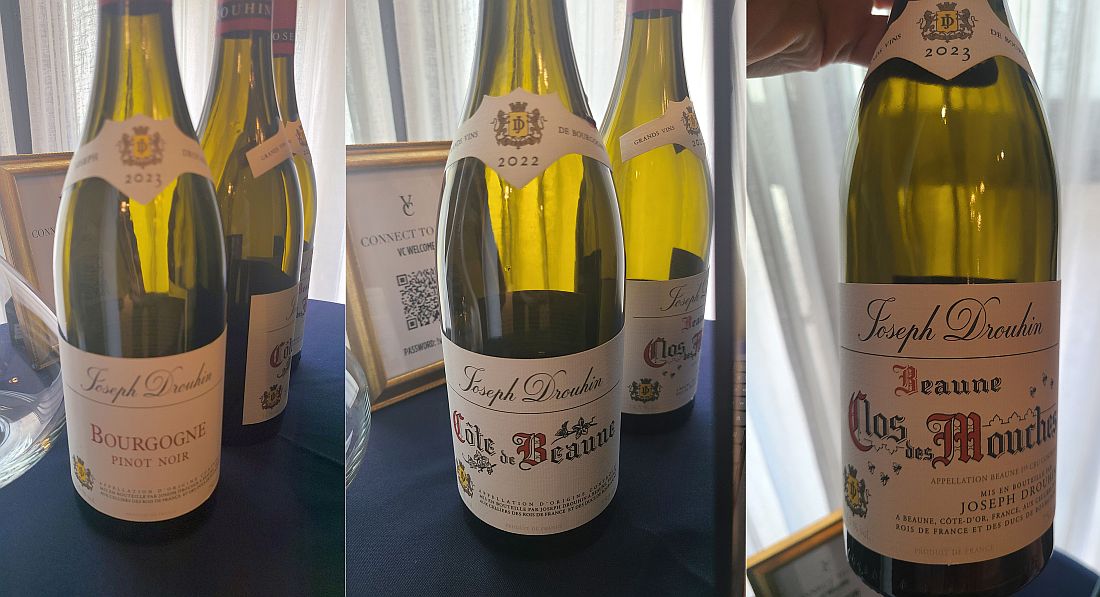
Maison Joseph Drouhin Bourgogne Pinot Noir 2023 – a medium intensity, a consistent garnet colour from core to the rim. Medium-plus intensity aromas of red fruits and sweet spices. Dry, medium body with a smooth, soft mouthfeel. Medium acidity and tannins. Red cherries, candied cherries, red fruits, floral, and touches of oak and sweet spices on the palate. Tasty. Fresh flavours. Acid driven.
Maison Joseph Drouhin Cote de Beaune Rouge 2022 – a medium to medium-plus clear garnet colour in the glass. Very light aromas of cherries. Medium body, with a soft but thicker mouthfeel. Light acidity and tannins. Light flavours of red fruit and ripe cherries. Less structure on the palate. Medium-plus length. Tannins pick up on the finish. This is from young vines, so this wine is not yet too expressive according to Laurent.
Maison Joseph Drouhin Beaune Clos des Mouches Rouge 2023 – it has a deep, clear garnet colour. Medium-intensity, deep aromas of sweet spices and ripe, dark fruits. Full body, round, smooth, with a thicker mouthfeel. Balanced tannins, acidity, and fruit flavours. Sweet, ripe dark fruit flavours. Fine-grained tannins that pick up on the finish but are never harsh. Medium acidity. A very nice mouthfeel. Medium-plus length. A rich and ripe wine. Top quality. –
Where Can I Buy These Wines?
A range of Maison Joseph Drouhin wines can be purchased at BC Liquor stores, Everything Wine stores, Marquis Wine Cellars, and other private wine stores.