This is the final article for my Ontario Chardonnay Review. I’ve reviewed the wines, compiled tasting notes, identified soils associated with the participating wineries, and identified the weather conditions for each vintage. Are there any similarities between wines produced on the same soil type, and are there any similarities between wines produced in the same year, and finally are there similarities between wines produced on the same soil and happening in the same year? A tall order, but I will do my best to sift through these data.
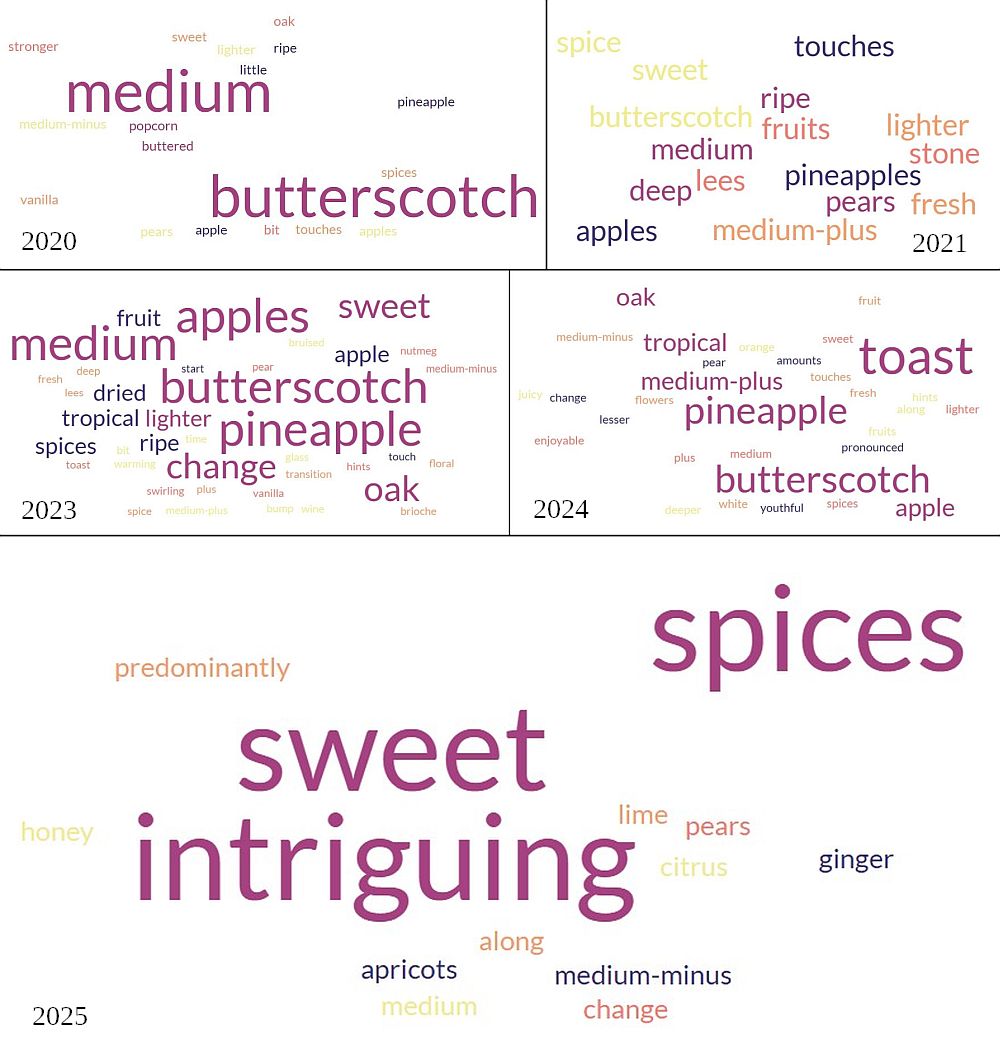
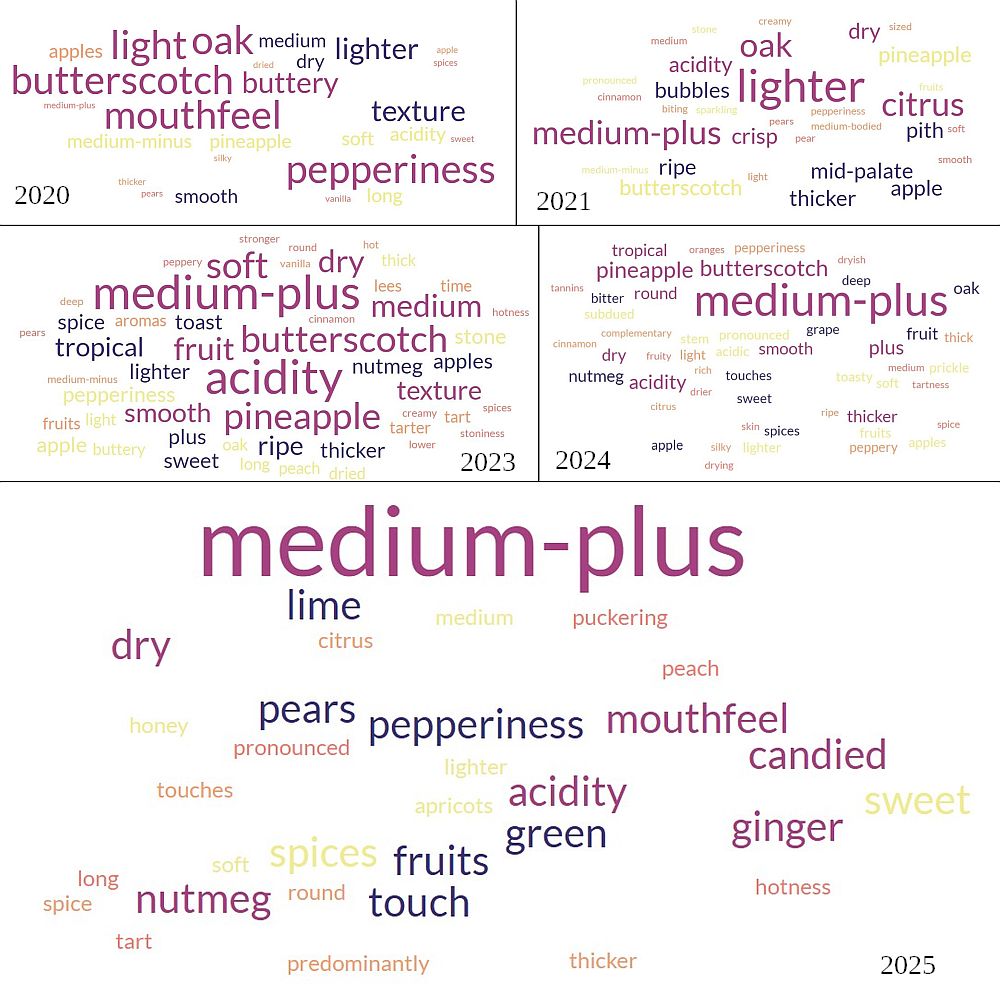
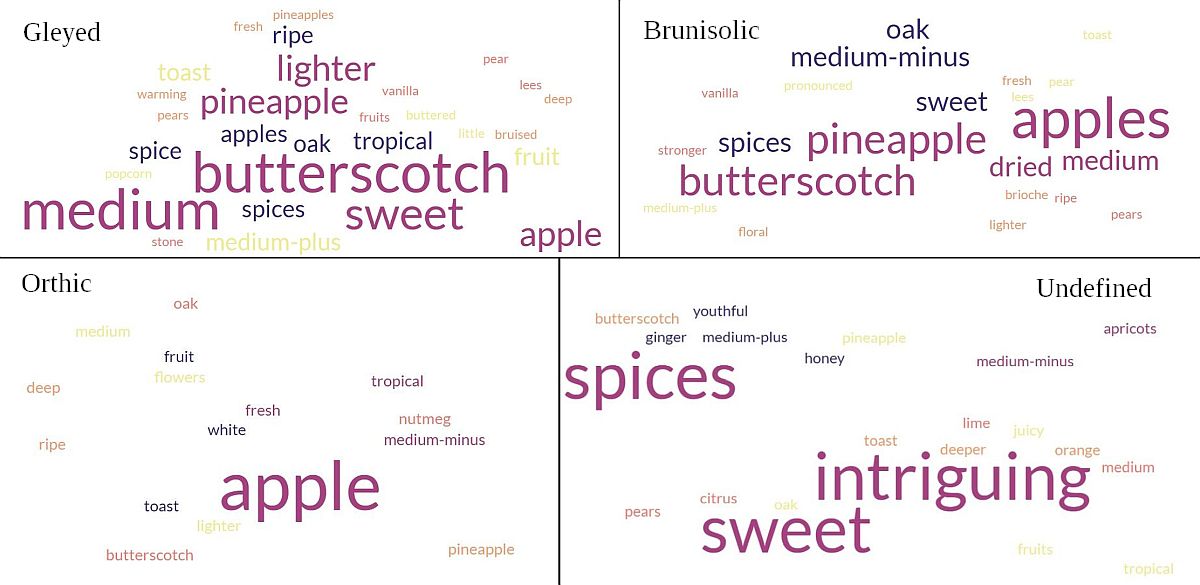
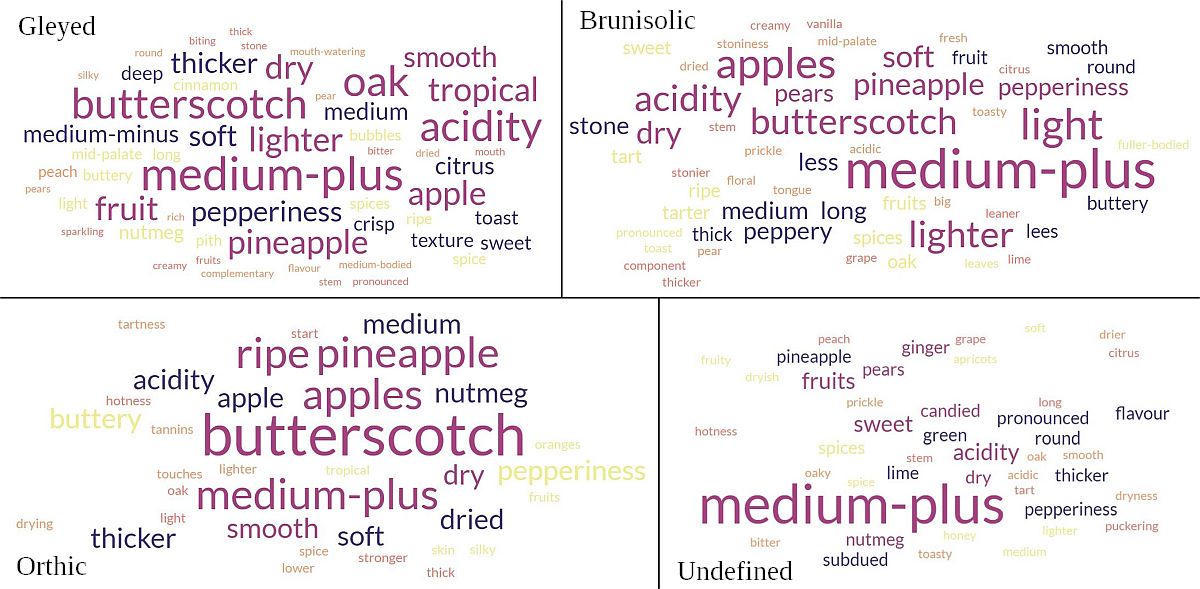
First, how did I determine similarities by year and by soil type? I generated word clouds for the aromas of wines in the same year and then aromas of wines on the same soil type regardless of year. I also generated word clouds for wine flavours by the same year and then by soil type regardless of year. For word clouds, larger printed words mean that those words were located many times. Small-sized words means that those words were mentioned fewer times. Here are the word clouds, followed by my observations by year and soil type, and then discussion of the observations.
Word Clouds By Year
Aromas
Flavours
Word Clouds By Soil Type
Aromas
Flavours
Observations of Aromas and Flavours by Year
2023 and 2024 had the widest range of aromas. Similar aromas, but the aromas were stronger in 2023, which was a hot year. 2020 and 2025 had the least range of aromas but had only two bottles per year. 2021 was a good year and had more aromas, due to more samples, similar in intensity to 2024, but missing the tropical fruit aromas. More stone fruit and apple aromas. 2025 had a very unique bottle from Wending Home Estate Vineyards & Winery giving the sweet, intriguing ginger aromas. The 2020 samples showed more oak influence over the fruit aromas.
There were more flavour descriptors than aromas by year. Oak, butterscotch, and pineapple flavours were more prominent, followed by apples and then sweet spices. Oak and butterscotch come from oak barrel fermentation and aging, so pineapple is the main fruit flavour from the Chardonnay grapes. Lesser citrus flavours were only in 2021, 2024, and 2025. The flavours were predominantly medium-plus in strength. Crispness, tartness, and acidity showed up in all four years. Sweet spices and pepperiness showed up in all the years but were generally lower valued than the fruit or oak flavours.
Observations of Aromas and Flavours by Soil Type
Most of the wines I reviewed were made with grapes grown on Gleyed Gray Brown Luvisol. The strongest fruit flavour from the word cloud was pineapple, followed by apple and then a small amount of pear. Butterscotch was mentioned many times, but this comes from oak barrels. The body appears to be medium mainly, followed by medium-plus.
Brunisolic Gray Brown Luvisol was the second major soil group for the grown grapes. Apples were mentioned the most, followed by pineapple, then a small amount of pear. So there’s a reverse between pineapple and apple from the Gleyed Gray Brown Luvisol soil. A subtle difference. Medium and medium-minus strength were the most common words I used to describe the body of these wines, so a little lighter-bodied than from the Gleyed Gray Brown Luvisol.
Orthic Melanic Brunisol was the least common soil for growing the Chardonnay grapes I reviewed. From this limited sample, apple was the most common flavour, with pineapple and floral being much less frequently mentioned. Oak and butterscotch were also not mentioned to a large degree.
Lastly, undefined soil type, which was a result of grapes used from across the Niagara Peninsula, did not show fruit flavours coming out as strong. It was more sweet spices. Pears, citrus, and pineapple were mentioned about the same amount, so one was not more prominent.
It is interesting for all the wines, the word “minerality”, “mineral”, or “stoniness” did not show up in the word clouds, other than in flavours for 2023, as the Niagara region is well-known for the limestone in the soils. Word clouds show word frequency, so if one of these words only showed up once, for example, it may not show up in the word cloud.
Discussions of Observations
Across all vintages and soil types, Chardonnay in this series is driven more by the interaction of fruit ripeness and winemaking influence than by minerality. The soils provide a subtle framework, but it is the vintage conditions and oak integration that ultimately defined the personality of these wines.
When viewed through the lens of vintage, warm years such as 2020 and 2025 enhanced ripeness and body, amplifying pineapple fruit and strengthening the perception of oak, particularly butterscotch. Cooler and wetter vintages such as 2021 and 2023 shifted the profile toward apple and stone fruit, with a slightly leaner structure and occasional citrus presence. The 2024 vintage stood out as the most balanced, delivering both intensity and harmony across all soil types and producing the most complete expressions of Chardonnay in the lineup.
Taken together, the interaction between soil and vintage shows a clear pattern. Gleyed Gray Brown Luvisol responds most strongly to favourable vintages by building depth and richness, Brunisolic soils consistently lean toward a lighter, apple-driven style that is especially evident in cooler years, and Orthic Melanic Brunisol remains consistently restrained regardless of vintage. Across all combinations, vintage sets the overall intensity, soil subtly guides the fruit direction, and oak remains a defining structural influence that shapes texture across the entire series.
These observations and discussions are based on my sample of sixteen wines. If I had received a larger sample of wines to review, my observations might change. I look forward to any comments you may have based on your personal experiences with Ontario Chardonnays. Give these Ontario Chardonnays a try, as I really enjoyed reviewing them.
Thank You
Thank you to these Ontario wineries for providing me with samples of their Chardonnays:
Dobbin Estate Winery
Wending Home Estate Vineyards & Winery
drea’s Wine Co.
Cave Spring Vineyard
Featherstone Estate Winery
Tawse Estate Winery
Speck Brothers Wine
The Grange of Prince Edward
Henry of Pelham Family Estate Winery