
Abruzzo, an ancient wine-growing region in Italy, is increasingly gaining recognition for its diverse landscapes, commitment to quality, and an evolving wine scene that is challenging preconceptions. While historically known for its red Montepulciano, the region is actively promoting its indigenous white varieties and a unique rosé, Cerasuolo.
To tell us more about Abruzzo we attended a luncheon at The Vancouver Club that had two guest speakers, Barbara Philip MW from BC and Davide Acerra from the Consorzio Vini d’Abruzzo.
A Region of Contrasts and Natural Preservation
Abruzzo’s unique geography plays a significant role in its viticulture and character. It is described as a hidden gem region that takes you by surprise with the variety of its landscapes. This variety stems from its mountainous protection. The soaring Apennines mountain range to the north acts as a buffer against storms, creating perfect vineyard conditions. The region boasts the highest mountains, Maiella Massif which is more or less 3,000 m high. To the east, the Adriatic Sea’s influence yields a mild Mediterranean climate, which produces quality grapes. The vineyards are particularly concentrated in the first 30 kilometres from the sea. Finally, the region is notably dedicated to preservation, known as the “Green Region” of Europe because more than 30% of the land is protected by many national parks.
Winemaking Heritage and Evolution
According to our speaker, Davide, Abruzzo is one of the oldest wine-growing regions in the world and is undergoing a dynamic shift, balancing tradition with innovation. The region is known for its dominant varieties, the red Montepulciano grape, which also includes the Cerasuolo rosé and the white Trebbiano d’Abruzzo grape. Beyond the main grapes, Abruzzo also cultivates Passerina, Pecorino and Cococciola as well as Sangiovese, Chardonnay, Cabernet Sauvignon and Merlot.
There is a push for white varieties. Pecorino, specifically, has seen a resurgence, described as the most popular wine of the last 20 years, having disappeared in more or less in the 1950s and reappeared at the end of the 1980s.
Cerasuolo d’Abruzzo is a distinctive rosé, described as the wine of the farmer in the past. It has a deeper colour like the colour of a cherry, and it seems more like a lighter red wine than a light rosé wine.
The region is driving toward quality with the younger generation who are taking over the wineries and while the past generation used to sell their grapes to cooperatives, but they are going to try bottling it. This signifies a shift towards higher quality and more specific terroir identification.
The Consortium for the Protection of Wines of Abruzzo
This non-profit organization, established in 2002, plays a crucial role in safeguarding and promoting Abruzzo wines. It has 190 associates, including viticulturists, winemakers and authorized bottlers. Its primary aim is to protect, enhance and take care of the interests related to the Controlled Designation of Origin (DOC wines) of the region. They protect wines with Controlled Designation of Origin (DOC) such as Montepulciano d’Abruzzo DOC, Trebbiano d’Abruzzo DOC, and Cerasuolo d’Abruzzo DOC. In addition, it also protects wines with a Typical Geographical Indication (IGT).
Tasting Notes and Wine Characteristics
White Wines

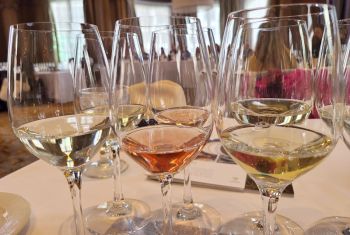
- Valle Martello Brado Cococciola IGT – This wine has pine needles and peach on the nose and a very nice crisp apple flavour on the palate. It also presents minerality on the palate. As it warms up, you can add pine needle flavour. This wine is delicious and vibrant, with great acidity and beautiful aromatics.
- Torre Zambra Pecorino (available at BC Liquor stores and Everything Wine stores) – This organic wine has a nice pine needle nose. It is fuller-bodied, nice and round, and features pine needle on the palate, along with a nice peach flavour. It is dry and very delicious.
- Valori Abruzzo Pecorino – An organic wine. It has a peach scent on the nose, and no pine needle. It has a medium body, a little bit of acidic prickle, dryness, and flavours of stone fruits plus stoniness.
- Mazza Rosa Pecorino – It has some pine needle aroma, though not as pronounced as other wines, and may include honey notes in addition to stone fruits. This wine is described as medium-plus body, with an acidic prickle, dry, and round. The flavours include pine needle and stone fruit, and possibly a bit of tropical fruit.
Red Wines

- Tenuta Cerulli Spinozzi Cortalto Montepulciano d’Abruzzo DOCG – This wine has a very sort of purple-ruby colour that is vibrant looking. The nose offers a juicy berry grape aroma with some oak. It is dry and medium-bodied, with a nice soft round mouthfeel. Flavours include juicy berry with some pepperiness. It has higher acidity and light, fine-grained tannins. A nice fresh wine.
- Tenuta Cerulli Spinozzi Torre Migliori Montepulciano d’Abruzzo DOCG – Also showing a vibrant purple colour, but a much deeper colour than the previous one. It has medium aromas that are not as effusive, featuring deeper purple fruit and more prominent oak on the nose. It is fuller-bodied, round, with a much thicker mouthfeel. The tannins are much stronger than the previous wine, and it has a deep berry fruit flavour. There may also be cherries and a little floral component.
- Casina del Colle Mammut Montepulciano d’Abruzzo 2020 – This wine presents a medium dull vibrant purple-ruby colour. It has light aromas with berries and the oakiness about equal to the berry aroma. It is medium-plus body, smooth and round, though not quite mouth-filling. It is fairly peppery and provides berry flavour, possibly with cherry and the floral component I found in the previous wine. This wine has higher acidity and medium tannins. This could be described as an acid-driven wine, with tannins that are fairly strong but only show up at the end.
I did not see the vintages on all but one of the wines, but they are vintage wines.
Food Pairing and Concluding Thoughts

We were treated with Porchetta with salsa verde on a milk bun, and a Parmesan Wheel Risotto with lemon asparagus, fresh herbs, and micro greens to taste with the wines. I tasted the porchetta with the Valori Abruzzo Pecorino wine and the Risotto with the Mazza Rosa Pecorino wine.
The Porchetta had a nice salty and herbaceous flavour, plus crunch from the crispy skin and juicy savouriness. The stone fruit flavour and acidity of the Valori was complementary to this dish. Likewise, the Parmesan Wheel Risotto was very creamy and had a lot of Parmesan flavour and touches of lemon asparagus and herbs, which went well with the pine needle flavour and the acidity in the Mazza Rosa wine.
I enjoyed tasting all these wines. I read that the Montepulciano d’Abruzzo is a good wine to enjoy with pizza. We did not have that pairing at this luncheon, but I invite you to try it out. I could only find one of the wines we tasted at BC Liquor stores or Everything Wine stores. That being said, Pecorino and Montepulciano d’Abruzzo are enjoyable wines, and I think good summer wines, so check for wines from these grape varieties at your local wine store. Cin cin.