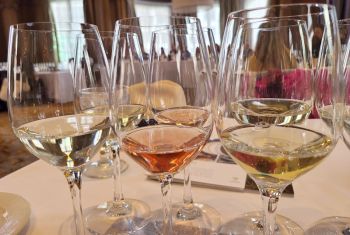
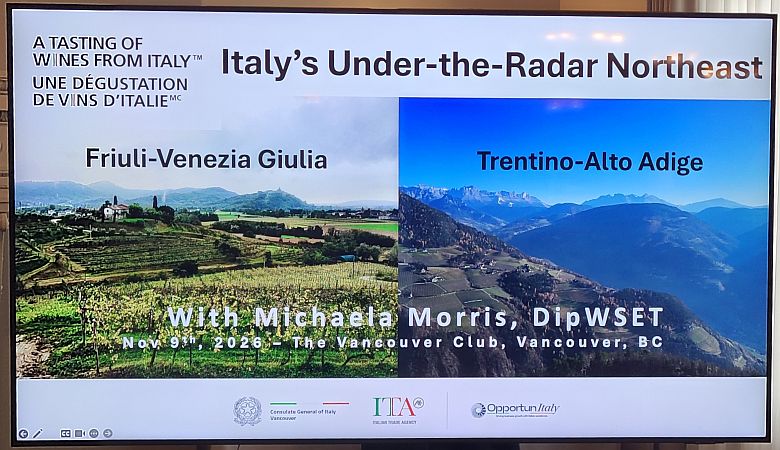
When wine enthusiasts dive into Italian viticulture, heavyweights like Barolo and Chianti Classico inevitably dominate the conversation. As wine educator Michaela Morris DipWSET notes, Friuli-Venezia Giulia and Trentino-Alto Adige are frequently overlooked. Squeezed alongside massive, high-volume production centres like the Veneto, these northeastern territories quietly fly under the global radar. This week I attended a masterclass on the wines from Friuli-Venezia Giulia and Trentino-Alto Adige. Both red and white wines are produced. Many indigenous grapes you may not have heard of, as well as international grapes that were brought into Italy. A fascinating time to taste these wines and experience something different than an oaked Chardonnay or Cabernet blend.
Yet, these two regions represent Italy’s intersection of alpine purity, complex terroirs, and rich historical heritage.
Friuli-Venezia Giulia
Friuli-Venezia Giulia (FVG) is situated in Italy’s far northeast. It represents the geographical meeting point of Italian, Germanic, and Slavic cultures. Bordering Slovenia and Austria, its historical connections run deep. Spanning roughly 30,000 hectares of vineyards, FVG produced 2.02 million hectoliters of wine in 2024 (about 4% of Italy’s national output). Reflecting an exceptional focus on quality-driven viticulture, production is weighted heavily toward quality designations at 80% DOP / 16% IGP, with an overwhelming 88% white wine focus versus 12% red/rosé, largely crafted by small, family-owned estates.
Trentino-Alto Adige
Trentino-Alto Adige is structured along the north-to-south corridor of the Adige River, this mountainous region splits into two distinct provinces: German-speaking Alto Adige (Südtirol) in the north and Italian-speaking Trentino in the south. The region experiences extreme diurnal temperature swings, governed by cold alpine currents from the Alps colliding with warm breezes sweeping up from Lake Garda. Viticulture spans dramatic elevation shifts from valley floors at 200 meters to terraced slopes soaring past 1,000 meters above sea level. Alto Adige recently codified this micro-terroir precision by introducing 86 Unità Geografiche Aggiuntive (UGs) as of the 2024 vintage, mandating strict yield reductions up to 25% below standard DOC limits.
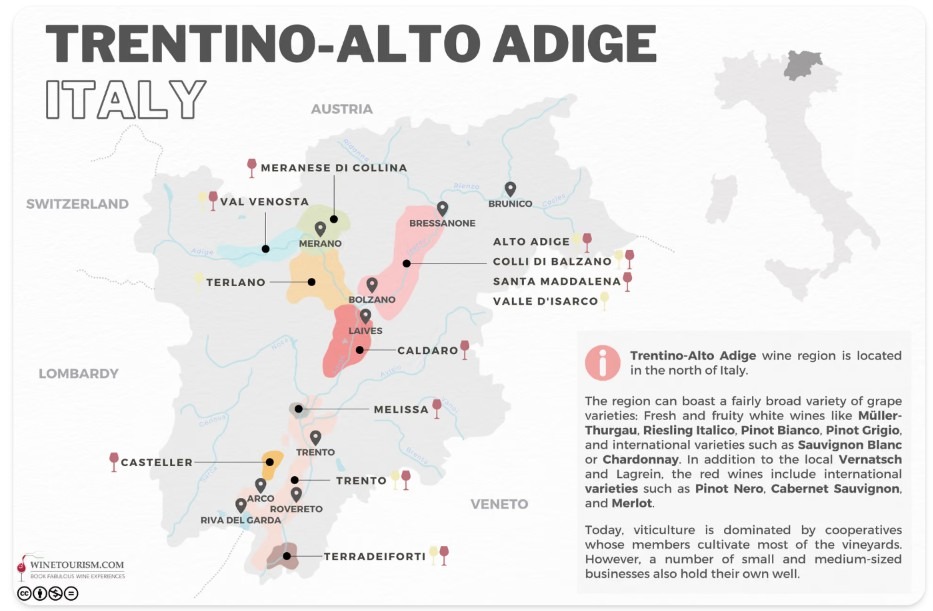
Alto Adige (Südtirol) vs. Trentino
While unified administratively, the territory consists of two distinct cultural and viticultural landscapes formed along a Y-shaped junction of the Adige and Isarco river valleys:
Alto Adige (Südtirol): The Northern Germanic Arm is predominantly German-speaking with deeply entrenched Alpine traditions.
Varietal Focus: 65% White / 35% Red. Celebrated globally as Italy’s premier benchmark for Pinot Bianco (Weissburgunder) and Pinot Noir (Blauburgunder).
Trentino: The Southern Italian Arm is thoroughly Italian in language and culture, extending south toward Verona and Lake Garda.
Varietal Focus: 74% White / 26% Red. Dominated numerically by Pinot Grigio (30%) and Chardonnay (27%). Trento DOC is dedicated exclusively to traditional-method sparkling wines crafted from Chardonnay, Pinot Noir, Pinot Bianco, and Meunier. The Ferrari cooperative accounts for roughly half of Trento DOC’s 10-million-bottle annual output.
Key Grapes
Friulano (formerly Tocai Friulano): The signature white grape of FVG. European Union legal rulings prohibit the word “Tocai” on commercial labels. It produces medium-to-full-bodied whites marked by green apple, pear, unripe mango, green almond, and resinous herbal notes with a distinctively viscous, glycerol-driven texture and balanced, moderate acidity.
Ribolla Gialla: An ancient, thick-skinned, late-ripening variety dating back in local monastic records to the 1300s. Highly vigorous, it thrives on hillside sites. It retains sharp, steely acidity even in hot vintages and rarely exceeds 12.5%–13% ABV. Used for crisp quiet whites, sparkling base wines, and extended skin-contact orange wines.
Refosco dal Peduncolo Rosso: The most prominent native red variety, named for its stems (“peduncles”) which turn bright red as the fruit reaches full maturity. Requires strict yield management and hillside site selection to curb vigour and soften stringent, high-acid tannins. Typically displays notes of sour cherry, wild herbs, floral perfume, and bitter almond.
Schioppettino: Derived from schioppare (“to explode”), producing medium-weight reds packed with vibrant pepperiness driven by high natural levels of rotundone.
Pignolo & Tazzelenghe: Ultra-niche native reds; Pignolo features compact, pinecone-shaped bunches yielding intensely tannic cellar-worthy wines, while Tazzelenghe literally translates to “tongue-cutter” due to its razor-sharp acidity.
Terrano: Grown on the red Carso soils; historically prescribed during the Austrian Empire as a iron-rich tonic for anemia.
Indigenous vs. International Grapes & The White Wine Revolution
Northeastern Italy excels in dual viticultural identities. On one hand, it fiercely guards ancient native varieties such as Ribolla Gialla, Friulano, Refosco dal Peduncolo Rosso, Schiava, Teroldego, and Nosiola that are virtually non-existent outside the region. On the other hand, it produces world-class expressions of “traditional international” varieties, including Pinot Bianco, Pinot Grigio, Pinot Nero, Chardonnay, Sauvignon Blanc, and Merlot that were introduced in the mid-1800s via historical aristocratic ties with France and Austria.
The region’s modern reputation was forged through a white winemaking renaissance. Mid-20th-century white winemaking in Friuli was often rustic and non-temperature-controlled, yielding heavy, oxidative bottlings. Winemaking pioneers, including Mario Schiopetto, Livio Felluga, and Jermann, transformed the landscape by introducing temperature-controlled stainless steel fermentation and reductive handling to capture pure varietal character. Concurrently, modern producers in Collio (led by figures like Joško Gravner and Stanko Radikon) initiated the “Amber/Orange Wine Revolution,” revisiting historical extended skin-contact and amphora fermentations with modern technical skill.
My Wine Tasting Notes and Commentary on the Masterclass Selection
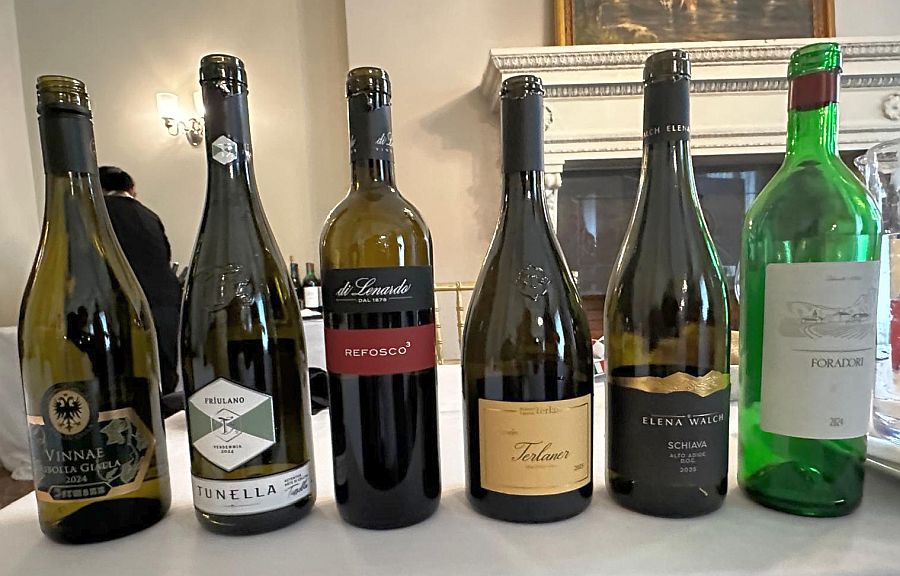
Jermann ‘Vinnae’ Ribolla Gialla, IGT Venezia Giulia 2024 – primarily Ribolla Gialla with touches of Friulano and Riesling. Whole-cluster pressing; fermented and aged in stainless steel tanks. This wine has a light, bright lemon colour. Quite expressive on the nose with sweet stone fruits and some stoniness. Dry, medium-plus body, but lean mouthfeel. Higher acidity. Tart and bright citrus and stone fruit flavours plus a touch of grape stem bitterness. Medium-plus length with a tart finish, along with some grape stem bitterness and some pepperiness. 

La Tunella Friulano, Colli Orientali del Friuli DOC 2024 – made from the Friulano grape (formerly Tokai Friulano). Whole-cluster pressed; cold settled; indigenous yeast fermentation at 16°C for 30–40 days; extended lees contact (bâtonnage) in stainless steel. This wine has a medium intensity, bright lemon colour. Light aromas of stone fruit, grape stem, and black pepper. Dry, medium-plus body with a soft, round, thicker textured mouthfeel. Soft stone fruit flavours plus hints of pepperiness and green fruit. Softer acidity. Medium to medium-plus length. A little tart on the finish along with sweet stone fruits. A quality, easy sipper. – 
di Lenardo Refosco dal Peduncolo Rosso, IGT Venezia Giulia 2022 – from Refosco dal Peduncolo Rosso grapes. Cool-temperature maceration and fermentation in temperature-controlled tanks for 10 days; aged exclusively in stainless steel. It has a medium intensity, very translucent garnet colour. Medium-plus aromas of red fruit, cherries, leather, and sweet spices. Dry, medium body with a light, smooth, soft mouthfeel. Red fruits, almonds, and sweet spices on the palate plus a touch of oak. Medium acidity and lesser tannins. Medium to medium-plus in length, finishing with a mix of tartness and sweet red fruits, plus a hint of leather. An elegant, light sip.
Cantina Terlan Terlaner Cuvée, Alto Adige DOC Terlano 2025 – Founded in 1893, the co-op today unites roughly 140 family growers managing 200 hectares. Made from 60% Pinot Bianco, 30% Chardonnay, and 10% Sauvignon Blanc. Slow fermentation in stainless steel; aged 6–7 months on fine lees (80% stainless steel, 20% large oak casks). It has a light, bright lemon colour in the glass. Light aromas of citrus and green fruit, then with air you also pick up stone fruit aromas. Dry, round, with a little thicker mouthfeel. Medium to medium-plus acidity gives this wine a backbone. Sweet stone fruit flavour with a touch of pepperiness at the tip of your tongue. Medium-plus length, finishing with a mix of tart and sweet stone fruit flavours, some bitterness, and pepperiness. –
Elena Walch Schiava, Alto Adige DOC 2025 – 100% Schiava grapes. Brief cold maceration; cool fermentation in stainless steel; short maturation in stainless steel and traditional concrete tanks. A light, clear, constant translucent cherry colour. Light aromas of tart red fruits and maybe cranberries? Dry, medium body with a smooth, soft, light mouthfeel. Floral, cherries, crunchy red fruits, and some cranberry on the palate. Very light tannins. An acid-driven wine. Medium length with tart red fruit, cherries, and some oak tannins on the finish.
Foradori Teroldego, IGT Vigneti delle Dolomiti 2022 – 100% Teroldego grapes. Fermented with indigenous yeasts in subterranean Spanish clay tinajas (amphorae) and large oak casks; aged 12 months. Utilizing biodynamic viticulture. It has a deep, dull garnet colour. About 80% opaque. Medium intensity, deep aromas of black fruit, pepper, and Old World oak. Medium-minus intensity aromas of black fruits and black berries, oak, and a hint of candied cherries. This wine is dry with a medium to medium-plus body and a soft, smooth mouthfeel. Medium to medium-plus acidity and soft, light tannins. Tart red and black fruit, plus red cherries and a touch of pepper on the palate. A complex mix of flavours. Medium-plus length. –
All six wines at this masterclass have wine agent representation. Some wines may be generally listed while others, SPEC, and may be found at specialty wine shops or restaurants. You will have to check. Thank you to Michaela Morris for presenting this material and taking us through each of the wines at this masterclass.