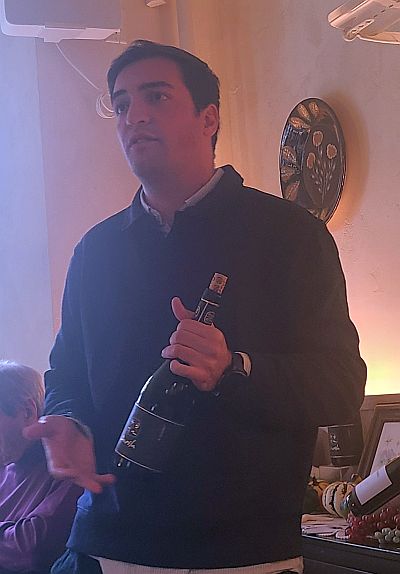
At Casa Molina, widely celebrated as the most authentic Spanish restaurant in Vancouver, a remarkable culinary gathering hosted by World Wine Synergy brought the green, wind-swept region of northwestern Spain to the Pacific Northwest. The masterclass brought Yago Gómez, representing his family’s estates in Galicia, Adegas Valmiñor and Mínius, to Casa Molina to speak about their wines.
Minius started in 2014, produced in Oímbra, Ourense (D.O. Monterrei), and expresses the warmer interior Galician terroir, concentrating on Godello and Mencía grapes.
- Albariño: The cornerstone white grape of Rías Baixas, known for bright citrus, stone fruit aromatics, crisp acidity, and a distinct mineral finish shaped by schist soils.
- Loureiro Blanco: An aromatic varietal defined by floral, herbal, and laurel notes.
- Treixadura: Contributes mid-palate texture, weight, and delicate grapefruit notes when blended with higher-acidity varieties.
- Godello: Delivers structural weight, stone fruit richness, and textural balance.
- Caíño Blanco: A late-ripening grape that provides firm structure, vibrant acidity, and extended aging potential.
Red Varietal Breakdown
- Mencía: The signature red varietal of interior Galicia, delivering wild red fruit aromatics, floral violet notes, and a mineral-driven palate.
- Castañal: A rare native red grape contributing deep colour, dark fruit character, and tannic structure.
- Sousón: Valued for its intense colour extraction, firm tannin structure, and high natural acidity in Atlantic red blends.
Wine Discussion and Tasting Notes
Wines
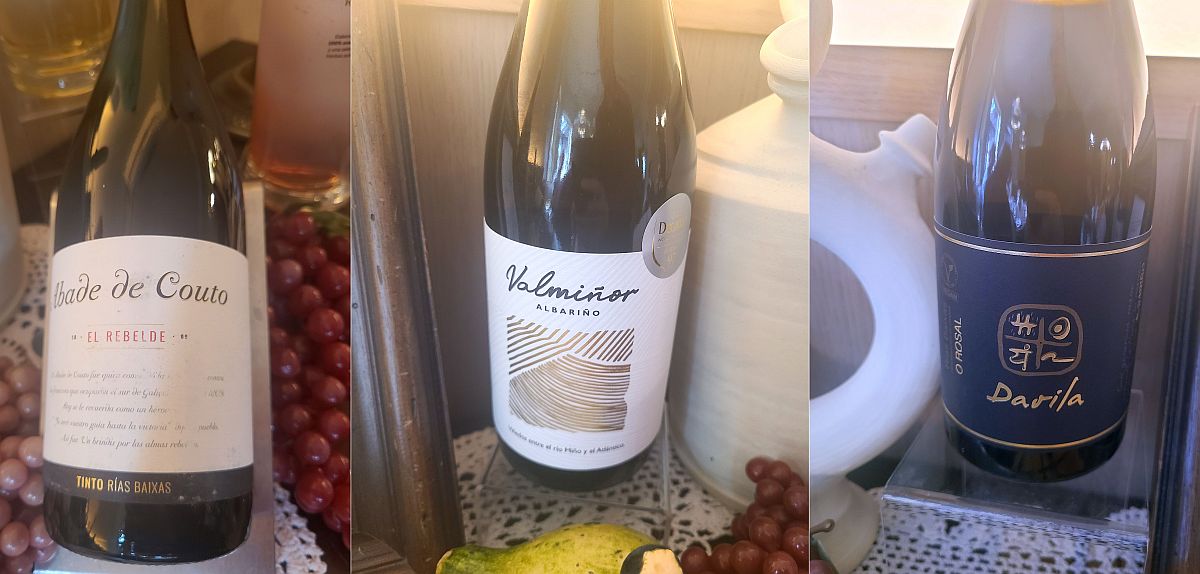
Abadía de Couto 2021
The Abadía de Couto 2021 is a red blend made of Caiño Tinto, Brancellao, and Sousón. Informally dubbed “The Rebel” for asserting a red presence in a territory where white grapes account for over 95% of production. The wine carries a colourful history rooted in local folklore. Legend has it that a historic village priest (Abad) in O Rosal single-handedly repelled invading French troops without firing a shot; he hosted a lavish feast for the officers and served them poisoned local wine. Yago lightheartedly assured guests that the present vintage was entirely safe for consumption.
The Abadía de Couto 2021 has an opaque garnet colour with a ruby rim. Medium intensity, deep aromas of sweet cherries, plums, and oak. It is dry, medium-bodied with a lean mouthfeel. Sweet and tart cherries, plus oak on the palate. Medium acidity and tannins. 
 –

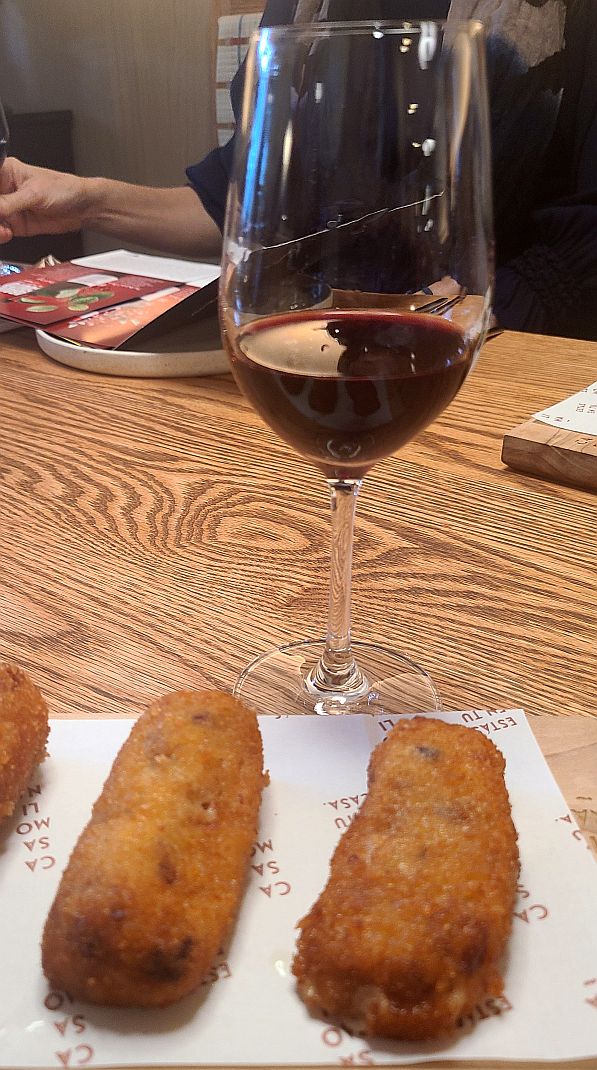
The wine was paired with a rich Croqueta de Jamón Ibérico. Encased in a golden, crispy crust, the rich, velvety béchamel interior, studded with savoury cured ham, offered a luxurious creaminess that paired with the acidity and crunchy red-fruit profile of the wine. The acidity kept the croqueta fresh.
Valmiñor 100% Albariño 2024
The Valmiñor 100% Albariño 2024, their flagship wine, comes from the O Rosal subregion, where the Miño River meets the Atlantic Ocean. A portion of the fruit originates from the historic Katusa plot, the estate’s oldest vineyard, where 35-year-old ungrafted, own-rooted vines grow in sandy alluvial riverbed soils. Vinified in stainless steel with fine lees contact but no active battonage (lees stirring), the wine preserves its crisp maritime focus while gaining subtle mid-palate weight.
The Valmiñor 100% Albariño 2024 has a bright, medium-intensity lemon colour. Medium intensity citrusy, orange, and orange blossom aromas. Dry, medium-plus body with a soft mouthfeel. Medium acidity. Citrus flavours, with lesser amounts of sweet spices, stone fruits, and pepperiness. AN elegant wine. Fresh acidity but not making the wine tart. –
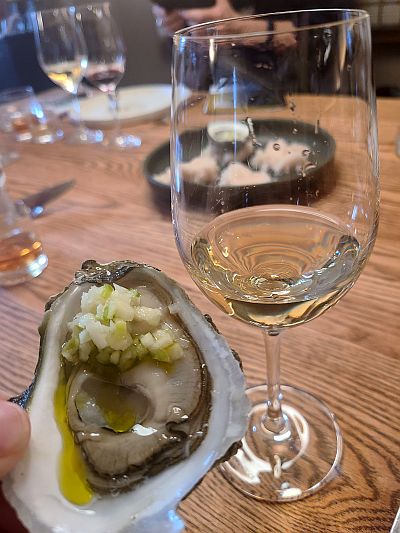
The wine was paired with a pristine Vivero Oyster, garnished with shaved fennel, crisp green apple, fresh jalapeno, and dill oil. The briny, sweet oyster and its bright herbal accent provided a complimentary pairing to this wine. I enjoy the crunchy, creamy texture and the herbal flavour of the oyster. The smoothness of the wine offered a contrast to the crisp flavours of the oyster.
Davila O Rosal 2024
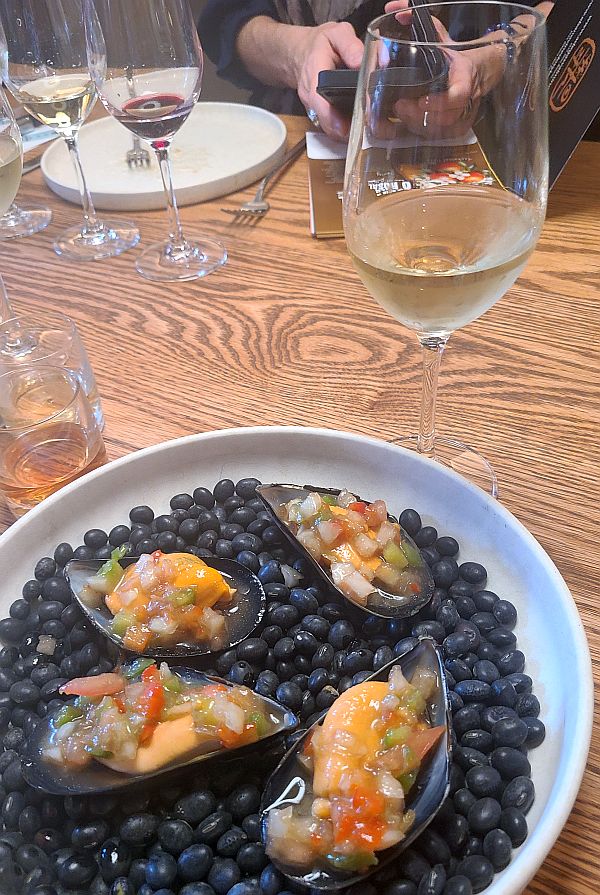
The Davila O Rosal 2024 is a blend of 54% Loureiro, 40% Albariño, and 6% Treixadura that is fermented in stainless steel tanks. Davilla undergoes active battonage on its lees, adding texture to the wine. Yago explained that the winemaking team adjusts these varietal proportions with every vintage to compensate for natural fluctuation in seasonal acidity, ensuring a consistent structural balance.
The winery’s emblem depicts an ancient Celtic four-element spiral carved into a stone on the mountains overlooking the estate, symbolizing rain, sun, air, and earth.
Davila O Rosal 2024 is in the BC market. This wine has a pale lemon/straw colour. A light stone fruit nose. Dry, medium-plus body with a viscous, thicker mouthfeel. Flavours of chamomile, spice, floral, and sweet citrus flavours. A tasty wine. Available at BCL.
The pairing featured Steamed Galician Mussels tossed in a vinaigrette of diced bell peppers, sweet onions, ripe tomatoes, strained mussel broth, and aged sherry vinegar. The bright vinigrette worked with the acidity of the wine and its fruit flavours. The wine’s flavours and acidity were also complimentary to the earthiness and texture of the mussels.
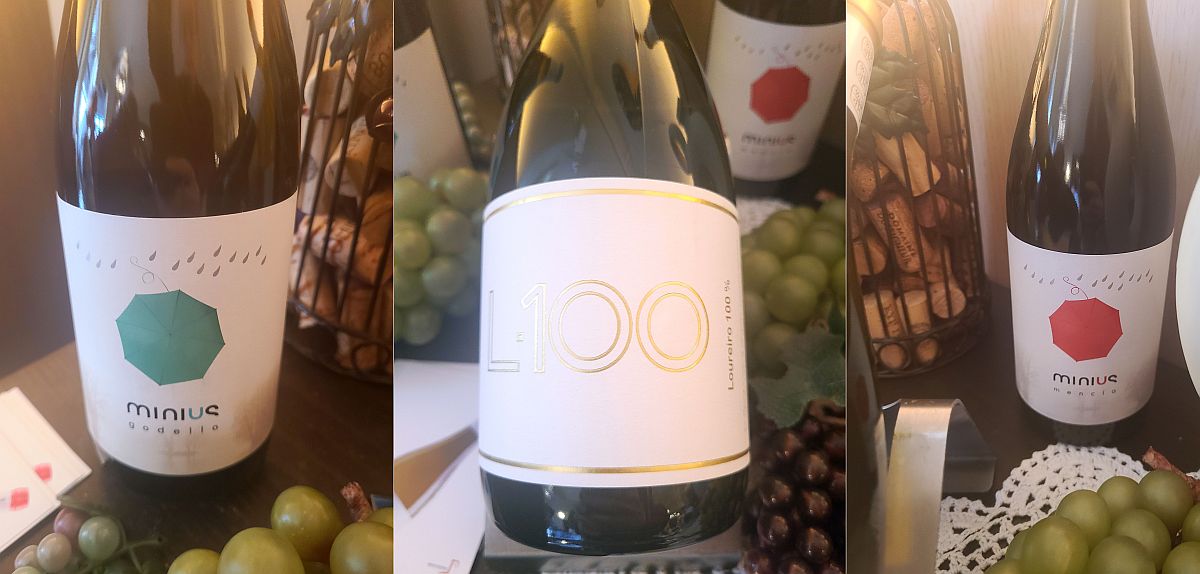
Mínius Godello 2024
Moving inland along the Miño River corridor toward Monterrei, the terroir shifts dramatically. Monterrei features a continental microclimate defined by sharp temperature swings between hot summer days and cold nights. The soil also changes from metamorphic granite to clay and slate-rich soils.
The Mínius Godello 2024 has a pale straw colour. Light aromas of citrus and stoniness. Dry, medium-plus body with a round, smooth, thicker mouthfeel. Stoniness on the palate along with light stone fruit flavours and some bitter grape stem. Medium acidity. Medium to medium-plus length.
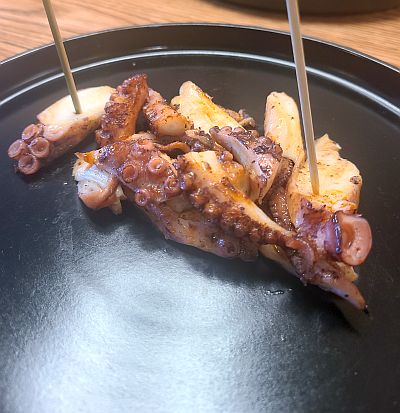
It was served alongside Pulpo a la Gallega (Galician-style octopus imported directly from Spain). The octopus was cooked until tender, sliced onto round wooden plates, drizzled with extra virgin olive oil and dusted with sea salt and smoky hot paprika. I quite enjoyed the crunch and salinity and texture to the octopus. The paprika flavour was not too strong. The bright acidity of the wine and fruit flavour, paired nicely with the marine flavour and texture from the octopus.
Adegas Valmiñor L-100 Gama Loureiro 2023
The white flight concluded with the Adegas Valmiñor L-100 Gama Loureiro 2023. Loureiro is a grape typically used in small amounts in blends due to its low yields. The wine undergoes a six-to-eight-hour cold skin maceration prior to pressing, extracting essential oils that lend delicate aromas of bay leaf, white tea, and crushed blossom, framed by a subtle, natural effervescence retained from stainless steel aging, according to Yago. He also noted that historically, single-varietal Loureiro was so revered that farm families refused to sell their tiny yields to commercial buyers. Instead, bottles were stashed away in home cellars, brought out exclusively when prestigious guests, such as the visiting country doctor or the local Marqués, came to call.
The Adegas Valmiñor L-100 Gama Loureiro 2023 has a very pale lemon colour, almost white. Medium-intensity aromas of floral and oranges. Medium body with a lean but slightly thicker mouthfeel. Bright acidity. Citrus, spicy, mineral, bay leaf, and floral on the palate.
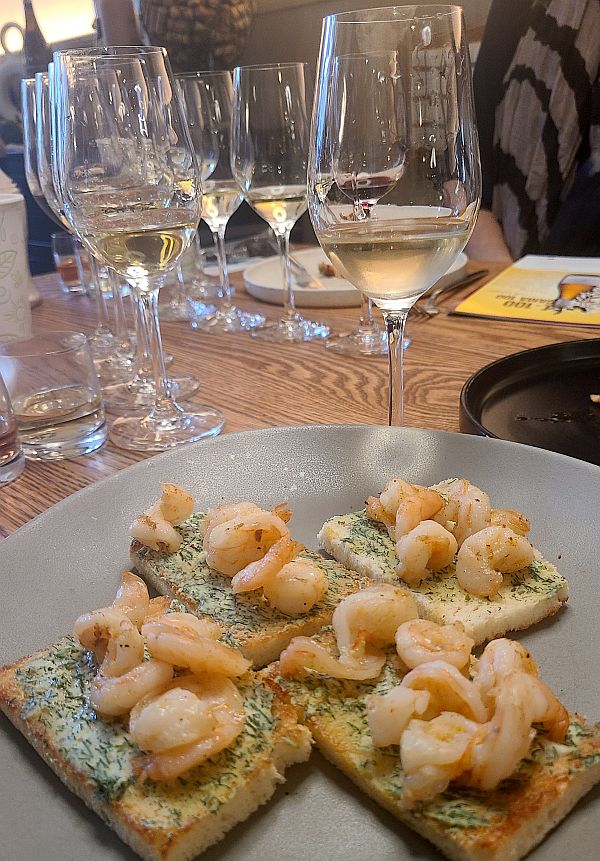
The wine was paired with a Shrimp Toast accompanied by sweet fennel, dill, and creamed cheese. The dill or fennel flavour was quite prominent. Light creaminess from the cheese. The acidity of the wine made the cheese more lively. The citrus flavour of the wine also contributed. I like the texture from the shrimp and the crunch from the toast. The wine overall added softness and moistness to the dish.
Minius Mencía 2024
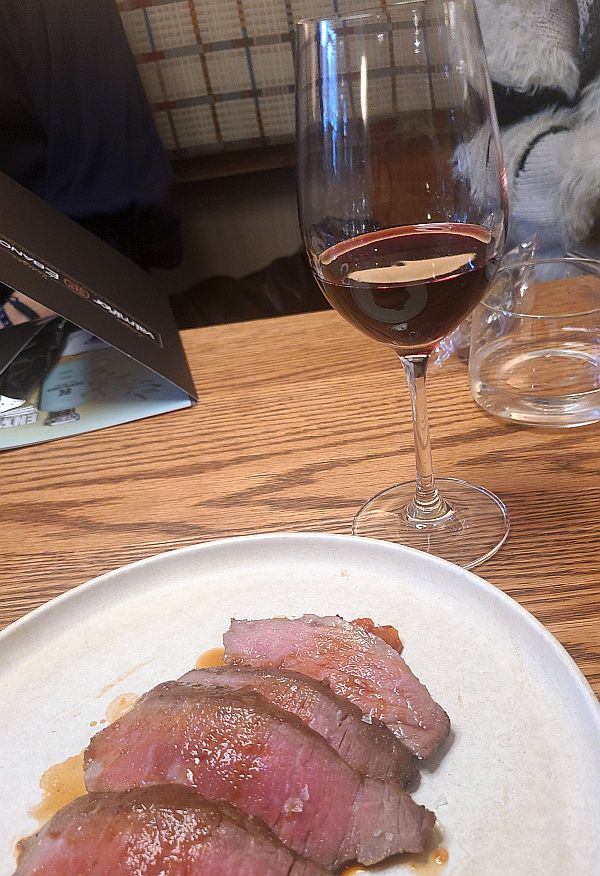
For the final sip, we returned to the Minius Mencía 2024 red wine from the continental terrain of Monterrei. Grown on steep slate and clay slopes, this bottling reveals the cool-climate personality of Mencía, reminiscent of high-altitude Pinot Noir or Loire Valley Cabernet Franc according to Yago. The name Mínus holds deep regional symbolism; it is the ancient Latin name for the Miño River (Río Miño), which flows across the heart of Galicia and is represented by the diagonal blue stripe on the official Galician flag.
The winemaking team avoided oak aging for this bottling, maturing the wine entirely in stainless steel. By omitting barrel influence, the winery wanted to show off the fruit expression, crisp acidity, and minerality of this wine.
The Mínius Mencía 2024 has an opaque garnet colour with a touch of ruby at the rim. Light cassis and blackberry nose. Dry, medium-plus body with a lean, light mouthfeel. Black fruits, juicy blackberries and light pepperiness. Medium acidity and tannins. Medium to medium-plus length finishing with tart berry fruit flavours. Acid-driven to the finish. Light tannins. –
The wine was paired with a grilled cut of feiró, a highly marbled top shoulder cut of Spanish pork, served alongside sweet roasted red peppers. I enjoyed the salty, chewy and meaty flavour of the pork. The acidity and red fruit flavour in the wine complimented the texture and fattiness of the pork.
Did you notice the red umbrella and rain drops on the label? Reminds me of our rainy climate here as well.
Vermouth
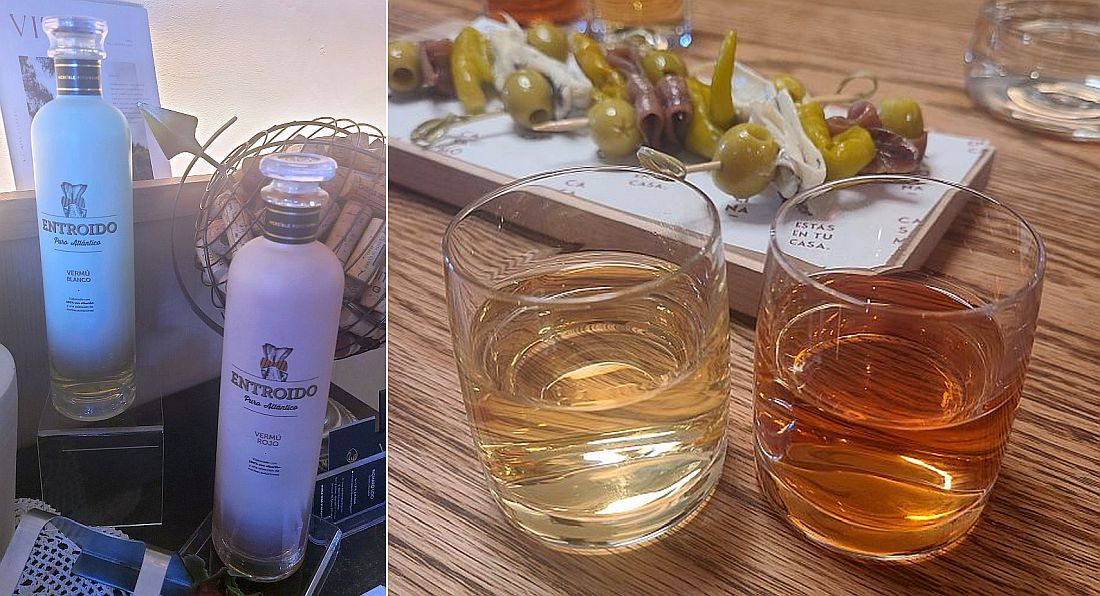
In addition to traditional still wines, we tasted two vermouths made using Albariño Valmiñor base wine. One was a light amber colour, while the other was a light red colour. Both were made with different herbs as well as grape treatment. Reinterpreting traditional vermouth production, which historically relied on surplus base wines, according to Yago, and masked by heavy sugars, their vermouths start with a base of 100% Albariño wine. It is naturally fermented to 13% alcohol by volume, then the base wine is fortified to the required 15% ABV using neutral grain spirits.
Their Entroido White Vermouth was crafted by macerating native Galician botanicals, including cardamom, rosemary, and coriander, in a hydroalcoholic base for two months to extract their flavours and aromas. The infusion was then blended with an Albariño Valmiñor wine base and sugar, without added anthocyanins, allowing it to retain its amber colour. Adjusted to 15% ABV, the vermouth is filtered and bottled, resulting in a crisp, aromatic style.
This vermouth had a light citrus nose. Medium-minus body with a soft mouthfeel. Citrus and spicy flavours. Off-dry. Nice acidity. A tasty sip on its own.
The Entroido Red Vermouth was crafted by macerating native Galician botanicals, including fennel, coriander, eucalyptus, and laurel, in a hydroalcoholic base for two months to extract their flavours and aromas. The infusion was then blended with an Albariño Valmiñor wine base, sugar, and red grape anthocyanins for colour. Adjusted to 15% ABV, the vermouth was filtered and bottled, resulting in a smooth, spiced, and complex red aperitivo. The red vermouth represents a technical achievement borne out of a five-year research initiative with the Polytechnic University of Madrid. Seeking to avoid additives or synthetic dyes to achieve the red colour, the team perfected a method to extract the natural pigment, anthocyanins, from red grape skins. This process imparts a reddish hue without introducing artificial sweetness or altering the integrity of the base wine.