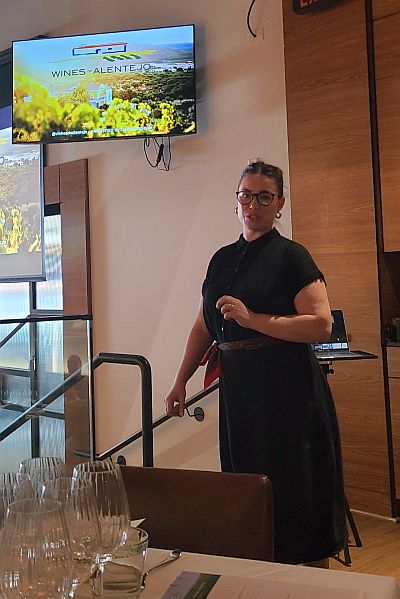
Have you ever heard of the Alentejo wine region? Would you guess it is in Spain, Portugal, or Chile? If you guessed, Portugal, you would be correct. Recently, I attended a Wines of Alentejo trade learning session held downtown at Coast. It was presented by wine educator Jenna Brisco. The session provided a comprehensive overview of the Alentejo wine region, highlighting its climate, sub-regions, indigenous grape varieties, historic winemaking practices, modern sustainability leadership, and commercial positioning within North American markets.
Below is the information provided to the attendees by Jenna, followed by my wine tasting notes and a brief mention of how these wines paired with a lunch provided at the seminar.
Where is Alentejo Located?
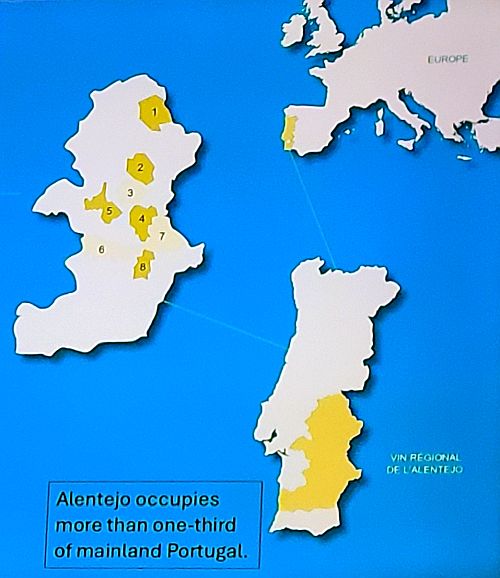
Alentejo is located in southern Portugal and extends from approximately 40 kilometres west of the Spanish border to near the southern coastline, with its western reach touching coastal influences. The regional capital and historic heart is Évora, famous for its Roman ruins and agricultural foundation. The region is approximately a 1.5 hour car ride east of Lisbon, making it easily accessible.
Alentejo spans 2.35 million hectares (occupying roughly one-third of Portugal’s total land area), with 23,125 hectares of planted vineyards. It accounts for 40% of Portugal’s domestic wine market share. Annual production reaches 107 million litres, with 18 million litres exported across primary global markets (including Brazil, the United States, Canada, Poland, and Switzerland). Production is dominated by red wines (78.1%), followed by white wines (20.5%), and a small fraction of rosé (1.4%).
There are eight sub-regions which include:
- Portalegre (Northeast): Nestled in the high-elevation northern Serra de Mamede range along the Spanish border, Portalegre features granitic soils, cooler mountain air, and an abundance of old vines that deliver minerality and vibrant acidity.
- Borba & Évora: Positioned in the central-northern sector, these moderate microclimates feature clay-limestone and schist soils. Borba yields aromatic reds and fresh, mineral-driven whites, while Évora represents the historic, Roman-influenced agricultural heart of the region.
- Granja-Amareleja, Reguengos, & Moura: Occupying the hot continental interior, these sub-regions feature poor soils and intense summer thermal mass. Granja-Amareleja is the largest sub-region in Alentejo, characterized by sparse soils and extreme heat, while Moura endures sharp winter cold and scorching summer heat, producing concentrated, structured wines from heat-tolerant grapes like Castelão.
- Vidigueira (South): Serving as the geographical bridge between Alto (upper) and Baixo (lower) Alentejo, Vidigueira benefits from volcanic and schistous soils alongside cooler southern airflow, creating temperate conditions during the ripening phase.
Grapes and Winemaking
Alentejo is classified as the warmest wine region in continental Europe for quality wine production. The general climate is a combination of Mediterranean and interior continental, characterized by very hot, dry summers and low precipitation. There is one area to the north that is cooler and more viable for white grapes. The region cultivates 86 grape varieties. Winemaking is primarily focused on multi-grape indigenous blends rather than single-varietal bottlings, leveraging traditional varieties such as Alicante Bouschet, Aragonez, Trincadeira, Antão Vaz, and Arinto.
Their winemaking ranges from ancient Roman traditions (2000 years ago), specifically Vinho de Talha (fermentation in large clay amphorae called talhas), to state-of-the-art, temperature-controlled stainless steel facilities when they joined the European Union in 1986. For those of you interested in sustainability, there is the Wines of Alentejo Sustainability Program (WASP) which is integrated into their regional DOC body rather than managed by a third party. Through this program, active members have achieved a 30% reduction in energy consumption and a 20% reduction in water usage, alongside circular economy initiatives and ecosystem management.
It should also be noted that Portugal supplies over 50% of the world’s natural cork. Cork oak trees (Quercus suber) require a minimum of 9 to 11 years between bark harvests. Alentejo wine estates actively maintain cork oak forests, promoting biodiversity, supporting native species (such as sheep grazing in vineyards for weed control), and prioritizing natural cork stoppers.
At present, British Columbia Liquor Stores carries five general listings from Alentejo, with additional presence on private retail shelves and restaurant wine lists.
Main Grape Varieties
The main red grape varieties are:
- Alicante Bouschet: A French crossing that found its spiritual home in Alentejo. It provides pigment, structural weight, cocoa notes, and longevity.
- Aragonez (Tempranillo): A widely planted early-ripening variety providing roundness, plum fruit, and spice. Due to climate warming, some growers are scaling back reliance on Aragonez to prevent sugar levels from outpacing physiological ripeness.
- Trincadeira (Tinta Amarela): Historically difficult to ripen, Trincadeira is undergoing a major revival. Its natural acidity and herbal/floral lift counteract the intense heat of the region, providing vital freshness to red blends.
- Alfrocheiro: A native variety requiring significant heat to mature; it adds dark berry fruit, refined structure, and balance.
- Castelão (Periquita): A rustic, tannic, high-acid variety that thrives in the extreme, arid heat of eastern sub-regions like Moura.
- Touriga Nacional: Famous across Portugal, it brings floral aromas, a deep purple colour, and dark fruit concentration.
- Syrah and Cabernet Sauvignon: Introduced after joining the EU in the late 1980s, Syrah thrives in Mediterranean heat, whereas Cabernet Sauvignon is declining due to its high water demands in a dry environment.
And the main white grape varieties are:
- Antão Vaz: The flagship white grape of Alentejo. It features thick skins and withstands intense heat, yielding structured, full-bodied white wines with tropical fruit notes, citrus undertones, and a rich textural weight.
- Arinto: Essential for maintaining structural acidity in white blends. It contributes bright citrus, green apple, minerality, and a long cellaring capability.
- Síria (Roupeiro): Generous and highly aromatic in its youth (with peach, citrus blossoms), but consumed fresh as its aromatics fade over time.
- Fernão Pires (Maria Gomes) and Gouveio: Offers expressive floral aromatics and creamy mid-palate weight, respectively.
My Wine Tasting Notes
Note: none of these wines are currently in the market, but when you read about the grape blends that go into these wines, it may give you an idea of what to expect when you purchase an Alentejo wine that is currently listed at BC Liquor stores or at private wine shops.
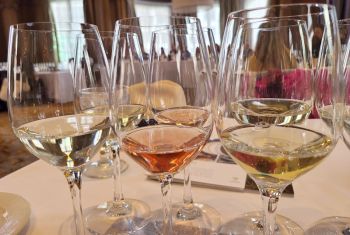
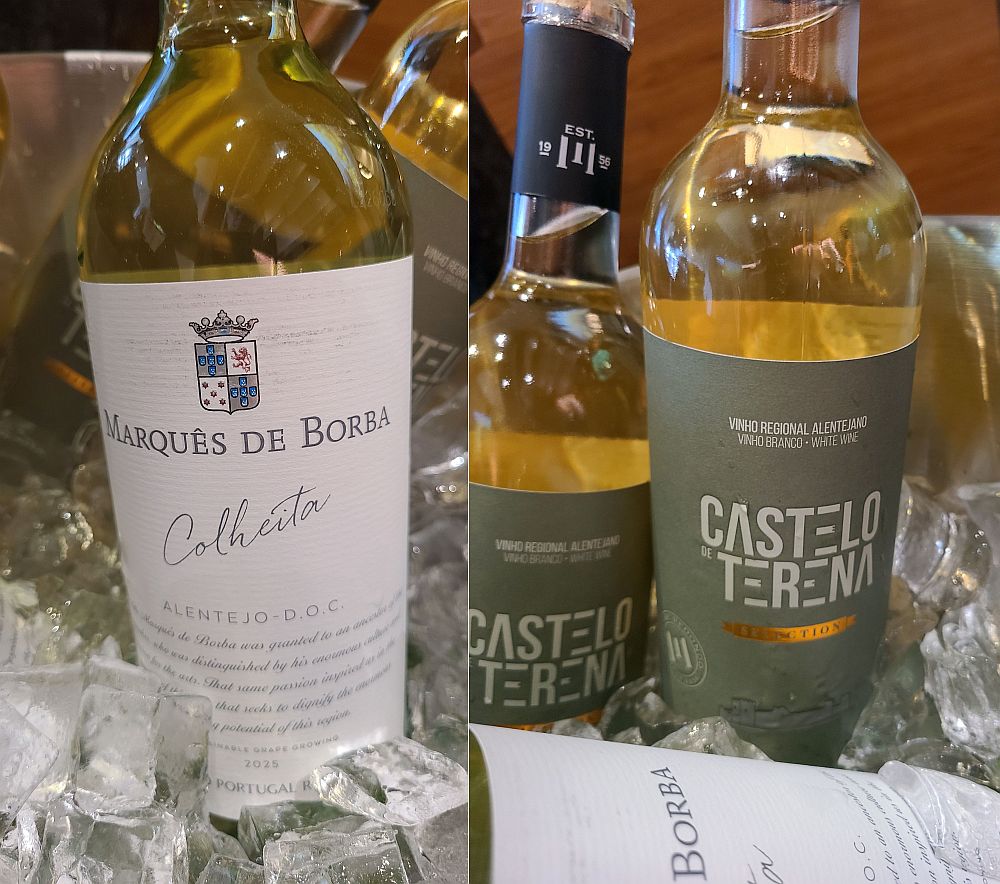
Joao Portugal Ramos Vinhos Marques de Borba Colheita 2025 – a blend of Arinto, Antao Vaz, and Viognier. It has a medium-minus intensity, clear, bright lemon colour. Fresh, ripe stone fruit nose. Dry, medium-minus body, with a lan moutghfeel. Bright acidity. Citrus and fresh stone fruit flavours, plus some pepperiness from the mid-palate to the finish. Tart finish. 

Adega Cooperativa de Redondo Castelo de Terena Selection Regional 2023 – Roupeiro, Rabo de Ovelha, and Arinto. A medium-intensity lemon colour. Medium-minus intensity aromas of apples and some petrol. This wine is dry, medium body with a lean, smooth mouthfeel. Medium-plus acidity. Apple, petrol, and some citrus pith on the palate. Also pepperiness from the mid-palate to the finish. This wine has a nice texture (mouthfeel).
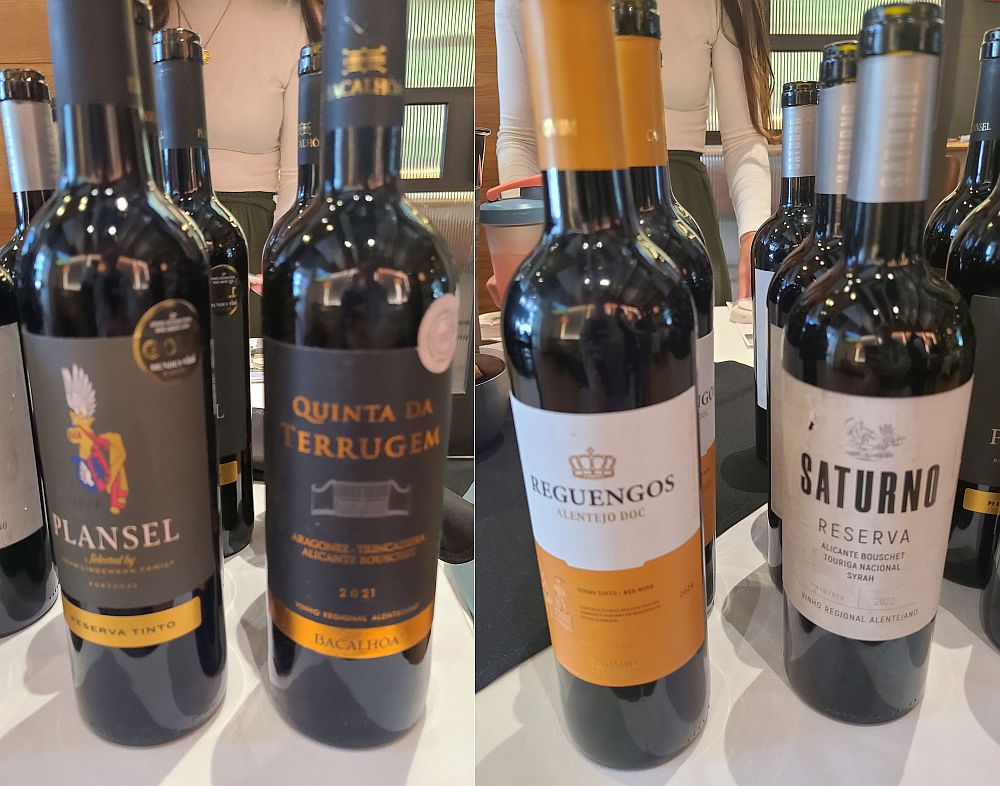
Quinta da Plansel Selecta Reserva 2023 – Aragonez and Tinta Barroca. It has a deep ruby colour. Medium-intensity aromas of fresh berries plus a hint of oak and sweet spices. Dry, medium body with a smooth and soft mouthfeel. Ripe, fresh berry fruits and some pepperiness. Medium-plus acidity and light, soft tannins. An easy sipper.
Carmim Reguengos – An indigenous red blend (Aragonez, Trincadeira, etc.). It has a medium-intensity ruby colour. Medium intensity aromas of berry fruits and a touch of oak. Dry, medium-minus body with a lean mouthfeel. Berry fruit, red currants, and cherries on the palate, plus light pepperiness. Medium acidity and tannins. Acid driven. Medium length. Tasty.
Herdade Monte da Cal Saturno Reserva 2022 – 40% Touriga Nacional, 30% Alicante Bouschet, and 30% Syrah. A deep ruby colour. Rich aromas of cedar and ripe black fruit. Dry, medium-plus body with a smooth, round, thicker texture. Cedar and ripe black fruits with some butteriness on the mid palate. Medium-acidity and tannins. 
Bacalhôa Quinta de Terrugem 2021 – Aragonez, Trincadeira, and Alicante Bouschet. Deep ruby colour. Light aromas of sweet spices and red and black fruits. Dry, medium body with a smooth mouthfeel. Medium acidity and medium-plus drying tannins. Red and black fruit flavours, along with a hint of capsicum and pepperiness. Grippy tannins on the finish. Medium-plus length. –
My Food and Wine Pairings
My appetizer was a West Coast crab cake made with dungeness and rock crab, herb mayo, cucumber, and dill, and my entree was a Canadian prime 10 oz striploin steak along with potato puree, baby heirloom vegetables, and red wine jus. I tried the two white wines with the crab cake and the four red wines with the steak.
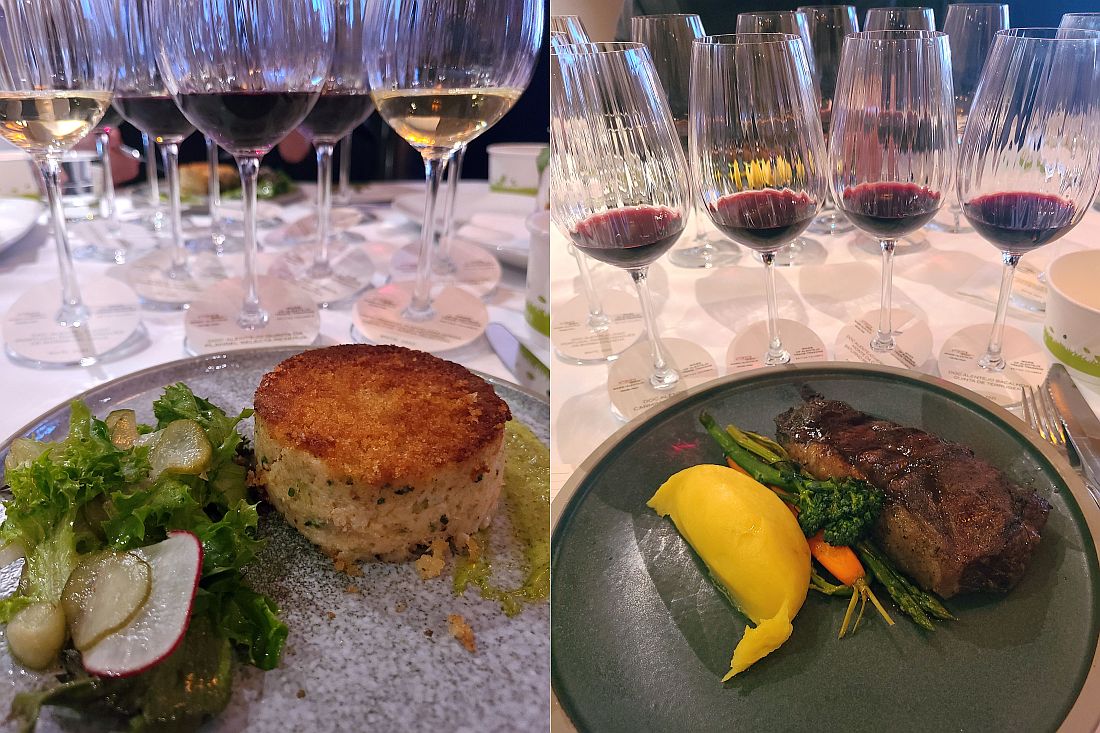
The crab cake was huge and thick. I enjoyed the texture of the shredded crab and the herbaceousness from the mayo. The crunchy top of the crab cake was also enjoyable. The pairing was complementary with both white wines, but I preferred the Joao Portugal Ramos Vinhos Marques de Borba Colheita 2025 a bit more with the crab cake. You get fresh crab and herb flavours and fresh wine flavours.
The striploin steak was done medium-rare. It had a nice grilled flavour and was softly chewy. A touch of saltiness and buttery texture. A juicy steak. All four red wines also made complementary pairings to the steak. I enjoyed the bright acidity and red fruit flavours from the Carmin Reguengos with the steak. The sweet spices and cedar flavour from the Planasel were a good pairing with the buttery fatness of the steak. The Terrugem was fuller-bodied and matched the body and fuller flavour of the steak. Lastly, the Saturno’s juicy berry flavour was complementary to the buttery texture of the steak.
The meal was delicious. Thank you to Coast and the chefs for their excellent culinary work.