
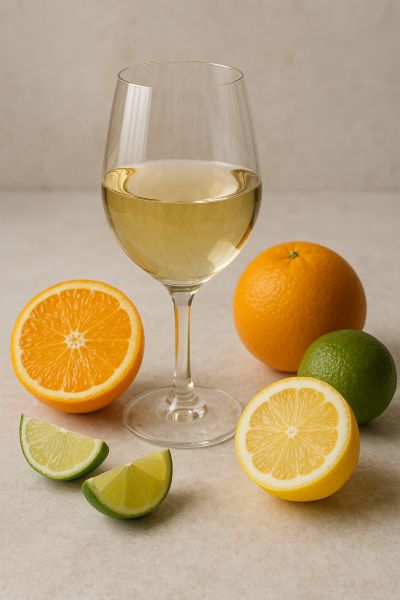
When you swirl that glass and ponder why one wine tastes crisp and lively while another feels soft and mellow, you’re sensing the delicate interplay of pH and TA, two key metrics that shape wine’s structure and personality. While often mentioned together, these two measures describe distinct aspects of acidity: pH reveals how strong the acid is, and TA reflects how much acid is present. Below I get into the details of pH, TA, and how winemakers deal with their balance. A little geeky. Sorry in advance.
About pH
pH is a logarithmic scale ranging from 0 to 14 that indicates the concentration of free hydrogen ions in the wine. Typical wine pH values fall between 2.9 and 4.0. A lower pH means more active hydrogen ions and thus sharper acidity. That acidity not only gives a wine its bright edge, it also plays a critical role in its microbial stability and colour preservation. Most winemakers aim to keep pH below around 3.6 as this inhibits spoilage organisms and enhances the effectiveness of sulphur dioxide. It also helps red wines maintain vibrant anthocyanin (red-blue-purple colours) pigment, whereas a pH above 3.6–3.8 risks dull colour and bacterial issues (Decanter, Winemakers Research Exchange).

About TA
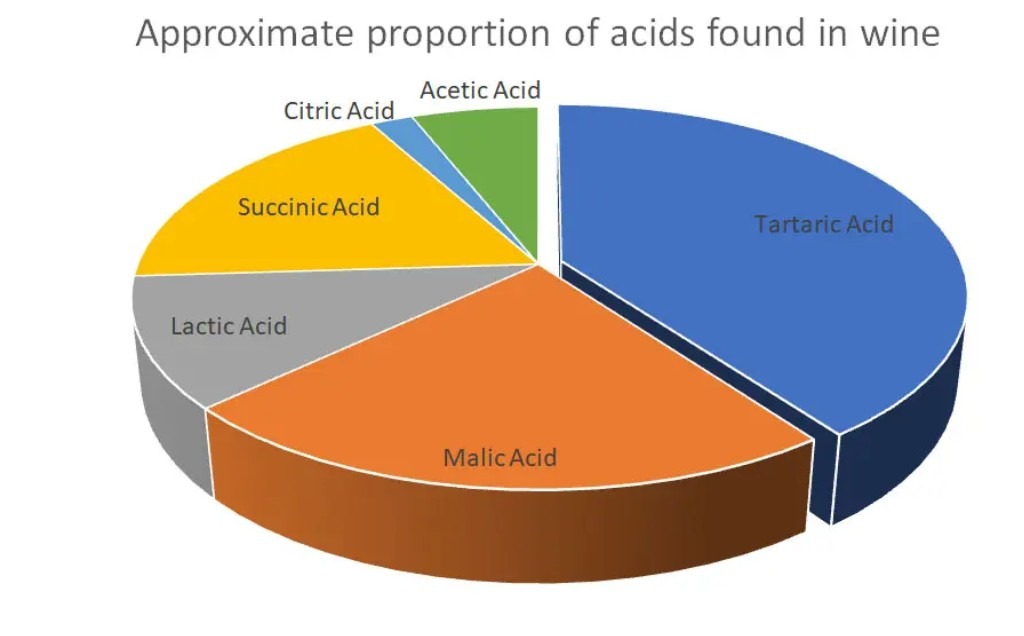
Meanwhile, titratable acidity (TA), expressed in grams per litre, measures the total concentration of acids, primarily tartaric, malic, and citric, that will react with a strong base. TA correlates more directly with how sour or crisp a wine tastes. Whites typically fall between 6–9 g/L, reds between 4–7 g/L, and sparkling wines can reach 7–10 g/L for that mouthwatering finish (Decanter). You might encounter a wine with high TA but a relatively high pH if its acids are weaker or buffered by minerals like potassium.
Why pH and TA Matters
Why do winemakers care so much? First, the microbial safety of wine hinges on pH: low pH (<3.6) keeps spoilage bacteria and yeast at bay and allows sulphur dioxide to protect more effectively (Sensorex Liquid Analysis Technology). Second, pH also influences colour. Low-pH reds hold onto that ruby intensity, whereas higher-pH wines can trend toward brick or brown tones. Then there’s mouthfeel and freshness: TA heightens the perception of crispness, making wines lively and food-friendly, while lower TA produces rounder, softer sensations. Finally, the harmony of pH and TA contributes to long-term stability; well-balanced wines age more gracefully with less risk of oxidation.
How Winemakers Adjust pH and TA in Wine
Winemakers have tools to adjust acidity precisely. To lower pH and raise TA, tartaric acid, which is naturally present in grapes, can be added before or during fermentation. To reduce TA (and sometimes raise pH), neutralizing agents like potassium or calcium carbonates are used. Malolactic fermentation also converts tart malic acid into softer lactic, reducing TA and increasing pH (Wikipedia). Cold stabilization can precipitate tartaric acid, subtly shifting TA and pH depending on starting values (winemakingtalk.com).
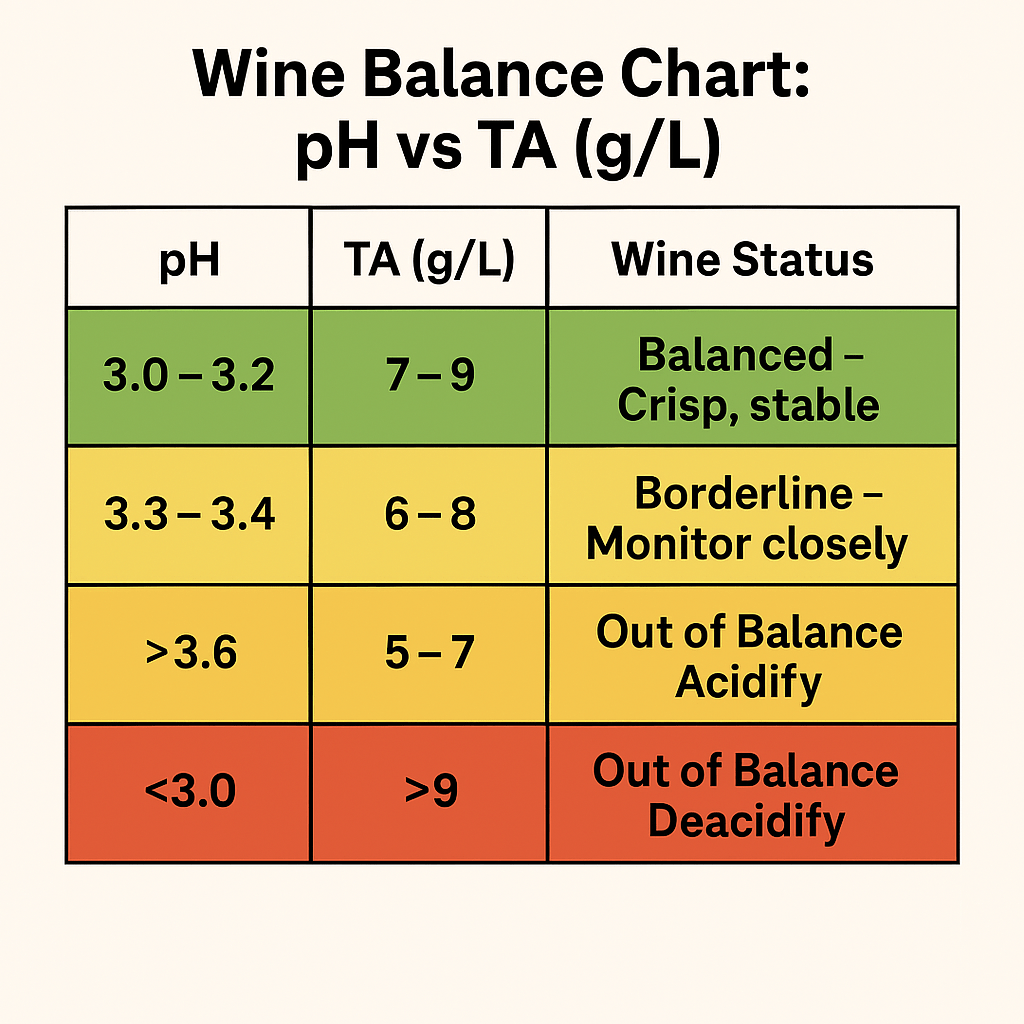
Adjusting acidity is a precise craft. pH and TA don’t always move in tandem thanks to a wine’s buffering capacity, especially with minerals like potassium present. Because of this, winemakers rely on small-scale bench trials, adding a bit of acid or base, test and taste, before making broad changes. Timing matters, too. The must stage is ideal, though post-fermentation tweaks are possible with care.
How Acidification is Handled by BC Winemakers
In the end, pH and TA together define a wine’s sparkle, strength, and staying power. They are cornerstone measures of quality and longevity. A perfect harmony between art and chemistry. Get curious, ask your winemaker, or next time you taste, imagine the balancing act happening in the glass.












Best and most succinct explanation of PH and TA I have read and also covers how they relate to each other and mitigating factors. Just excellent.